How TV Evolved Through the Decades
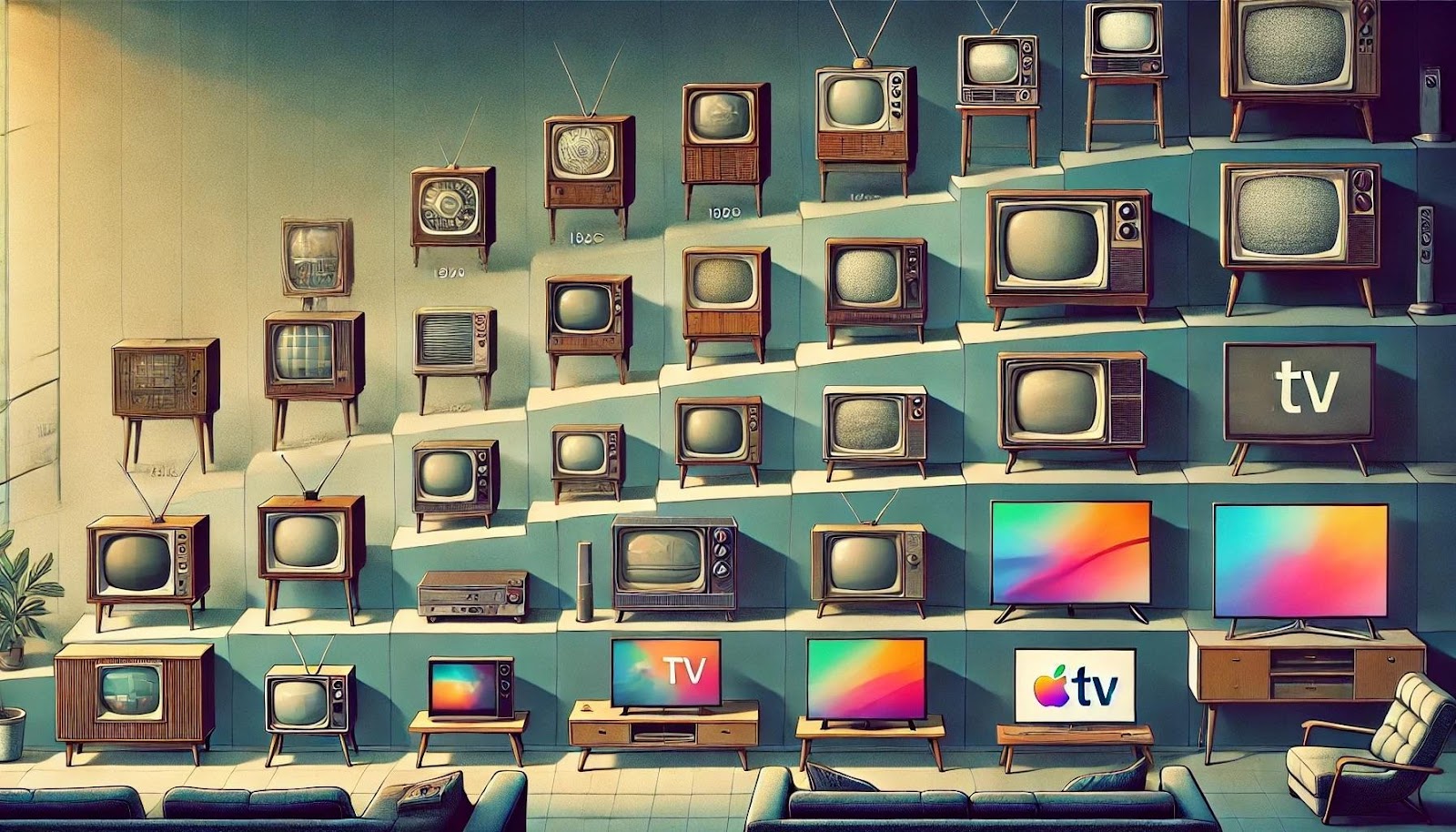
Have you ever considered how fascinating it is to watch images come to life on various screens? There’s a story there. Someone had to work really hard to make that happen. Video content is something that we all love and will continue to watch without ever getting bored of it. Luckily, there’s so much video content in the world that you’ll never run out of something to watch (it would take you 17,810 years to watch all the videos on YouTube).
But this visual storytelling didn’t happen overnight. It’s the result of over a hundred years of technological progress, from the first photographs to the digital TVs we use today. So, how did we get here?
Our Love for Moving Images
People have been drawn to moving pictures for fun since the beginning of cinema. Edward Muybridge, with his groundbreaking work with motion pictures, and the Lumière brothers, with their first-ever films, started a revolution of entertainment. People have been amazed by how life can be recorded and played back. As technology got better, everyone wanted more visual material. So many movies, TV shows, and videos are now easy to find and watch, and it’s crazy. But this wouldn’t be possible without the incredible evolution of image-making technologies.
The Evolution of Image-Making Technologies
Are you interested in taking a journey through time? Do you want to know the amazing story behind your TV that you watch daily in your living room? Here’s how it happened:
The Dawn of Photography
A simple photograph is the pillar of visual entertainment. Without this pillar, that flat-screen device in your living room wouldn’t have existed. Pioneers like Louis Daguerre and William Henry Fox Talbot created the first photography methods in the 1800s. This made it possible to record pictures and keep them. Even though these images were still, they were the start of something big.
The Birth of Motion Pictures
Throughout the late 1800s, geniuses like Thomas Edison and the Lumière brothers took matters to the next level. They did what no one else could – brought still pictures to life. When the kinetoscope and cinematograph were made, people could see moving pictures for the first time. Even though they were silent and black and white, early movies were groundbreaking and created a new way to have fun.
The Rise of Television
In the 20th century, TV became popular, bringing moving pictures into people’s houses. The first TVs were huge, but the screens were small and didn’t have excellent picture quality. However, watching them for the first time in their lives had people in awe. The 1950s and 1960s were TV’s golden age because technology improved and TVs became more affordable.
The Start of Color TV
And then, there were colors. Suddenly, movies could be watched in color during the 1960s, and lives changed for the better. Everyone wanted a TV in their house.
From Analog to Digital
With the switch from analog to digital broadcasting in the late 20th and early 21st centuries, picture and sound quality improved dramatically. The high-definition (HD) and ultra-high-definition (UHD) TVs we use today were inspired by digital TVs, which had better images, sound, and channels.
The Rise of Streaming
Then came streaming. Services like Netflix, Hulu, and Amazon Prime Video have changed the way we watch movies and TV shows. They’re an inseparable part of our lives. You no longer have to wait until 7 o’clock to watch your favorite movie. Now, you can watch anything on any device, whenever you want, and wherever you want.
Staying Safe in the Digital Age
TVs have come a long way and are here to stay for good. Technology constantly evolves, so who knows what the future holds for them? But, while you may applaud their fascinating journey, you also need to keep in mind the digital threats that lurk along the way.
With smart TVs and streaming devices like Apple TV or Firestick, your TV is now connected to the internet. That’s great, but it also makes it vulnerable to cyberattacks, just like any other device. So, you need to take action.
Using a virtual private network (VPN) is your best option. With a VPN on TV, you can stream securely, knowing your data is protected. It keeps your online activities private, shielding them from hackers. Plus, a VPN can give you access to geo-restricted content, offering even more shows and movies to enjoy.