Injection Molding Screws: How the Right Design Reduces Shear and Enhances Melt Quality
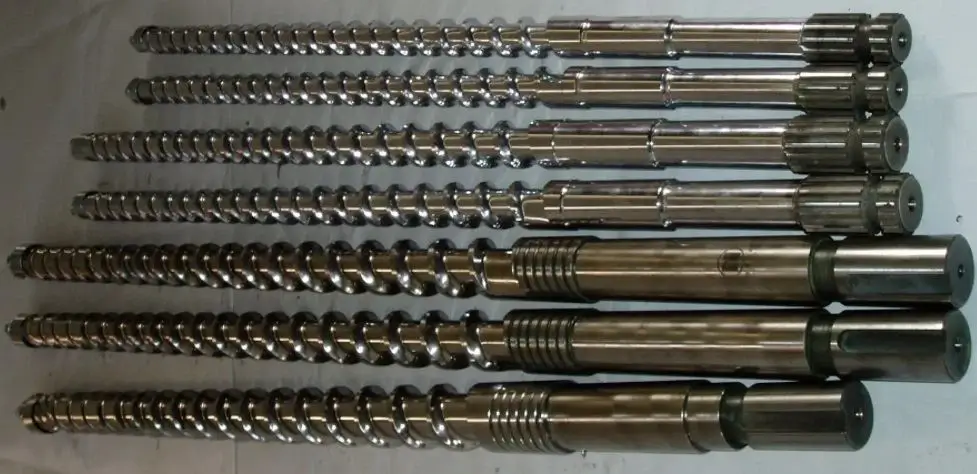
Injection molding is a cornerstone of modern manufacturing, allowing for the mass production of intricate plastic components with precision and efficiency. At the heart of this process lies one of its most critical components: the injection molding screw. The design and performance of the screw significantly impact melt quality, cycle times, and overall product consistency. Optimizing the screw’s design can reduce shear stress, improve homogeneity, and enhance the final product’s structural integrity.
In this article, we will explore how the design of injection molding screws influences shear reduction and melt quality, delving into key aspects such as screw geometry, flight depth, and mixing sections.
The Function of Injection Molding Screws
Injection molding screws serve as the primary mechanism for conveying, melting, and homogenizing plastic resins before injection into the mold cavity. They play a crucial role in:
- Feeding raw plastic granules into the barrel
- Melting the plastic through shear and heat
- Mixing and homogenizing the molten material
- Pressurizing the melt for smooth injection into the mold
The efficiency of these functions largely depends on the screw design, which determines how effectively shear is controlled and how consistently the polymer is melted and mixed.
Understanding Shear in Injection Molding
What is Shear Stress?
Shear stress occurs when plastic material experiences forces that cause it to deform and flow. In injection molding, shear is both beneficial and detrimental:
- Beneficial Shear: Generates necessary heat for melting the polymer
- Detrimental Shear: Can degrade polymers, causing discoloration, poor mechanical properties, and inconsistent melt flow
Excessive shear, particularly in shear-sensitive materials like PVC or polycarbonate, can lead to thermal degradation, reduced impact strength, and undesirable warpage in finished products.
Key Injection Molding Screw Design Features for Shear Reduction and Enhanced Melt Quality
1. Screw Geometry and Compression Ratio
The geometry of an injection molding screw, including its flight depth and compression ratio, significantly impacts shear rates and melt quality.
- Low Compression Ratio (1.5:1 to 2.5:1): Suitable for shear-sensitive materials, reducing the risk of polymer degradation.
- Moderate Compression Ratio (2.5:1 to 3.5:1): Works well for general-purpose resins, balancing shear generation with efficient melting.
- High Compression Ratio (3.5:1 to 4.5:1): Used for highly viscous resins that require intensive shear to improve melt consistency.
The compression ratio is determined by the ratio of the channel depth in the feed section to that in the metering section. A well-optimized compression ratio ensures efficient melting without excessive degradation.
2. Barrier Screws for Shear Management
Barrier screws are a highly effective design modification that enhances melting efficiency while reducing excessive shear.
- How It Works: The barrier flight separates solid plastic pellets from molten polymer, ensuring gradual melting.
- Benefits: Prevents premature shear heating, maintains uniform temperature distribution, and enhances melt homogeneity.
This design is particularly useful for high-viscosity resins, where maintaining a consistent melt flow is crucial for product quality.
3. Mixing Sections for Improved Melt Quality
Many modern injection molding screws incorporate specialized mixing sections designed to enhance melt uniformity.
- Dispersive Mixers: Break up agglomerates and disperse additives uniformly, reducing viscosity variations.
- Distributive Mixers: Enhance melt homogeneity without significantly increasing shear stress.
The choice of mixing section depends on the polymer formulation and the desired end-product quality. A well-designed mixing section improves color dispersion, eliminates unmelted particles, and ensures a smoother finish on molded parts.
4. L/D Ratio for Effective Melting
The length-to-diameter (L/D) ratio of an injection molding screw determines how long the plastic stays within the barrel, impacting both shear rates and melt quality.
- Low L/D Ratios (16:1 to 18:1): Common in general-purpose applications where rapid melting is needed.
- Moderate L/D Ratios (20:1 to 24:1): Provide better melting efficiency and mixing capabilities.
- High L/D Ratios (24:1 to 30:1): Ideal for high-performance resins requiring precise temperature control and enhanced homogeneity.
An optimized L/D ratio ensures efficient melting while preventing excessive residence time, which can lead to polymer degradation.
5. Grooved Feed Sections for Controlled Shear
Grooved feed sections improve the feed rate and pressure consistency, helping control shear levels. This design prevents slippage and enhances the overall efficiency of the injection molding process by:
- Providing a stable feed rate
- Reducing screw torque requirements
- Enhancing melt consistency
6. Coatings and Surface Treatments for Reduced Friction
The surface finish of injection molding screws influences shear characteristics. High-performance coatings such as nitriding, tungsten carbide, and chrome plating enhance wear resistance and reduce unnecessary friction, contributing to:
- Lower energy consumption
- Reduced material degradation
- Extended screw lifespan
By minimizing friction, coatings help maintain optimal shear levels while improving overall processing efficiency.
Selecting the Right Screw for Your Injection Molding Application
Choosing the best injection molding screw involves evaluating the polymer’s shear sensitivity, viscosity, and melting characteristics. Here are some general guidelines:
- Shear-Sensitive Materials (e.g., PVC, POM, Polycarbonate): Opt for low-compression screws with barrier flights.
- General-Purpose Resins (e.g., PE, PP, ABS): Medium compression screws with moderate shear rates work well.
- High-Viscosity Polymers (e.g., Nylon, PET, PEEK): Use barrier screws with high L/D ratios for improved melt homogeneity.
Working closely with screw manufacturers and material suppliers can help tailor screw designs to your specific molding requirements.
Conclusion
The design of injection molding screws plays a pivotal role in controlling shear rates and ensuring superior melt quality. By optimizing factors such as compression ratio, barrier flights, mixing sections, and L/D ratios, manufacturers can significantly enhance product consistency, reduce material degradation, and improve overall process efficiency.Investing in the right screw design for your injection molding machine not only improves cycle times and energy efficiency but also enhances the quality and durability of molded products. Whether you are working with general-purpose resins or specialty high-performance polymers, understanding screw design principles is key to optimizing your injection molding process.