Everything You Need to Know About MTP Fiber Optic Cables
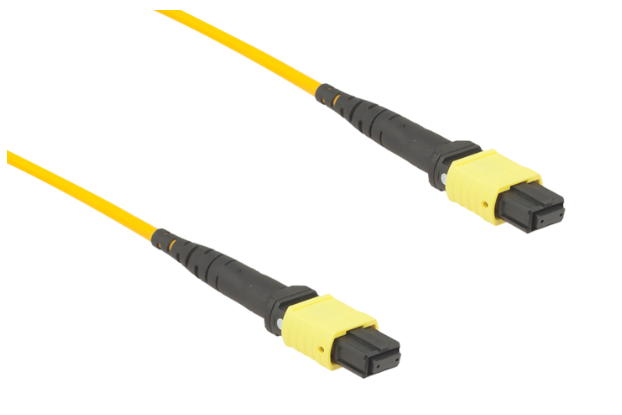
What is an MTP Cable?
US Conec designates the MTP (Multi-fiber Termination Push-on) connector as a more advanced form of the MPO (Multi-fiber Push-on) connector. It is made to deliver greater optical and mechanical performance, incorporating elements that assist in maintaining alignment and signal integrity. MTP connectors are widely used in data transmission operations and telecommunication systems that require ease and speed of access, including rapid and high-density networking environments like data centers.
For more in-depth information, you should view the mtp cable – FiberMall
Difference Between MTP and MPO
MTP and MPO are often used interchangeably. However, there are unique distinguishing traits that set them apart. MPO is an international standard which integrates IEC-61754-7 and TIA-604-5, adopting multi-fiber connector and layout templates, therefore, is widely accepted. MTP, however, is a custom-made version of MPO, in which standard multi-fiber MPO connectors have performance shortcomings. Significant component upgrades like those to the guide pins, which are now more precise, and a more robust ferrule design with a resilient shield reduce signal degradation and increase operational reliability in the network.
Defining MTP Fiber Assemblies
MTP fiber assemblies are pre-terminated cables that utilize MTP connectors to offer high-capacity, low-loss connections in the network infrastructure. They typically contain MTP trunks, which act as the foundation of the cabling system, and MTP breakout cables, which allocate the fiber connections to the end devices. MTP assemblies are perfect for applications that require speed and intensity because such assemblies aid in swift installation and are easy to adjust to scale. Moreover, they provide adaptability for migrating to elevated bandwidth systems, like 40G and 100G Ethernet, but still comply with the current systems infrastructure.
How Does an MTP Trunk Cable Work?
Structure of an MTP Trunk Cable
An MTP trunk cable incorporates a number of important parts that allow it to perform at a high level. It includes a robust outer jacket that is meant to shield the internal optical fibers, as well as aramid yarn, which gives the cable tensile strength. Within the aramid yarn jacket, several optical fibers are combined into bundles of 12, 24, or more fibers, depending on the intended application. Each side of the cable has a precise MTP connector, which guarantees low insertion loss and optimal alignment, and is installed at the ends. These connectors come with guide pins that help to mate with other MTP hardware systems while maintaining superior signal integrity.
Use of 12 Fiber MTP Trunk Cables
12-fiber MTP trunk cables are popular for use with high-density patch panels, fiber enclosures, and other network devices with MTP ports in data centers. Due to the parallel optical transmission capabilities with 40G and 100G Ethernet, these types of cables are most useful where many fibers work simultaneously to transmitt and receive data. Companies switching over to high-capacity networks without interfacing with older systems find these 12 fiber MTP trunk cables handy due to their compact desing and easy long distance installation.
Advantages of MTP Trunks in Data Centers
MTP trunk cables possess a wide range of benefits that are critical in today’s data center environments. First of all, the trunk cables’ high fiber density minimizes the data center’s spatial cabling infrastructure requirements, optimizing space in racks and pathways. The significant time savings associated with deployment and labor costs are a result of quick plug-and-play installation capabilities. In addition, MTP trunks are built to scale, allowing migration to higher bandwidth systems without extensive rewiring. Their robust construction ensures minimal maintenance and long-term network support, which helps meet the demands of evolving high-speed networks.
What are the Advantages of Using MTP Connectors?
High-Density Solutions with MTP Connectors
It is commonly understood that MTP connectors are important elements to incorporate in achieving installations of dense fiber optic networks. MTP connectors are capable of housing a multitude of fibers within one connector, thus reducing the amount of space needed for cabling. This is highly beneficial in regions such as data centers, where available space needs to be utilized optimally. MTP solutions also reduce the amount of fiber clutter within racks and panels while providing easy adaptability for network growth. With these features, MTP solutions effectively address modern network infrastructure needs.
Comparison of MTP and LC Connectors
The MTP and LC connectors differ in their application. MTP connectors are better suited for high-fiber-count applications because one MTP connector can accommodate 12, 24, or even more fibers, which reduces the amount of needed connections. On the other hand, LC connectors do best in low-fiber density applications because of their single-fiber design and small size. While LC connectors are best for point-to-point connections in small systems, MTP connectors are designed for dense environments that need reliable expansion and high performance.
Insertion Loss and Performance of MTP Connectors
Considering the performance of fiber optic connectors, insertion loss is one of the most important factors in their evaluation. MTP connectors are manufactured in such a way that low insertion loss is maintained even as high-bandwidth applications are handled. This ensures that there is little to no signal degradation. MTP connectors have low precise engineering and high-grade alignment mechanisms, which perform well in high-demand environments like high-speed data centers, enterprise networks, and so on. Furthermore, MTP Connectors of superior grade undergo extreme testing in order to met industry standards. This guarantees smooth functioning and endurance across multiple setups.
How to Choose the Right Fiber Optic Cable?
Factors to Consider
OM3 vs OM4
It is important to compare OM3 and OM4 multimode fibers before choosing fiber optic cables. OM3 fibers are tailored for short-range applications at a lower cost, with 10 Gb/s transmission supporting up to 300 meters, and 40/100 Gb/s support up to 100 meters. While OM4 fibers sustain 10 Gb/s up to 550 meters and 40/100 Gb/s up to 150 meters, meaning extended performance in comparison to OM3. OM4 excels for high bandwidth and greater link distances in relation to data centers or enterprise environments.
Comparison between single and Multimode Fiber
Singlemode and multimode fibers have different features in terms of transmission range and bandwidth. Singlemode fibers, with their small core, have minimal modal dispersion which makes them suited for long distance high-speed applications, thereby making them popular in telecommunications or core network deployments. In contrast, Multimode fibers are economical for short range communication, making them ideal for LANs, data centers, and less sophisticated networking environments.
Understanding Cable Ratings with Their Significance
Optical fiber cables have different ratings, which include indoor/outdoor use, plenum, riser, or armored. These ratings are necessary to ensure safety standards of use as well as specific needs for application compliance. Cables that are plenum-rated can be installed in air-handling spaces as they are fire-resistant and emit low smoke. Riser-rated cables are used for vertical runs between floors, while armored cables are meant for harsh environments. Cable rating ensures operational safety as well as long-term performance reliability in the intended application environment.
Common Applications of MTP Cables
Use of MTP Cables in High-Speed Networks
MTP cables are critical components in high-speed network settings, such as data centers and telecommunication systems. These cables are tailored to meet the bandwidth and latency requirements of 40G, 100G, and even 400G Ethernet applications. The multi-fiber push-on (MTP) connector allows for quicker network deployment, which minimizes installation time and makes network overhaul easier. Also, MTP cables preserve the quality of the signal over long distances, which is crucial for reliable data transmission.
Role of MTP in Cloud Data Services
Cloud data services require flexible and highly durable networking resources that can manage enormous volumes of data while maintaining optimal uptime. MTP cables are crucial in sustaining the infrastructure of these services by ensuring dense interconnection between server clusters, storage arrays, and intra-data center links. Their capability to facilitate parallel optical configurations enables scalability for cloud providers’ contemporary data tasks. In addition, MTP cables support advanced optical technologies like wavelength-division multiplexing (WDM) which makes them even more useful in the cloud.
Setting Up MTP Cables in Plenum Rated Areas
In the case of installing MTP cables within plenum-rated areas, fire safety standards should be your main concern. Plenum areas, often located in HVAC systems and under suspended floors, have specific cable requirements regarding smoke emission and burning resistance. MTP cables are specifically designed for high-density installations and mitigate both of these concerns. Proper enhancing methods such as maintaining specific bend radius guidelines along with proper cable management systems increase safety and operational efficiency within the plenum region.
How to Terminate MTP Fiber Cables?
Tools Required for MTP Termination
To effectively terminate MTP fiber cables, the following specialized tools and accessories are needed:
– **Fiber Cleaver** – Splits fiber ends to improve connector functionality.
– **MTP/MPO Crimp Tool** – Correctly crimps and fastens fiber connectors in place.
– **Cable Stripper** – Removes sheath and buffers from fiber cables.
– **Cleaning Kit** – Contains lint-free tissues, cleaning fluids, and cleaning sticks for connectors to guarantee clean connections free of contaminants.
– **Polishing Film (if needed)** – Applies to fiber’s end to polish and decrease insertion loss.
– **MTP Connector Housing and Boot Components** – Necessary for final assembly.
Visual Fault Locator (VFL) or similar test and verification tools for the terminated cable.
Having the tools listed above, prepare fibers with precise tuning to enhance the result before any actual work is started. Proper preparation will lead to ensured successful termination of the cable.
Step-by-Step Guide to Terminating MTP Cables
Soping
Put the tools in the arrangement needed to be used in a tidy and dustless space.
Collect each instrument necessary and examine each thoroughly for working order.
Look over the MTP plugs and cables for any accessible faults.
Cable Stripping:
With the cable stripper, remove the outer jacket of the cable.
Fiber ends should not be damaged while exposing the necessary amounts of fibers should be done.
Cleaving the Fibers
Make use of the fiber cleaver to trim the fiber ends to the length specified for the MTP plug.
Put afflicted cables in place through the MTP ferrule holding stitches from the confined space.
The MTP/MPO crimp gadget would assist in placing hold of the fibers and plug head.
Further integrally bound on block components.
Fibers and plugs would be held in steps provided inbound step processes.
Labeling and Checking:
Utilize a prepared cleaning box to remove elements of dust and residue from slides and plugs to the slides.
Watch to see if the arranged ends of the plug and fiber and aligned correctly along with the clean cut which in logic would mean accepted compromise.
Policing Minsk if called for:
Using copy aid to fiber surface polishing to improve smoother for polishing and lessen insertion loss.
Inspection:
Use any other apparatus available to the creased section to set verification and confirm the low loss of insertion with a camera.
Assemble core side:
For finishing the work attach the creased and unbent part outer shield of the tube and set other structural elements in position.
Best Practices for Minimizing Insertion Loss
Insertion loss should be a consideration during MTP terminations. Follow the steps below for best practices:
- Make Sure All Fibers Are Clean: The majority of the problems contributing to high insertion loss comes from contamination. Clean fiber tips and connectors properly.
- Bend Radius Must Be Maintained: Do not excessively bend the cable; stressing it either way will reduce fiber performance.
- Choose Quality Tools and Connectors: Low-grade tools will lead to misalignment, which increases insertion losses.
- Follow Specifications Closely: Follow set guidelines by manufacturers concerning assembly and testing procedures.
- Test After the Assembly: Conduct tests for insertion loss as well as return loss on the terminated cables to be sure of their usefulness and integrity before deployment.
- If adhered to, these steps and best practices will ensure the MTP terminated fiber optic cables perform and last longer while operating in high density networking environments.
What is the Future of MTP Fiber Technology?
Emerging Trends in Fiber Optic Connectivity
The expansion of data-centric markets is being fuelled by demand for MTP connectors and cables, as well as fiber optic connectivity as a whole. An emerging shift includes MTP connectors that offer ultra-low loss, as these allow more efficient signal transmission over greater distances by placing lower insertion loss limits. Cables with smaller form factors and increased fiber counts are designed to densely populate networking environments – and these features make MTP solutions essential in contemporary data centers.
MTP Cables and Connectors Technological Innovations
Material and process innovations led to improved performance and reliability of MTP cables and connectors, starting with the implementation of bend insensitive fiber technology which allows for high signal retention even in situations where tight spaces demand for sharp bends. Next, the latest generation of MTP connectors is equipped with automated precision alignment systems that greatly improve deployment workflows and general system dependability. These shifts promote growth in hyperscale data centers while maintaining support for older systems.
The Role of MTP in Next-Gen Network Solutions
MTP technology is set to enable a multitude of 400G network solutions and more. Its modular and dense configuration meets the economic network requirements, as well as provides cost-effective connectivity in scaling networks that are transitioning towards higher data rates. MTP connectors provide integration with new emerging technologies, such as SDN and NFV, that require dependable and adaptable physical layer infrastructure. Moreover, with the expansion of 5G networks, MTP systems become crucial in delivering the bandwidth and latency needed to sustain edge computing and the IoT ecosystem. These competencies cement MTP’s technology credibility concerning the advancement of network technology systems which enables the suspension of obsolescence.