What Is a Blind Fastener? Applications and Benefits in Modern Manufacturing
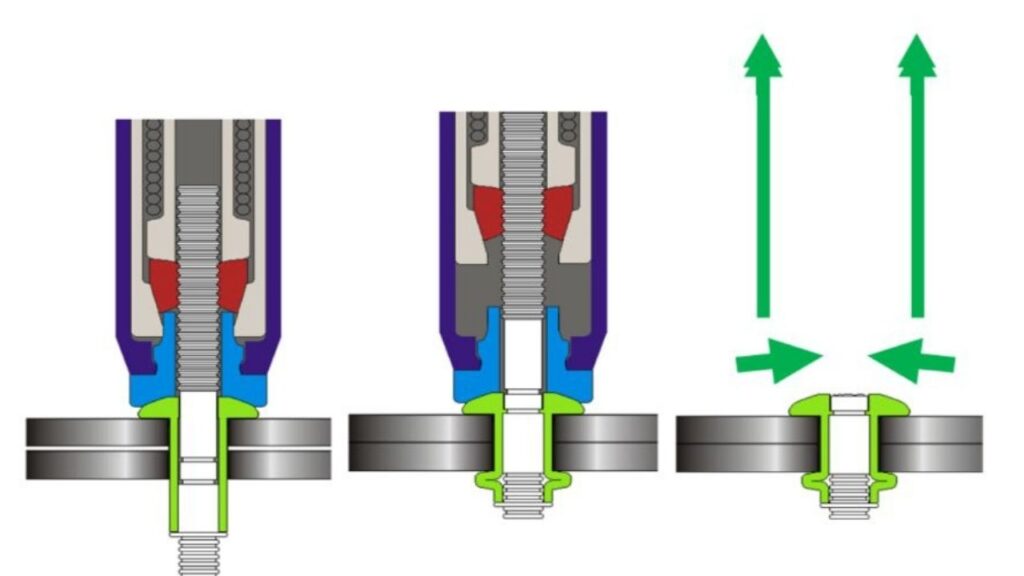
Blind fasteners are bolts, rivets, or other fastening hardware tools that are generally used to connect two or more materials. These are specifically designed to combine metals or plastics through pre-drilled holes that are present on one side of the material and hidden on the other side.
Blind fasteners are effective and reliable tools used in various industries like construction, automotive, and aerospace. Their unique and small design allows manufacturers to easily and quickly assemble applications together. In complex work, where it is quite difficult to combine or put together two materials, blind fasteners offer quick installation solutions and a pleasing appearance.
Let’s see how modern manufacturing industries benefit from using blind fasteners.
Benefits of Blind Fasteners in Modern Manufacturing
Blind fasteners are used for enhancing design flexibility, easy assembly, and quick installation. Here are the key benefits of blind fasteners in modern manufacturing:
1. Enhanced Efficiency and Easy Installation
Blind fasteners remove the need to work on both sides of the material and simplify assembly. It increases overall job efficiency by reducing the amount of time required to fasten or assemble materials using conventional techniques.
2. Improved Structure Flexibility
Blind fasteners increase the flexibility of the structure by making it simple for manufacturers to access or join bent, straight, or curved designs.
3. Material Versatility
Usually, composite, plastic, and metal are used to make blind fasteners. They are therefore appropriate for a wide range of manufacturing requirements and applications.
4. Enhanced Durability
Blind fasteners avoid design failure or grip loosening by forming strong connections. They are corrosion-resistant and composed of sturdy plastic or metal. This increases the structure’s overall durability.
Key Applications of Blind Fasteners
Blind fasteners have applications in many fields. Some of the important uses include the following:
1. Aerospace Industry
Blind fasteners are an important component used in the assembly of varied aircraft parts, such as internal panels, equipment enclosures, and airframe structures. Being strong and resistant to corrosion, they are used in full load transfer applications, such as hinges, landing gear, and wing attach fittings.
2. Construction
Blind fasteners are widely used for facades, installing cladding atop, and erecting the masonry support system. Sometimes, it is also used for metal wall panel installation, roofing sheets, or HVAC ducting.
3. Automotive Industry
Blind fasteners attach bumper covers, dashboards, sunroofs, and body panels. Due to their excellent vibration-resistance properties, they are best suited for automotive applications.
4. Electronics
Blind fasteners are also used in the electronics components and industrial sectors. They are used to secure heat sinks, attach connectors, and assemble various electronic devices.
The Bottom Line – Hold it Together with Blind Fasteners
Blind fasteners are small yet strong and practical tools for assembling materials. They are vibration and corrosion-resistant, which makes them ideal for aerospace, manufacturing, construction, and electronic industries. They offer flexibility, easy installation, and enhanced durability. For long-lasting effects and use, blind fasteners are the ideal choice.