10 Reasons Why You Should Visit Montenegro in 2025
I’ve visited plenty of places that people wax about being “hidden gems,” and nine times out of 10 they are completely overrun with tourists sipping overpriced cocktails.
At least not exactly like that in Montenegro — not yet. It’s that magical combination of rugged coastline, mountains that appear ready to topple into the sea and towns where you can still linger at a cafe without feeling like you’ll be charged rent.
If you plan to explore beyond the main towns, a car rental Montenegro option makes the whole experience easier, giving you freedom to chase those quieter corners.
The tricky part? Montenegro doesn’t shout for attention. It just quietly exists, letting its neighbors—Croatia, Greece, even Italy—take the spotlight. Which is probably why 2025 feels like the right time to go. Tourism is picking up, sure, but it’s still early enough that you’ll feel like you’re getting ahead of the curve.
1. Because the Coastline Isn’t Just Another “Mediterranean Copy”
You know how some coasts look the same after a while? Blue water, palm trees, maybe a boat tour.
Montenegro’s Adriatic stretch is different. The beaches are wedged between cliffs; the towns stick so closely to the rock that you occasionally question how on earth the thing was built before cranes were invented. Budva is the natural starting point, but don’t miss out on the big resorts, even if you just leave them once.
Budva is the obvious entry point, but skip the big resorts at least once. Drive (or honestly, take a bus if you don’t trust yourself on narrow cliff roads) to smaller spots like Petrovac or Pržno. They’re the sort of places where locals actually go swimming, which tells you something.
And really, having a car makes the whole journey easier — car rental Montenegro prices are reasonable, and you can hop between Kotor, Perast, and nearby villages at your own pace.
And if you’re thinking, why should I visit Montenegro instead of Croatia’s coast?—the short answer is price and space. Montenegro’s beaches are cheaper, less packed, and the water clarity is just as good.
2. The Bay of Kotor Feels Like a Stage Set
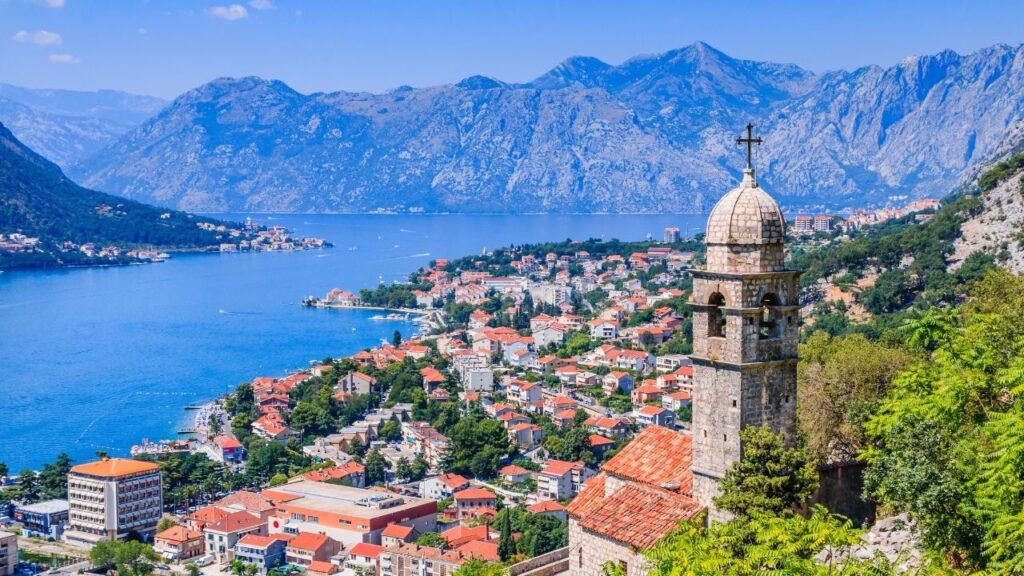
There are plenty of “must-see” places to visit in Montenegro, but Kotor really does deserve the hype. It’s not just the bay itself, which curves like a fjord (it technically isn’t one, but it sure looks like it). It’s the old town, with narrow stone streets that you’ll get lost in whether you want to or not.
I was going to say you could see it in a day, but actually… that would be selling it short. Climb the fortress above the town, wander into Perast (the quieter neighbor), and take the boat out to Our Lady of the Rocks. Even if you’re not a “church on an island” type, the views alone are worth the ride.
By 2025, more cruise ships will probably be docking here, which means mornings and late afternoons are your sweet spot. Midday feels like Times Square with gelato.
3. It’s One of the Few Places Where Mountains and Sea Collide
Here’s something you can’t fake: geography. Montenegro is literally named “black mountain,” and for good reason — they weren’t messing around. An hour’s drive inland from the coast, and you’re 1,500 meters above sea level, looking down at glacial lakes.
Durmitor National Park is the standout. Picture alpine meadows, wolves (don’t worry, you’re unlikely to see one up close), and the Tara River Canyon, which is apparently the second-deepest in the world after the Grand Canyon. White-water rafting there is one of those things people talk about for years after.
The proximity is what makes it special. One morning you’re eating fish by the sea, the next you’re hiking among pine forests. That’s not common in Europe unless you’re in Switzerland, but then you’d also be paying Swiss prices.
4. Because Food Is Better Than Anyone Gives It Credit For
Nobody really travels just for Montenegrin food. And yet, it sneaks up on you. The coastal towns serve grilled fish so fresh you’ll start questioning what you’ve been eating back home. Inland, it shifts: lamb cooked slowly under “sač,” a metal lid piled with hot coals. It’s hearty, filling, and probably not great if you’re counting calories.
There’s also Njeguški pršut—Montenegro’s version of prosciutto. It’s smoked in mountain villages, and if you drive through Njeguši you’ll see whole legs of ham hanging in roadside shops. Grab some bread, cheese, and olives, and you’ve got a picnic for less than the cost of a latte in Paris.
5. It’s Cheaper (For Now)
This one’s practical. If you’ve traveled Europe recently, you know prices are climbing everywhere. Montenegro hasn’t caught up yet. A sit-down dinner with wine can still be under €20. Decent guesthouses run €30–50 a night. And bus rides across half the country? Under €10.
But here’s the catch. Tourism boards are pushing hard, and by 2025, things will be shifting. Not overnight, but the writing’s on the wall. Which is part of the reason why you should visit Montenegro sooner rather than later.
6. You Can Still Have Random, Unpolished Moments
There’s something to be said for a place that isn’t over-sanitized for tourism. Buses run late. Streets don’t always have signs. In smaller towns, you might struggle with English. And honestly, those “inconveniences” become memories.
One evening in Herceg Novi, I sat in a café where the waiter just shrugged when I asked for a menu. He pointed at the display case instead. I ended up with cake and Turkish coffee for €3, which was better than any dessert I’d have chosen off a printed menu anyway.
That rough-around-the-edges charm is part of the reason people who go once tend to come back.
7. The History is Layered, Not Glossy
Montenegro’s history, after all, has seen it dragged from empire to empire, by the Ottomans, the Venetians, the Austro-Hungarians, you name it. You see it in the architecture, often within steps of one another: a mosque here, a baroque palace there, and communist-era concrete just around the corner. The capital, Podgorica, isn’t beautiful in any classic sense. It’s more… functional. But if you enjoy peeling back layers of history, it’s worth a stop. Cetinje, the ancient royal capital, is a bit of a time warp. And monasteries cut into cliffs (like Ostrog) aren’t mere Instagram bait; they’re active houses of worship.
8. Outdoor Adventures Don’t Require Elite Fitness
Some destinations make you feel like you need to train for six months before attempting anything. Montenegro offers a middle ground. The hikes in Durmitor range from easy lakeside strolls to serious summit climbs. The Tara River rafting trips are exhilarating but manageable, even if you’ve never picked up a paddle.
Even cycling between small coastal towns is doable—though, fair warning, the hills aren’t gentle. For less sweat, there’s always the lazy option: boat rides along the Bay of Kotor, or Lake Skadar with its floating water lilies and birdlife.
9. It’s Small Enough to See a Lot, Big Enough Not to Get Bored
Montenegro could fit into some U.S. states multiple times over. That means you won’t spend your vacation trapped in transit. You can realistically hit the coast, the mountains, and at least one national park in a week.
But it’s not so small that you’ll feel boxed in. There’s variety—beach resorts, quiet mountain hamlets, wine country (yes, Montenegro has vineyards, especially near Podgorica), and buzzing nightlife if that’s your thing in Budva.
Think of it as the sweet spot between “weekend city trip” and “three-week odyssey.”
10. Because It Still Feels Like a Discovery
Let’s be blunt: Montenegro won’t stay under the radar forever. By 2025, travel publications will be pushing it harder, influencers will be staging sunset shots in Kotor, and the word “underrated” will start to lose its meaning.
But for now, telling friends you’re going to Montenegro still raises eyebrows. Some won’t even know where it is. That little bit of mystery is half the fun. And it’s why you should visit Montenegro before it becomes the next overrun hotspot.
Final Thoughts
I thought I had Montenegro pegged after a week — mountains, coast, old towns, rinse and repeat.
But the truth is, the country shocks you when you least expect it. A cafe in a nook of an alley in Kotor, the quiet around a lake you didn’t realize was there, a randomly found roadside grill with food better than anything you’d find in the tourist area.
It’s in moments like those that I understood why you should visit Montenegro just isn’t all that beaches or castles offer. It’s all about the rawness and the warmth, a mix you rarely see packaged in the same product anymore.