Creating Outdoor Retreats: How to Build Decks That Enhance Your Home: Design, Construction, and Benefits
Introduction: Understanding the Importance of Decks
Decks are one of the most practical ways to extend your usable living space outdoors. They create a comfortable area for relaxing, entertaining, dining, and spending time with family or guests. Unlike standard patios, decks can be elevated, layered, and shaped to match your property’s layout, giving you more design freedom and better integration with views, landscaping, and indoor spaces.
A well-built deck is more than a visual upgrade. It can improve how you use your home daily, support outdoor activities year-round (with the right features), and add appeal that often translates into stronger resale value. When planned properly, decks blend naturally with the home’s architecture and become a true outdoor retreat rather than “extra space.”
Planning and Designing Decks
Good decks start with clear planning. Before construction begins, define the purpose of the deck. Will it be mainly for dining, hosting friends, creating a quiet reading area, or building an outdoor kitchen setup? The answers affect size, layout, access points, and structural needs.
Key planning points include:
- Deck location: Backyard, side entry, pool area, rooftop, or a raised platform on sloped land
- Traffic flow: Easy access from kitchen/living areas and clear walking paths
- Local codes and permits: Load requirements, railing height, stair rules, and setbacks
- Safety and usability: Non-slip surfaces, railings, lighting, and step design
- Future use: Space for furniture changes, growing families, or later upgrades like a pergola
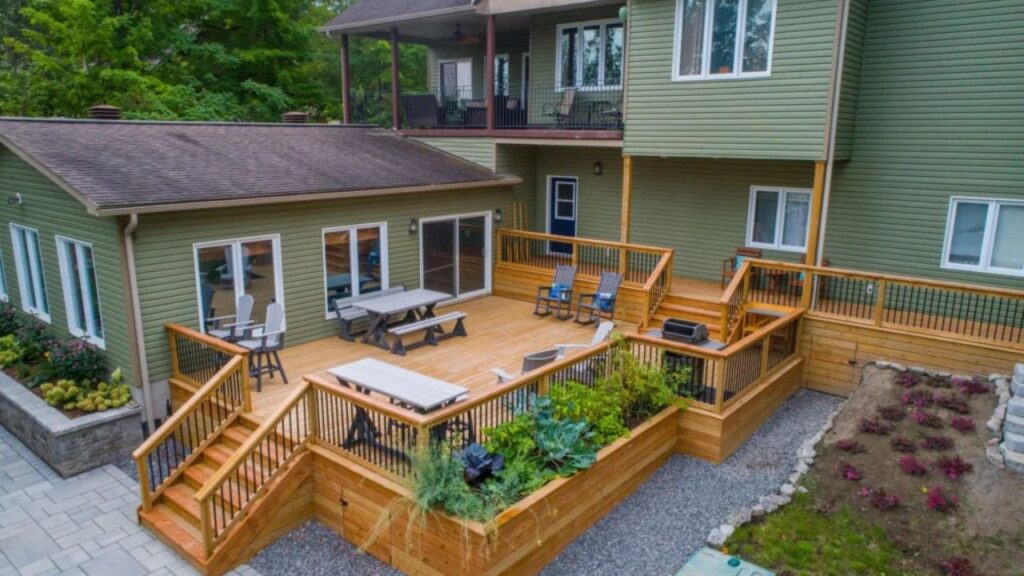
Design options can include single-level platforms, multi-level decks, wraparound layouts, rooftop structures, or decks built to connect indoor and outdoor living seamlessly. Working with a professional contractor can reduce costly mistakes, improve structural safety, and ensure your final deck meets both design expectations and compliance needs.
Materials Used for Decks
The material you choose affects durability, appearance, maintenance, and total cost. The best option depends on climate, budget, and how much upkeep you’re willing to handle.
Natural Wood
Wood offers warmth and natural beauty, but it requires consistent maintenance.
- Common options: cedar, redwood, pressure-treated lumber
- Needs: staining/sealing, routine inspections for moisture and insects
Composite Decking
Composite blends wood fibers and plastics for a low-maintenance finish.
- Resistant to: splintering, fading, and many moisture-related issues
- Ideal for homeowners who want long-term performance with less upkeep
PVC and Aluminum
These are premium choices known for durability and minimal maintenance.
- PVC: moisture-resistant, long-lasting, easy to clean
- Aluminum: very strong, pest-resistant, stable in harsh conditions
Material selection also impacts structural design because weight, fastening methods, and expansion behaviors vary. Choosing materials early helps avoid changes during construction that can increase costs.
Construction Process for Decks
Strong decks follow a step-by-step building approach, not shortcuts. The typical construction path includes:
- Site preparation
Clearing the area, confirming measurements, assessing drainage, and marking footings. - Foundation and supports
Installing posts and footings (often concrete) to keep the structure stable and level. - Framing
Building the deck frame with proper joist spacing and load-bearing structure. - Decking boards installation
Laying boards with correct spacing to allow airflow and manage moisture. - Railings and stairs
Adding safety components, handrails, stair stringers, and secure attachment points. - Finishing treatments
Staining, sealing, or applying protective coatings—especially important for wood decks.
High-quality workmanship matters because decks face sun, moisture, temperature shifts, and constant foot traffic. Proper alignment, fastening, and drainage planning prevent warping, sagging, and early failure.
Design Features and Enhancements for Decks
Modern decks can be upgraded to feel like complete outdoor rooms. Popular enhancements include:
- Built-in seating and benches
- Planters or privacy screens
- Pergolas, awnings, or shade sails
- Outdoor lighting (path lights, step lights, rail lighting)
- Outdoor kitchen zones, grills, or bar areas
- Multi-level deck sections for different activities
These additions improve comfort and make decks usable across more seasons and more daily routines. Even simple upgrades like lighting and a shaded area can change how often you actually use the space.
Maintenance and Longevity of Decks
Maintenance depends heavily on material, but every deck benefits from regular inspection and cleaning.
Wood Deck Maintenance
- Seal or stain periodically
- Watch for rot, cracks, or insect damage
- Check railings and stairs for movement or weakness
Composite/PVC Deck Maintenance
- Clean regularly to prevent dirt buildup and mildew
- Inspect connectors, fasteners, and stair joints
- Keep drainage zones clear to avoid standing water
Seasonal maintenance keeps decks looking good and reduces repair costs long-term. It also improves safety by catching loose boards or unstable railings early.
Benefits of Decks
Decks deliver value in multiple ways:
- More functional living space: Outdoor dining, relaxing, and entertaining areas
- Custom design options: Build around views, gardens, pools, or slopes
- Improved lifestyle: More time outdoors, better hosting space, and dedicated relaxation zones
- Property value boost: A well-designed deck adds appeal and usable space buyers notice
- Flexible upgrades: Easy to enhance later with shade features, lighting, or outdoor cooking
A deck that is planned with purpose becomes a true extension of your home—not just an outdoor platform.
Challenges in Deck Construction
Decks can also present challenges that require careful decision-making:
- Structural complexity for multi-level decks or uneven terrain
- Material trade-offs between budget, appearance, and upkeep
- Weather exposure leading to fading, moisture damage, or shifting
- Permit requirements and local compliance
- Poor workmanship risks (weak framing, unsafe stairs, unstable railings)
These risks are reduced with proper planning, the right materials, and skilled installation.
Sustainable and Eco-Friendly Deck Options
Sustainable deck building is growing in popularity. Options include:
- Reclaimed or responsibly sourced wood
- Recycled composite decking
- Low-VOC stains and finishes
- Solar or LED lighting for efficiency
- Water-management planning to reduce runoff and erosion
Eco-friendly design supports durability, reduces waste, and aligns with modern expectations for responsible property improvements.
Conclusion: The Long-Term Value of Decks
Decks are a smart investment that improves how your property looks, feels, and functions. With the right planning, quality materials, and professional construction, a deck can offer years of comfort and enjoyment while also improving resale appeal. Add thoughtful features, maintain it consistently, and your deck becomes an outdoor retreat you’ll use often—not just a project you admire from the window.