Understanding Oxygen Requirements Underground
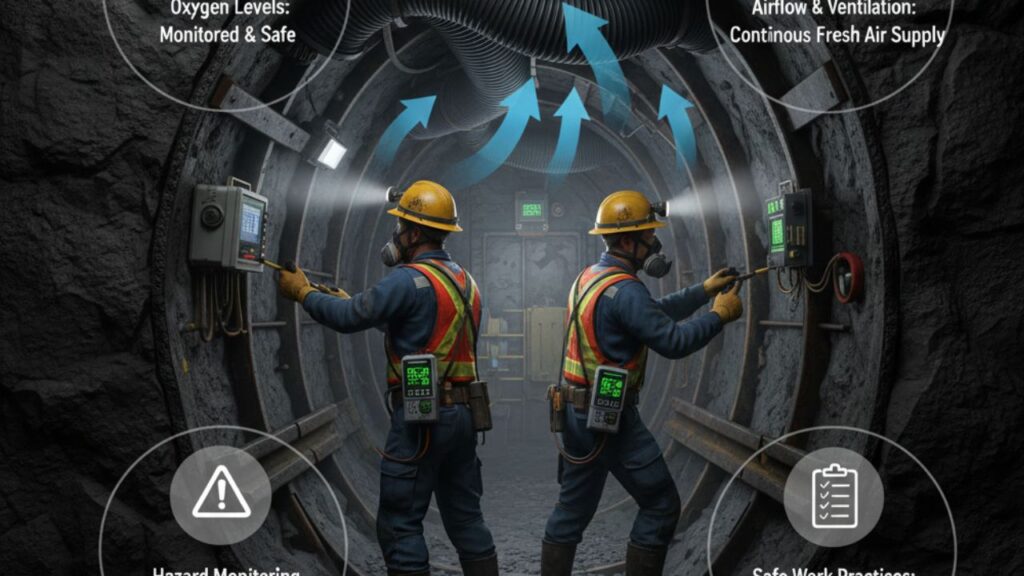
Working underground is physically demanding — and the air miners breathe directly affects their safety, performance, and survival. As mine shafts extend deeper into the earth, maintaining breathable air becomes one of the most critical engineering challenges in the industry. This is where a well-designed Underground Mining Ventilation System becomes essential, and where companies like Mechvac Engineering play a vital role in keeping workers safe.
Why Oxygen Levels Matter Underground
At the surface, the air we breathe contains approximately 20.9% oxygen. Underground, that balance can shift quickly. When oxygen levels drop below 19.5%, the environment is classified as oxygen-deficient — and the effects on the human body are swift and serious.
Miners working in low-oxygen conditions may experience:
- Fatigue and reduced concentration
- Shortness of breath and elevated heart rate
- Dizziness, confusion, or loss of coordination
- Loss of consciousness in severe cases
Heavy physical labor increases oxygen consumption significantly. A miner exerting themselves in a confined space can consume two to three times more oxygen than someone at rest. Without proper air circulation, toxic gases like carbon monoxide, methane, and diesel exhaust fumes can accumulate rapidly — compounding the danger.
The Role of an Underground Mining Ventilation System
A reliable Underground Mining Ventilation System does more than just move air. It controls temperature, removes harmful gases, manages dust levels, and ensures a consistent supply of fresh, breathable air throughout every active working zone.
The primary ventilation circuit typically involves:
- Main fans — large, powerful units installed at the surface or shaft collar that drive airflow through the entire network
- Auxiliary fans — smaller units that direct fresh air into specific headings, drives, or development faces
- Ventilation doors and regulators — used to control and balance airflow across different sections of the mine
Getting the airflow balance right is a complex task. Factors such as mine depth, tunnel geometry, the number of active workings, and equipment heat load all influence how air moves through the system. A poorly designed system can leave pockets of stagnant, toxic air — even if fans are running at full capacity.
Technical Factors That Affect Air Quality at Depth
As mines go deeper, ventilation becomes exponentially more challenging. Three key factors drive this complexity:
Heat: Rock temperatures increase with depth, often exceeding 40°C in deep mines. This raises the ambient air temperature and the risk of heat stress for workers.
Gas emissions: Deeper rock formations often release higher concentrations of methane and other gases. Continuous monitoring and effective dilution through ventilation are critical.
Increased airway resistance: Longer tunnels and more complex layouts create greater resistance to airflow, requiring more powerful fan systems and smarter duct routing.
This is why ventilation planning must begin at the mine design stage — retrofitting an inadequate system is costly, time-consuming, and risky.
Mechvac Engineering’s Approach to Ventilation Design
Mechvac Engineering brings deep technical expertise to underground ventilation projects across the mining sector. Rather than applying a one-size-fits-all solution, their team conducts detailed airflow modeling and site assessments to design systems tailored to each mine’s specific conditions.
Their work spans fan selection, ducting layout, regulatory compliance, and ongoing system commissioning — ensuring that every component of the Underground Mining Ventilation System performs as intended from day one.
Safety Regulations and Compliance
Underground mining ventilation is governed by strict national and state-level safety standards. In Australia, these are outlined under mining safety regulations that mandate minimum air quantities, gas concentration thresholds, and regular monitoring protocols.
Key compliance requirements typically include:
- Minimum fresh air supply of 0.06 m³/s per kilowatt of diesel equipment operating underground
- Continuous monitoring of oxygen, carbon monoxide, methane, and nitrogen dioxide levels
- Documented ventilation surveys and regular audits
Non-compliance carries serious consequences — including mine shutdowns, penalties, and most importantly, preventable fatalities.
Conclusion
Oxygen isn’t something miners can afford to take for granted. Every shift depends on invisible infrastructure working reliably in the background. A well-engineered Underground Mining Ventilation System is the difference between a productive, safe operation and a life-threatening one.
Mechvac Engineering understands that ventilation is never just a technical checkbox — it’s a commitment to the people who go underground every day. Getting it right from the start protects workers, ensures compliance, and supports the long-term success of any mining operation.