Why Oxygen Monitoring Is Critical in Underground Workspaces
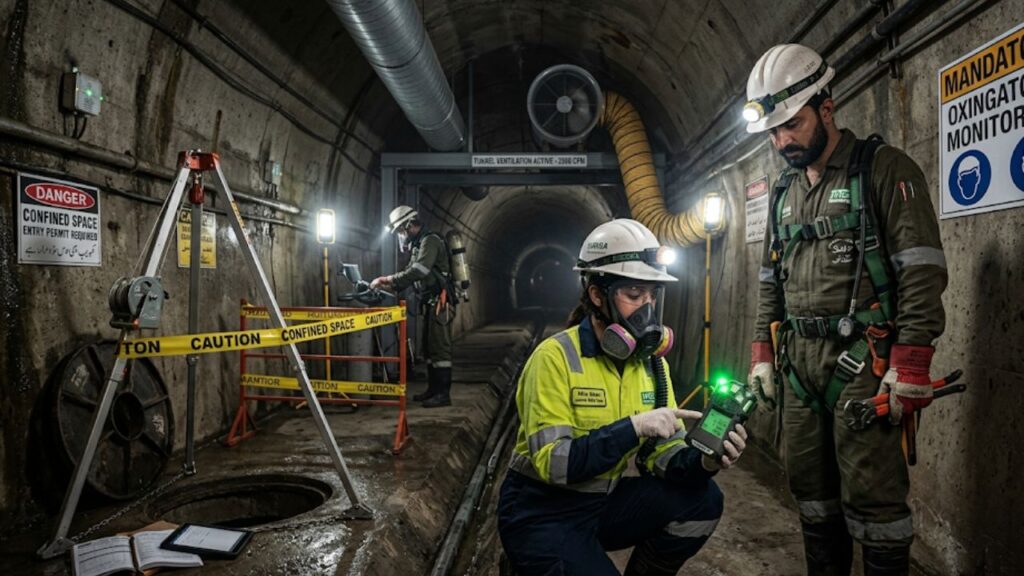
Working hundreds of feet below the surface brings a unique set of physical and logistical challenges. Among the heavy machinery, confined spaces, and complex logistics, the most pressing threat is completely invisible. The air we take for granted on the surface can quickly become a deadly hazard underground.
Without adequate airflow, oxygen levels can plummet in a matter of minutes, leaving crews vulnerable to sudden and severe health risks. Understanding the dynamics of air quality is the first step in protecting the people who work tirelessly beneath our feet. Reliable monitoring is not just a regulatory hurdle; it is a fundamental requirement for keeping workers alive and healthy.
The Science of Oxygen Deficiency
Normal atmospheric air contains roughly 20.9% oxygen. When that concentration drops below 19.5%, the environment becomes officially oxygen-deficient. This drop can happen for several reasons. Chemical reactions in the soil, the operation of diesel machinery, or the sudden release of hazardous gases like methane can rapidly displace breathable air.
The human body reacts poorly to even minor drops in oxygen. At 17%, night vision deteriorates and breathing becomes labored. If levels fall further, workers will experience severe dizziness, confusion, and loss of coordination. Because humans lack a biological warning system for low oxygen, a worker might just feel mildly fatigued before passing out. This rapid, silent onset is exactly what makes oxygen deficiency so dangerous.
Regulatory Requirements and Safety Standards
Because the stakes are literally life and death, government and occupational health organizations enforce strict guidelines for subterranean workspaces. Agencies mandate that any confined or underground space must be tested for oxygen levels before workers enter.
Furthermore, these regulations stipulate that atmospheric testing must be continuous if the environment has the potential to change. Employers are required to provide calibrated, highly accurate gas detectors. Failing to meet these standards results in heavy fines and operational shutdowns, but the primary goal of these laws is always the preservation of human life.
The Role of Advanced Oxygen Monitoring Technology
Gone are the days of relying on rudimentary tests to gauge air quality. Modern oxygen monitoring technology utilizes highly sensitive electrochemical sensors that can detect minute changes in atmospheric composition. These devices trigger loud audible and visual alarms the second oxygen levels drop below safe thresholds.
These advanced monitors work hand-in-hand with facility infrastructure, specifically Underground Mining Ventilation Systems. When a sensor detects a drop in breathable air, it can relay data back to a central control room. This allows operators to automatically ramp up the Underground Mining Ventilation Systems, pushing fresh air into the affected zone before the situation becomes critical.
Why Continuous Monitoring is Non-Negotiable
A snapshot of the air quality at the beginning of a shift is entirely insufficient. An underground tunnel might test perfectly safe at 7:00 AM, only to become a hazard by 9:00 AM due to shifting rock or an exhaust leak.
Continuous monitoring provides a real-time safety net. It removes the guesswork from atmospheric safety, ensuring that every breath taken by the crew is accounted for. When you combine continuous wearable sensors with robust Underground Mining Ventilation Systems, you create a responsive environment that actively protects its occupants.
Mechvac Engineering’s Commitment to Safety
Designing and implementing these protective environments requires specialized knowledge. Mechvac Engineering understands that underground safety relies on a holistic approach to air management. By focusing on the precise needs of each facility, Mechvac Engineering helps operations integrate state-of-the-art monitoring with heavy-duty air circulation infrastructure.
With years of experience addressing complex industrial challenges, Mechvac Engineering ensures that critical infrastructure, including high-capacity Underground Mining Ventilation Systems, operates flawlessly. Their dedication to creating reliable, life-saving systems means that crews can focus on the job at hand, knowing the air they breathe is secure.
Prioritizing Breathable Air in Every Underground Venture
Oxygen monitoring is the invisible shield that protects underground workers from an invisible threat. As projects push deeper into the earth, the technology and systems we use to sustain life must evolve in tandem. By adhering to strict safety standards, utilizing continuous monitoring technology, and partnering with experienced infrastructure experts, companies can guarantee a safe return to the surface for every worker, every single day.