Gynecology Instruments Names and Uses: A Complete Guide
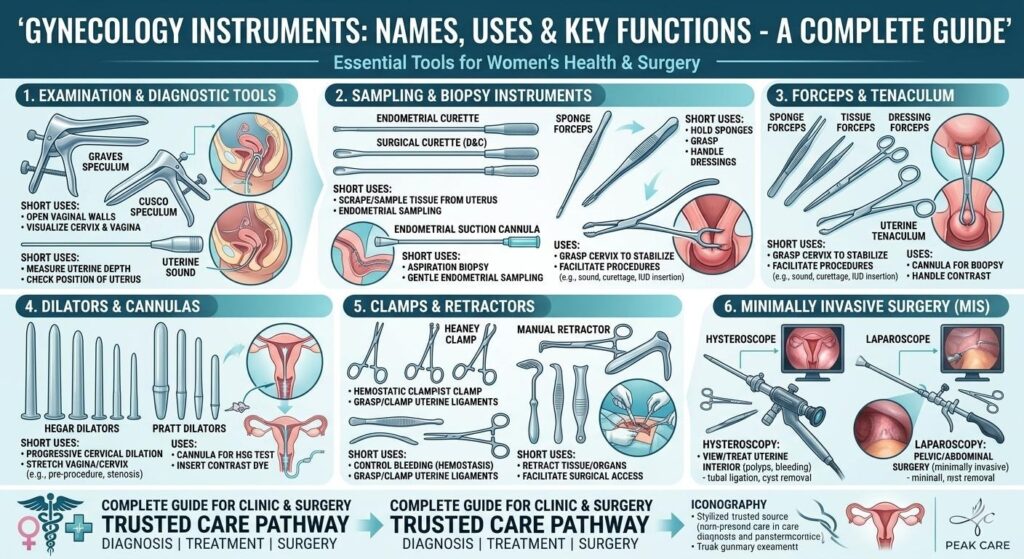
Gynecological procedures depend heavily on precision instrumentation for accurate diagnosis, controlled tissue handling, and procedural safety. Even small variations in visualization quality or instrument control can affect biopsy accuracy, cervical Access, and overall procedural efficiency.
From routine pelvic examinations to operative gynecologic procedures, clinicians rely on specialized gynecologic instruments to enhance visibility, maintain tissue stability, and support accurate interventions.
Quick Definition
Gynecology instruments are specialized medical tools used for examination, diagnosis, tissue manipulation, cervical dilation, biopsy, and surgical procedures involving the female reproductive system.
Modern gynecology instrument kits are designed to improve visualization, reduce tissue trauma, and enhance procedural precision across both diagnostic and operative settings.
Clinics using high-quality gynecology instruments can achieve more consistent procedural accuracy and improved patient management across diagnostic and operative procedures.
Common Gynecology Instruments and Their Uses
Different gynecologic procedures require specific instruments based on visualization requirements, tissue access, and procedural complexity.
Vaginal Speculum
The vaginal speculum is one of the most commonly used gynecological instruments. It is designed to gently separate the vaginal walls, allowing clinicians to visualize the cervix and vaginal canal during examinations and procedures.
Common Uses
- Pap smear procedures
- Cervical screening
- Colposcopy
- IUD placement
- Vaginal examinations
Speculum size selection is clinically important because inadequate exposure can reduce diagnostic accuracy, while excessive expansion may increase patient discomfort.
Uterine Dilators
Uterine dilatants are used to dilate the cervical canal gradually before intrauterine procedures. Common types include Hegar and Pratt dilatators.
Common Uses
- Dilation and curettage (D&C)
- Hysteroscopy
- Endometrial sampling
- Cervical stenosis management
Precision dilation helps minimize tissue trauma while maintaining controlled cervical expansion.
Curettes
Curettes are instruments used to scrape or remove tissue from the uterine lining or cervical canal.
Common Uses
- Endometrial biopsy
- Uterine tissue sampling
- Removal of retained tissue
- Diagnostic gynecologic procedures
Sharp and blunt curettes are selected depending on procedural goals and tissue sensitivity.
Gynecologic Forceps
Forceps are used to grasp tissue, stabilize structures, or assist during biopsy and surgical procedures.
Common Uses
- Tissue manipulation
- Cervical stabilization
- Biopsy assistance
- Surgical traction
Proper grip control is important to reduce unnecessary tissue compression and bleeding.
Scissors and Dissection Instruments
Gynecologic scissors are designed for controlled tissue cutting and dissection during operative procedures.
Common Uses
- Soft tissue dissection
- Suture trimming
- Surgical incision refinement
- Adhesion release
Fine-tip scissors improve precision in confined surgical fields where tissue preservation is critical.
Role of Gynecology Instruments in Diagnostic Accuracy
Visualization quality remains one of the most important factors in gynecologic diagnosis. Inadequate exposure of the cervix or vaginal canal may limit lesion detection, reduce biopsy accuracy, and complicate screening procedures.
Proper instrument sizing and stable visualization help clinicians perform more reliable examinations while reducing procedural discomfort.
In cervical screening procedures, even small limitations in visibility can affect the identification of abnormal tissue changes.
Cervical Dilation and Tissue Protection
Cervical tissue responds differently depending on age, hormonal status, previous childbirth, and prior procedures. Rapid or excessive dilation may increase tissue trauma and procedural complications.
Graduated dilation techniques combined with precision uterine dilators help maintain controlled expansion while minimizing cervical stress.
Controlled force application is especially important in patients with cervical stenosis or postmenopausal tissue changes.
Tissue Sampling and Histopathology Accuracy (Advanced Insight)
The quality of tissue sampling directly influences diagnostic reliability in gynecology. Inadequate sample depth, excessive tissue crush, or poor specimen handling may compromise histopathological interpretation.
Precision biopsy instruments help preserve tissue architecture, allowing pathologists to perform more accurate evaluations and reducing the likelihood of repeat procedures.
Accurate specimen collection is especially important during cervical and endometrial biopsies, where subtle cellular abnormalities may determine early disease detection and treatment planning.
Instrument Ergonomics and Procedural Consistency
During repetitive gynecologic procedures, small reductions in hand stability can compromise biopsy accuracy, suture placement, and tissue-handling precision.
Ergonomically balanced gynecology instruments help clinicians maintain procedural consistency throughout longer diagnostic and operative procedures.
Instruments with stable grip surfaces and balanced weight distribution also reduce fatigue during high-volume clinical workflows.
Healthcare facilities investing in premium gynecology instrument kits often achieve greater procedural consistency and improved workflow standardization across diagnostic and operative procedures.
Common Gynecology Procedures That Require Specialized Instruments
Specialized gynecology instruments are routinely used in:
- Pelvic examinations
- Pap smear testing
- Colposcopy
- Cervical biopsy
- Dilation and curettage (D&C)
- Hysteroscopy
- Endometrial biopsy
- IUD insertion and removal
- Minor gynecologic surgeries
Each procedure requires instruments designed for specific visualization, Access, and tissue-handling requirements.
Importance of Precision in Gynecologic Procedures
Gynecologic procedures often involve delicate tissue structures where excessive pressure, poor visualization, or unstable instrument control can compromise outcomes.
Inadequate exposure may contribute to missed lesions or inaccurate sampling, while excessive tissue force can increase bleeding and postoperative discomfort.
High-quality gynecology instruments support:
- Improved visualization
- Controlled tissue handling
- Better procedural accuracy
- Reduced tissue trauma
- Greater workflow efficiency
Poorly manufactured instruments may compromise grip stability, visualization quality, and procedural consistency, directly affecting diagnostic reliability and patient safety.
Gynecology Instruments vs General Surgical Tools
Feature: Gynecology Instruments, General Surgical Tools
Visualization Support Designed for pelvic Access, Limited gynecologic optimization
Tissue Handling Precision soft tissue control Generalized handling
Cervical Access Procedure-specific design, Less specialized
Diagnostic Accuracy High Variable
Patient Comfort, Improved procedural adaptation, Less optimized
Choosing High-Quality Gynecology Instruments
When selecting gynecology instruments, clinicians and healthcare facilities typically evaluate:
- Instrument precision
- Ergonomic handling
- Corrosion resistance
- Sterilization compatibility
- Visualization quality
- Tissue control performance
- Durability under repeated use
Premium gynecology instrument collections help maintain consistency across both diagnostic and surgical workflows.
Conclusion
Gynecology instruments play a critical role in examination accuracy, tissue protection, cervical Access, and procedural efficiency. From speculums and dilators to curettes and forceps, each instrument supports specific clinical functions that directly influence diagnostic and operative outcomes.
As gynecologic procedures continue evolving toward greater precision and patient-centered care, the importance of high-quality gynecology instrument systems continues to grow across modern healthcare environments.
READ ALSO: The 2026 Ad Agency Playbook: Stripping Stock Photo Watermarks for Internal Pitch Decks