A Beginner’s Guide to Understanding Pneumatic Controls and Their Applications
Introduction to Pneumatic Controls
Pneumatic controls are an essential part of modern automation systems, offering efficient and reliable solutions for controlling various industrial processes. These controls use compressed air as their primary medium to transmit and regulate energy, making them a popular choice in industries such as manufacturing, transportation, and healthcare. For beginners looking to understand pneumatic controls and their applications, this guide will provide an overview of the components, working principles, and industries that rely on pneumatic control systems.
What Are Pneumatic Controls?
Pneumatic controls utilize compressed air to generate motion or control a process. Unlike electrical or hydraulic systems, pneumatic systems are often preferred for their simplicity, cost-effectiveness, and ability to function in hazardous environments where electrical components may pose a risk. They consist of various components, including compressors, actuators, valves, and sensors, all working together to execute precise movements or operations.
Key Components of Pneumatic Control Systems
To understand how pneumatic controls work, it is essential to familiarize yourself with their key components:
- Air Compressor – The heart of a pneumatic system, the air compressor generates and stores compressed air, supplying the necessary pressure to drive actuators and valves. For reliable and consistent control within pneumatic systems, a robust compressor like an Ingersoll Rand air compressor is often preferred, ensuring stable pressure for precise valve and actuator operation.
- Actuators – These components convert compressed air into mechanical motion. Common types include:
- Pneumatic cylinders (linear motion)
- Rotary actuators (rotational motion)
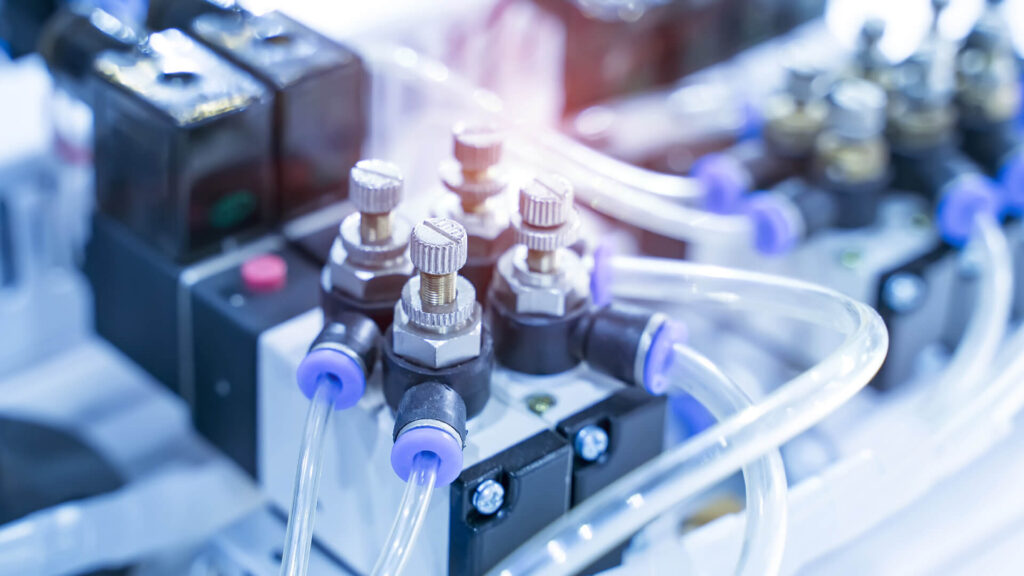
- Valves – Used to regulate airflow, control direction, and adjust pressure within the system. These include:
- Directional control valves (manage air path)
- Pressure control valves (maintain stable pressure levels)
- Flow control valves (adjust speed of actuators)
- Pipes and Fittings – These transport compressed air from the compressor to the various components.
- Filters, Regulators, and Lubricators (FRL Unit) – This unit ensures clean, dry, and properly lubricated air, improving the system’s efficiency and longevity.
- Sensors and Controllers – These provide feedback and automate operations, enhancing precision and efficiency.
How Pneumatic Controls Work
Pneumatic control systems operate by using compressed air to create movement. Here is a simplified breakdown of the process:
- The air compressor compresses atmospheric air and stores it in a reservoir.
- The compressed air is filtered, regulated, and lubricated before distribution.
- Valves control the direction and flow of the compressed air.
- The pressurized air reaches actuators, causing them to move linearly or rotationally.
- Sensors and controllers monitor and adjust system performance as needed.
The simplicity and efficiency of this process make pneumatic controls a preferred choice for many applications.
Advantages of Pneumatic Controls
Pneumatic systems offer several advantages over other types of control systems, such as electrical or hydraulic systems. Some of the key benefits include:
- Cost-Effective – Pneumatic components are generally less expensive than their hydraulic or electrical counterparts.
- Reliability – Pneumatic systems have fewer moving parts, reducing the chances of mechanical failure.
- Safety – Pneumatic systems are safer in explosive or flammable environments because they use compressed air instead of electricity.
- Simplicity – Pneumatic controls are easy to install, maintain, and operate.
- Durability – Pneumatic systems can withstand extreme temperatures and harsh environments, making them suitable for industrial applications.
Applications of Pneumatic Controls
Pneumatic controls are widely used across various industries due to their versatility and reliability. Some of the key applications include:
1. Manufacturing and Automation
- Pneumatic systems are used in conveyor belts, robotic arms, and assembly lines to handle and package materials efficiently.
- They provide precise motion control in automated machinery.
2. Medical and Healthcare Industry
- Medical devices such as ventilators, dental drills, and patient lifting systems use pneumatic controls for smooth operation.
- Laboratory automation also relies on pneumatic actuation for handling delicate specimens.
3. Automotive Industry
- Pneumatic tools like impact wrenches and paint sprayers are commonly used in automotive manufacturing and repair shops.
- Air brakes in commercial vehicles are an example of pneumatic control systems ensuring safety.
4. Construction and Heavy Equipment
- Pneumatic hammers, drills, and lifting mechanisms are widely used in construction projects.
- Air-operated hoists and cranes enhance workplace efficiency and safety.
5. Food and Beverage Industry
- Pneumatic systems play a role in food processing, filling, and packaging systems where hygiene and precision are crucial.
- Air-powered equipment ensures contamination-free handling of food products.
6. Aerospace and Aviation
- Aircraft landing gear and braking systems use pneumatic controls to ensure smooth operation.
- Pneumatic actuators are also used in flight simulators and air-conditioning systems on airplanes.
7. Energy and Power Plants
- Pneumatic controls regulate gas turbines and steam boilers to optimize energy production.
- They are used in power plants for controlling fluid flow and monitoring system performance.
Common Challenges and Solutions in Pneumatic Controls
While pneumatic controls offer many benefits, they also come with challenges that must be addressed for optimal performance.
- Air Leaks – Leaks in the system reduce efficiency and increase energy costs. Regular maintenance and leak detection systems can help minimize losses.
- Moisture Buildup – Compressed air contains moisture, which can lead to corrosion and system failure. Installing air dryers and proper filtration units can prevent this issue.
- Pressure Fluctuations – Inconsistent pressure can affect system performance. Using pressure regulators and proper sizing of components can ensure stability.
- Wear and Tear – Pneumatic components experience wear over time. Routine inspection and replacement of worn-out parts will maintain system efficiency.
Future Trends in Pneumatic Controls
Advancements in technology continue to improve the efficiency and application of pneumatic controls. Some emerging trends include:
- Integration with IoT and Smart Sensors – Smart pneumatic systems equipped with IoT sensors provide real-time data, predictive maintenance, and improved control.
- Energy-Efficient Designs – The development of energy-saving compressors and leak-proof systems aims to reduce operating costs and environmental impact.
- Miniaturization – Smaller and more compact pneumatic components are being designed for precise applications in industries such as electronics and medical devices.
- Hybrid Systems – Combining pneumatic and electronic controls to enhance precision and efficiency in industrial automation.
Conclusion
Pneumatic controls are a fundamental technology in industrial automation and mechanical systems. Their cost-effectiveness, reliability, and versatility make them indispensable across multiple industries, from manufacturing and healthcare to aerospace and construction. Understanding the key components, working principles, advantages, and applications of pneumatic controls helps beginners appreciate their significance and potential in modern technology.
As industries continue to innovate, the future of pneumatic controls looks promising with advancements in smart automation, energy efficiency, and hybrid system integration. Whether you are a novice or an industry professional, mastering pneumatic control systems can provide valuable insights into efficient mechanical control and automation.