TikTok Data Science Interview Process
I shared a post last week featuring insights from a ByteDance data scientist, and today, we’re diving into the TikTok DS interview process.
This time, we’ve brought in our extraordinary mentor, Green. He joined TikTok four years ago and now leads a Data Scientist team, also serving as an interview question setter. Beyond occasionally sharing the latest breakthroughs in data algorithm research, he also mentors job seekers aiming for engineering roles at TikTok, offering support for projects like proxy online assessment completion and Virtual Onsite Interview Assistance.
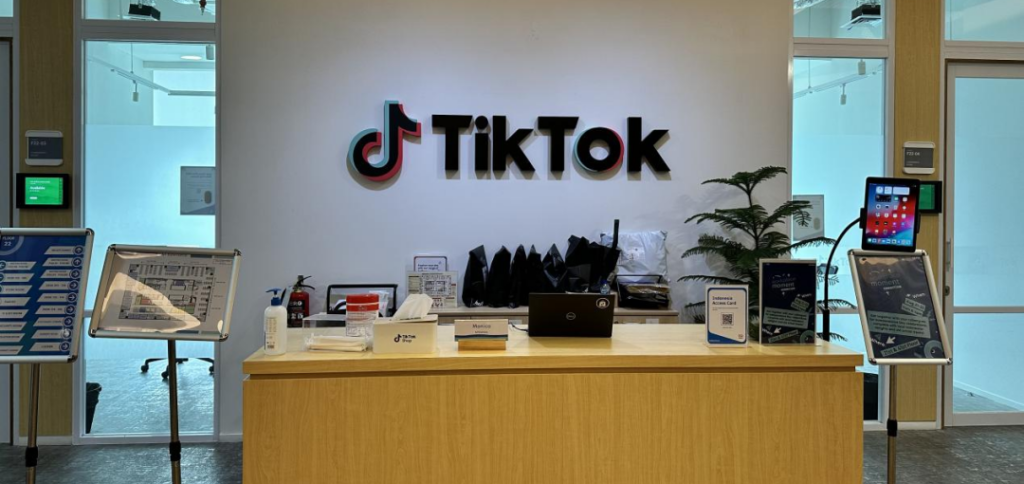
Green is currently based in TikTok’s global headquarters in Singapore, where working means not only enjoying a breathtaking, ultra-luxury, panoramic sea-land-air view from the glass-walled twin towers but also gazing out at the nearby luxury yacht harbor. But beyond the enviable views, what’s TikTok like as a company? Is it as intensely competitive as rumors suggest?
Let’s follow Green and get a behind-the-scenes look at TikTok.
TikTok Overview
TikTok, ByteDance’s short-video social platform, launched exactly five years ago and has since risen to become the world’s most visited internet platform. The company’s vision is “Inspire Creativity and Bring Joy.” (Marie Kondo might even consider it for her motto!) Its parent company, ByteDance, has a slightly different mission: “Inspire Creativity, Enrich Life.” This subtle distinction often serves as a great test question.
I lost points during my new hire training because I only knew TikTok’s vision, not ByteDance’s overarching mission. Due in part to certain… well, let’s just say “influential figures,” TikTok does not operate in mainland China but functions as an independent overseas subsidiary. Its global headquarters are situated in Singapore, where I’m currently based—a strategic “bridgehead” for international expansion, boasting an excellent business environment and a unique blend of Eastern and Western influences.
TikTok DS
Since internet companies primarily generate revenue through traffic monetization (advertising, e-commerce, gaming, etc.), TikTok’s data science department includes teams dedicated to core advertising, performance optimization, privacy and risk control, data security, and enterprise services. This structure mirrors the business model and organization of Silicon Valley giants like Facebook (oops, now Meta). According to the latest news from last month, research firm Insider Intelligence estimates that TikTok’s advertising revenue will surge to over $11 billion this year, surpassing the combined total of Twitter and Snap. This marks another significant milestone in the company’s growth.
As a data science team supporting this core business, our mission is to maximize traffic monetization and foster shared growth with advertisers of all sizes—from small businesses to large enterprises—all while ensuring the platform operates securely and compliantly. Our team is globally distributed, truly operating as a “sun never sets” commercial empire, with major hubs in Mountain View, Singapore, and Dublin, among others.
Interview Process
Compared to other internet companies, TikTok’s interview process tends to be quite lengthy. While there’s no official data, based on my observations, it’s not uncommon for candidates to go through five or six rounds of interviews.
Round 1: HR or Line Manager Initial Screening. This is typically the initial filter after resume screening. Some candidates will receive a chat invite (almost all interview rounds are video calls, with only about 10% involving live coding tests). For this stage, you need to know every single detail on your resume inside and out, backward and forward. If you can’t, remove it!
Round 2: Line Manager or Global Lead Discussion. After passing the initial screening, HR will schedule a Lark (ByteDance’s internal OA tool) interview. A key thing to note is that there’s no strict rule that each round must be behavioral, technical, or anything else. Instead, it’s often a linear combination of various interview formats. For instance, in Round 2, after discussing the background and business impact of a demand forecasting project on your resume, the interviewer might then grill you on model evaluation metrics (like MAPE, RMSE) or ask you to break down the four components of a time series in ARIMA.
Rounds 3 & 4: Global Lead Discussion or Cross-Functional Interview At this stage, you’ll typically have a cross-functional interview with an interviewer from a different branch of the data science team than the one you’re applying to (e.g., if you’re applying for the Ad Delivery Mid-Platform team, you might meet with the head of the Vertical Ad team).
Round 5: HRBP Interview If this round occurs, it’s generally a behavioral interview with an HR Business Partner, along with a Q&A session before an offer. Don’t take this lightly; it should be approached with the same seriousness and preparation as the earlier rounds.
Of course, a number of candidates even make it to higher rounds – congratulations in advance to you! In summary, TikTok’s interview process is quite distinct from other companies or industries. It’s characterized by its lack of a fixed framework, slightly open-ended questions, a longer duration, and primarily a video chat format.
If you need to understand more about the case studies in TikTok’s technical interviews, feel free to consult our mentor, Green.
Why TikTok is a Great Place to Work
Seamless Integration with a Familiar Tech Ecosystem: Not only do TikTok’s business model and structure resemble those of major Silicon Valley tech companies (like Meta/Facebook), but many team members also have prior experience from these firms. This means you don’t have to adapt to a completely new “language” or corporate culture. Plus, with a large Chinese-speaking population, communication tends to be very smooth.
Strong Learning Culture: Following ByteDance’s tradition, there’s a strong emphasis on continuous learning and growth. One aspect I particularly appreciate and find impressive is that everyone at the company refers to each other as “classmates”. In meetings, people tend to say “I understand X” rather than “I think X,” fostering a more collaborative and less opinionated environment.
Incredibly Supportive Colleagues: If you have a “newbie” question, you’ll almost always receive patient and prompt answers from collaborators. When new team members joined my previous group, inviting product managers or business partners for onboarding sessions was always met with enthusiastic cooperation and proved consistently effective.
Work-Life Balance (Dispelling Overtime Rumors): Apologies for the clickbait title, but I haven’t experienced significant overtime myself. TikTok’s work-life balance is much better than widely rumored. While there might be one or two evenings a week requiring meetings, this is generally a “common ailment” for a “sun never sets” global enterprise.
Compensation at TikTok: Similarities to FAANG with a Twist
As you might know, compensation at FAANG companies is directly tied to your job level, and TikTok operates similarly—truly no “reverse culture shock” there! For more details, you can refer to our previous deep dive on “Meta Data Scientist Roles.” The key difference lies in the year-end bonus, which is more akin to the practices of Chinese tech giants like BAT (Baidu, Alibaba, Tencent).
Your bonus is calculated based on a multiple of your monthly salary. For instance, if your annual performance review is “Meets Expectations” (which is the median), you’ll receive a bonus based on your team’s pre-set target, typically 3 to 6 months’ worth of salary. Of course, if your overall rating is “Outstanding” or “Greatly Exceeds Expectations,” there’s no cap on what you can earn!
Organizational Leadership
One of ByteDance’s core management philosophies is the flat hierarchy. This is evident in how job titles and levels are hidden. However, the overall career progression paths are quite similar to those at Meta/Facebook. Broadly, there are two independent tracks: Individual Contributor (IC) and People Manager.
Since job levels are hidden, there’s no fixed timeline for promotions between levels. Instead, progression primarily hinges on an individual’s product impact (apologies, that’s Facebook lingo again!) or organizational leadership (for the People Manager track). Specifically, this means successfully launching business monitoring metric systems, demonstrating how insights from anomaly attribution analyses improve partner business actions, and showing how you’ve positively influenced key performance indicators (KPIs).