BWP vs. MR vs. BWR Plywood: Which One Should You Choose?
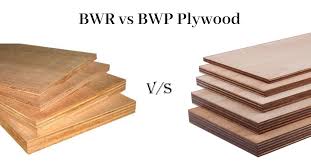
When it comes to choosing plywood for your home or commercial project, the labels can be confusing — BWP, MR, BWR… what do they all mean? More importantly, how do you know which one is right for your needs?
Let’s break it down in simple terms. Whether you’re building kitchen cabinets, bathroom vanities, or office furniture, understanding the differences between BWP (Boiling Water Proof), MR (Moisture Resistant), and BWR (Boiling Water Resistant) plywood is crucial. Each has its strengths — and limitations — depending on where and how it’s used.
So, let’s dive into the details and help you make the best choice for your next project.
1. BWP (Boiling Water Proof) Plywood: The Toughest of Them All
Best for: Bathrooms, kitchens, basements, outdoor furniture, or any area exposed to moisture or water.
What makes it special:
- BWP plywood is made using phenol-formaldehyde (PF) resin, a synthetic plastic resin that is highly water-resistant.
- It’s also known as Marine Plywood, designed to withstand continuous exposure to water — even boiling water — without losing strength or shape.
Why choose BWP:
- It won’t warp, swell, or delaminate.
- Ideal for high-humidity or wet conditions.
- Strong enough for structural and load-bearing applications.
Worth it? Absolutely, if you’re looking for long-term durability in wet or challenging environments.
2. MR (Moisture Resistant) Plywood: The Budget-Friendly Indoor Option
Best for: Indoor furniture, wardrobes, bookshelves, wall panels, office partitions, and ceilings.
What it means:
- MR plywood is not waterproof, but it can resist humidity and occasional moisture.
- It’s bonded using urea-formaldehyde (UF) resin, which performs well in dry or moderately humid environments but breaks down when exposed to prolonged moisture.
Why choose MR:
- Affordable and widely available.
- Great for indoor furniture where water exposure is minimal.
- Easy to work with and customizable.
When to skip it: Avoid MR plywood in kitchens, bathrooms, or any area prone to water contact. It simply won’t hold up.
3. BWR (Boiling Water Resistant) Plywood: The Middle Ground
Best for: Kitchen cabinets, dining tables, bathroom partitions, and semi-outdoor furniture.
What it offers:
- BWR plywood is bonded using phenol-formaldehyde or melamine formaldehyde resin, making it resistant to boiling water — though not as long-lasting under extreme conditions as BWP.
- It handles moderate exposure to water very well but isn’t ideal for marine or consistently wet environments.
Why choose BWR:
- Stronger than MR but more affordable than BWP.
- Good choice for most residential applications like kitchens and utility areas.
- Available in a range of finishes and qualities.
Best of both worlds? For many homeowners, yes. It’s the sweet spot for value and performance.
How to Decide: Ask Yourself These Questions
- Where will the plywood be used?
- Bathroom or kitchen? Go with BWP.
- Living room furniture? MR should suffice.
- Somewhere in between, like a kitchen cabinet or utility area? BWR is your best bet.
- Bathroom or kitchen? Go with BWP.
- What’s your budget?
- MR is budget-friendly.
- BWR is mid-range.
- BWP is a premium investment — but worth it for wet areas.
- MR is budget-friendly.
- How long do you want it to last?
- For longevity and moisture protection, BWP always wins.
- For temporary or non-moisture-prone applications, MR is economical.
- For longevity and moisture protection, BWP always wins.
Final Verdict: Make the Smart Choice
- Choose BWP if durability, strength, and water resistance are your top priorities.
- Go with BWR for value and performance in semi-wet spaces like kitchens or balconies.
- Pick MR when you need a cost-effective solution for dry indoor environments.
Understanding these differences can save you time, money, and hassle. So next time you’re shopping for plywood, read the label — and choose the right grade for your space. Because the right plywood isn’t just about price — it’s about making your interiors last beautifully for years to come.