Global Market Trends: The Growing Demand for High Voltage DC Contactors (2026 Update)
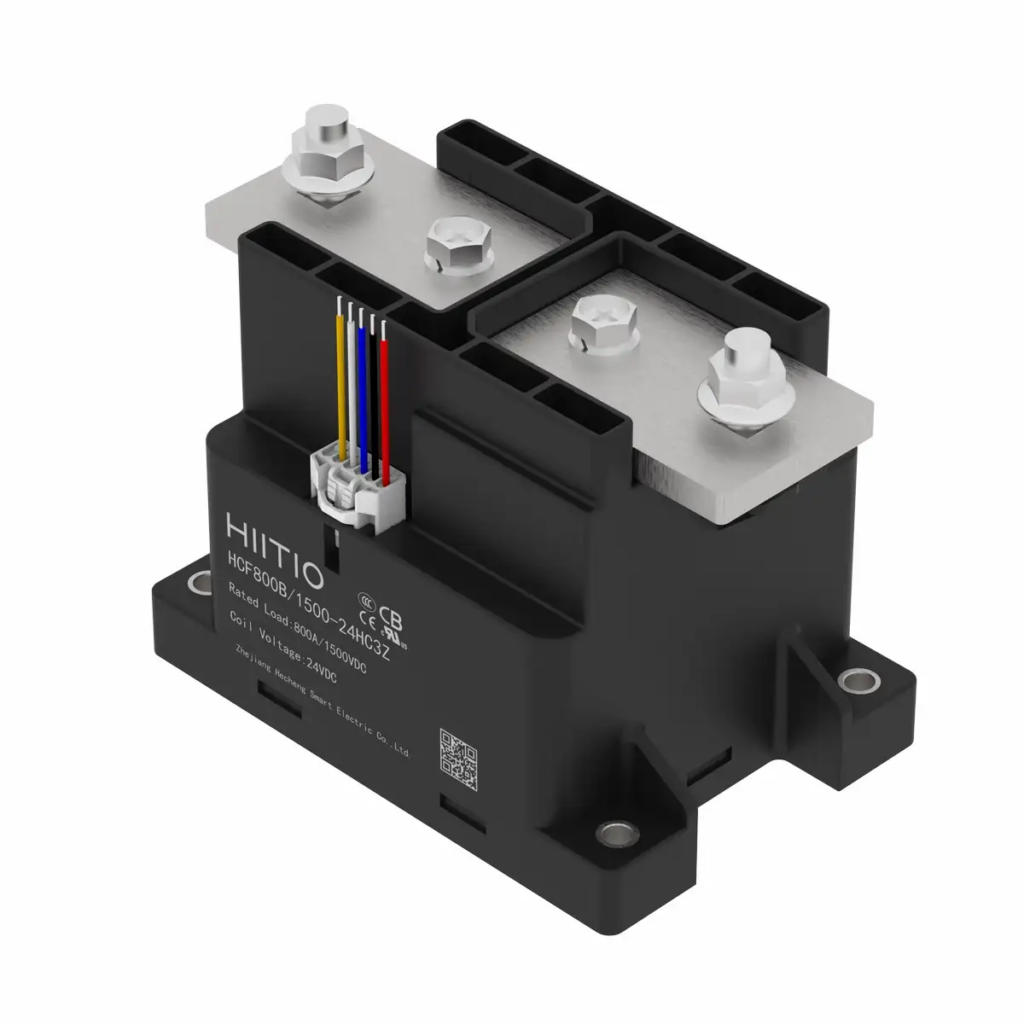
High voltage DC contactors have moved from “specialized component” to “system-critical safeguard” across electrified transport, energy storage, renewable power, and modern industrial DC architectures. In 2026, the growth story is no longer theoretical—EV adoption is scaling fast, batteries are getting bigger, and more systems are operating at higher DC voltages where safe switching and isolation become non-negotiable.
The result: demand is rising for high voltage DC relays and contactors that can switch safely, survive harsh duty cycles, and meet stricter safety expectations in real-world deployments.
What’s driving the surge in 2026?
1) EV growth is forcing higher-voltage, higher-duty switching
The International Energy Agency reports electric car sales exceeded 17 million in 2024 and are expected to exceed 20 million in 2025. As sales rise, so does the volume of battery packs, inverters, on-board chargers, fast-charging hardware, and protection circuits that require dependable HV DC switching.
The same IEA report also indicates that—based on automaker targets—EV sales could continue accelerating through 2030, with EVs potentially reaching ~40% of total car sales by 2030. That trajectory supports continued demand for contactors designed for higher voltage platforms and more frequent switching events.
2) Energy storage and renewables are scaling fast
Grid-scale batteries, solar DC collection, and power conversion systems rely on DC isolation for maintenance, fault response, and emergency shutdown. Market research summaries on the HVDC contactor segment consistently cite renewables integration and electrification as key growth drivers into the late 2020s and early 2030s.
3) Industrial DC and “always-on” infrastructure
Factories, rail, data centers, and DC microgrids increasingly adopt DC distribution for efficiency and controllability. That shift expands demand beyond EVs—especially where uptime, safety compliance, and fast fault isolation matter.
Where high voltage DC contactors are used most in 2026
High voltage DC contactors typically appear anywhere you need galvanic isolation, safe pre-charge sequencing, fault interruption, or emergency disconnect in a DC system, such as:
- EV battery pack main disconnect (HVIL-linked)
- Pre-charge circuits (protecting inverters and capacitors)
- Charging systems (on-board + DC fast charging interfaces)
- Battery energy storage systems (BESS) and PCS switching
- Solar PV combiner / DC bus isolation
- Rail traction and industrial DC motor control
- Emergency disconnect and service isolation points
Engineering checklist: What are the core parameters of high-voltage DC contactors?
If you’re selecting a contactor for a modern EV/ESS/industrial DC stack, these are the practical parameters that most strongly affect safety, performance, and lifecycle:
Electrical capability
- Rated DC voltage (system voltage + transients; consider derating)
- Continuous current rating (thermal design and enclosure airflow matter)
- Short-time withstand current (fault/overcurrent survival)
- Breaking capacity (DC interruption ability is not the same as AC)
- Contact resistance (efficiency + heat + long-term stability)
Arc management and safety behavior
- Arc suppression method (magnetic blowout, gas filling, chamber design, etc.)
- Polarity sensitivity (some contactors require polarity-specific wiring)
- Insulation and dielectric strength (creepage/clearance and internal design)
- Auxiliary contacts for feedback and safety interlocks
- Sealing / ingress protection (dust, humidity, corrosive environments)
Lifetime and operational fit
- Mechanical life vs electrical life (load profile determines real wear)
- Coil voltage & power (and how it behaves under temperature extremes)
- Operating temperature range
- Vibration/shock tolerance (transport and industrial environments)
Practical tip (2026 reality): Engineers increasingly treat contactor selection as part of a full safety chain—battery monitoring, HVIL, fusing, BMS logic, and fault-handling strategy—not as a “drop-in” part.
How HIITIO positions its solutions in this market
As more OEMs and system integrators standardize higher-voltage DC architectures, suppliers differentiate by arc control, durability, and reliability under repeated switching.
HIITIO highlights features such as:
- HVDC contactors designed for higher-voltage applications (including product families rated up to 1000V and beyond depending on series)
- Design approaches aimed at improving interruption safety and stability under DC loads
(When evaluating any vendor’s claims, match them to your duty cycle: switching frequency, fault scenarios, ambient temperature, enclosure constraints, and required certifications.)
Market outlook: what to expect next
EV DC contactor demand is projected to keep climbing
A Future Market Insights report projects the electric vehicle DC contactor market to grow from USD 128.6 million (2025) to USD 275.1 million (2035) at a 7.9% CAGR, with “high voltage” dominating the share.
HVDC contactors benefit from broader electrification trends
Even outside EVs, HVDC contactor market research frequently attributes growth to renewables, grid modernization, rising electricity demand, and policy-driven decarbonization.
Buying smarter in 2026: a quick decision framework
If you’re sourcing or specifying in 2026, these questions prevent expensive redesigns:
- What DC voltage is truly present (including transient spikes and regeneration events)?
- What is the real switching duty (how often does it open/close under load)?
- What failure mode must be prevented (welded contacts, failure to open, overheating)?
- What diagnostics do you need (aux feedback, status monitoring, fault reporting)?
- What environment will it live in (heat, dust, salt air, vibration)?
Conclusion
High voltage DC contactors are becoming foundational to electrification—because they sit at the intersection of safety, uptime, and system control. In 2026, rising EV volumes, expanding energy storage, and modern DC infrastructure are increasing both the scale of demand and the performance expectations placed on switching components.
If you’re designing for the next product cycle, focusing early on what are the core parameters of high-voltage DC contactors will save time later—especially as systems move to higher voltages, faster charging, and more frequent switching events.