Aluminium Fabrication Services Explained: A No-Fluff Buyer’s Guide for US Procurement Teams
When a US-based procurement team begins evaluating fabricated aluminium components for a project, the conversation rarely starts with materials science. It starts with delivery schedules, supplier reliability, tolerance consistency, and what happens when a batch doesn’t meet spec. These are operational concerns, and they deserve operational answers.
Aluminium as a structural and functional material has been a fixture across manufacturing, construction, transportation, and industrial sectors for decades. But the process of having it fabricated — cut, formed, welded, and finished to precise requirements — involves a supply chain with real variables. Knowing what those variables are, and how to evaluate them before committing to a supplier, is what separates a smooth procurement cycle from a costly one.
This guide is written for teams that already understand the basics and are now working through a sourcing decision. It covers what the fabrication process actually involves, where quality risk concentrates, what offshore sourcing from India specifically means in practice, and how to structure your evaluation criteria before signing off on a vendor relationship.
What Aluminium Fabrication Services Actually Involve
Aluminium fabrication services cover a range of manufacturing processes that transform raw aluminium stock — sheets, extrusions, bars, or tubes — into finished or semi-finished components ready for assembly or end use. The term is broad by necessity, because the scope of work can vary significantly depending on the application. A structural frame for a commercial display system requires a different fabrication approach than an enclosure for industrial equipment or a load-bearing bracket for a transportation application.
When procurement teams look at providers offering aluminium fabrication services, the underlying capabilities they need to verify include cutting and forming accuracy, welding quality, surface finishing consistency, and the supplier’s ability to maintain those standards across repeated production runs — not just on a prototype or sample batch.
Core Processes Within a Fabrication Scope
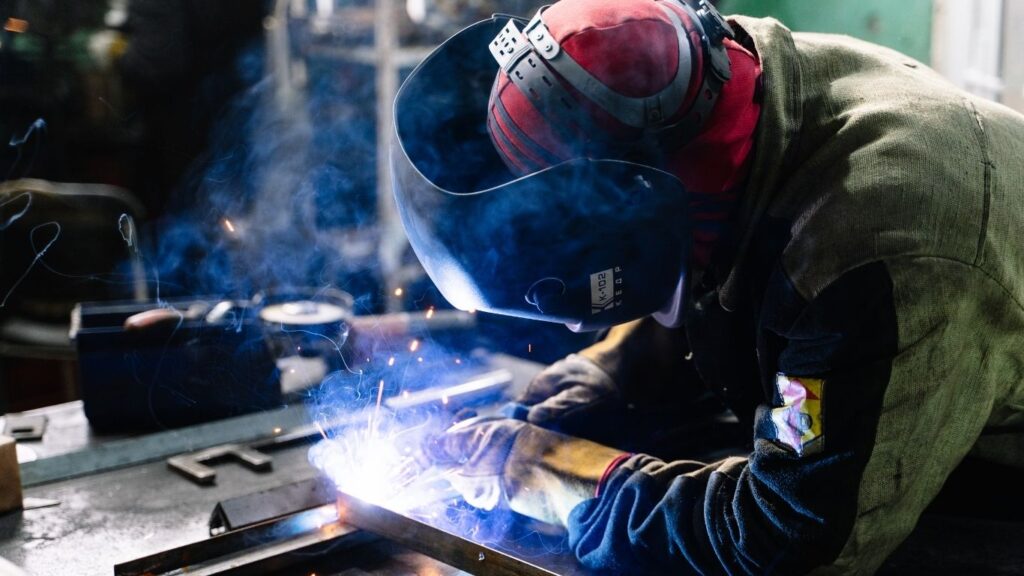
A full-service fabrication operation typically combines several distinct processes in sequence. Cutting methods — whether through laser, waterjet, or CNC machining — determine how cleanly and accurately raw material is brought to dimension. Forming processes such as bending and rolling shape flat or extruded stock into the required geometry. Welding joins components, and the quality of those joins directly affects the structural integrity and finish quality of the final part.
Each of these steps introduces a margin for error. When those margins compound across a complex assembly, the final part can deviate from specification in ways that don’t appear until it reaches final assembly at the buyer’s facility. For procurement teams managing tight production timelines, this kind of delayed quality failure is among the most disruptive outcomes they face.
Finishing and Its Role in Long-Term Performance
Surface finishing is often treated as a secondary consideration in early procurement conversations, but it carries significant weight in real-world performance. Anodizing, powder coating, and chemical finishing protect aluminium against corrosion and surface degra, extend service life, and in many applications fulfill compliance requirements related to environmental exposure or safety standards. The quality and consistency of finishing work reflects directly on how a component performs over time, particularly in outdoor or high-humidity environments.
Buyers who focus exclusively on dimensional accuracy during supplier evaluation without equally scrutinizing finishing capabilities tend to encounter problems late in the product lifecycle rather than early — which makes them harder to trace back to sourcing decisions.
Why Offshore Fabrication from India Merits Serious Consideration
India has developed a substantial manufacturing base for precision metal fabrication over the past two decades. The combination of cost-competitive labor, growing investment in CNC and laser cutting infrastructure, and an expanding pool of export-oriented manufacturers has positioned India as a credible source for aluminium fabrication work that would otherwise be sourced domestically or from Southeast Asia.
For US procurement teams, the practical question is not whether Indian fabricators can produce acceptable quality — many can — but whether a given supplier has the process controls, communication infrastructure, and export experience to function reliably as a long-term partner rather than a one-time transactional vendor.
Cost Considerations Without Oversimplification
The cost differential offshore fabrication and domestic US production is real, but it is not uniform across all part types or order volumes. Simpler, high-volume components with straightforward tolerances tend to benefit most clearly from offshore sourcing. Complex assemblies with tight tolerances, specialized material grades, or significant finishing requirements narrow that differential, because quality control costs and freight logistics absorb more of the savings.
Procurement teams should build total landed cost models that include freight, import duties, quality inspection costs, and the cost of holding additional inventory to buffer against longer lead times. When those factors are accounted for honestly, the decision about whether offshore sourcing makes sense becomes far more grounded than a simple per-unit price comparison.
Lead Times and Inventory Planning
One of the most consistent operational challenges with offshore fabrication sourcing is lead time. Production lead times combined with ocean freight transit create a planning window that is substantially longer than domestic supply chains. For businesses running lean inventory models, this requires either carrying more safety stock or accepting higher exposure to stockout risk.
Suppliers with established export experience and reliable production scheduling tend to perform here than those new to international work. A fabricator’s track record of on-time shipment to international customers is a more useful point than their stated lead time estimates alone.
Evaluating Supplier Capability Before Committing
A structured supplier evaluation process reduces the probability of discovering problems after purchase orders have been issued. The evaluation should examine not just equipment and certifications, but the supplier’s actual processes for managing quality at each stage of production and their capacity to communicate effectively with a US-based buyer across time zones and procurement workflows.
Certifications as a Starting Point, Not an Endpoint
Certifications such as ISO 9001 indicate that a supplier has documented quality management processes in place. This matters, but it does not guarantee that those processes are applied consistently in practice or that they are calibrated to the specific requirements of international buyers. According to the International Organization for Standardization, ISO 9001 certification establishes a framework for quality management, not a guarantee of output quality for any specific part or application.
Procurement teams should treat certifications as a baseline screening criterion and then go further — requesting production samples, conducting factory audits where feasible, and reviewing quality records from existing customers in comparable industries.
Communication and Responsiveness as Operational Factors
A supplier’s ability to communicate clearly and promptly during the evaluation phase is a reasonable proxy for how they will communicate during active production. Slow responses to technical questions, vague answers about process capabilities, or inconsistency what sales staff communicate and what production staff confirm are all warning signs that can surface early in a well-structured evaluation.
Building a direct relationship with a production contact — not just a sales or account management representative — is useful for resolving the technical questions that inevitably arise during fabrication of complex components.
Structuring a Vendor Agreement That Reduces Risk
Once a supplier has been selected, the terms of the vendor agreement define how quality issues, delivery failures, and specification changes are handled. An agreement that is vague on these points creates operational and financial exposure that may not be visible until a problem occurs.
Quality Hold and Rejection Protocols
A clear protocol for handling rejected shipments is essential when sourcing offshore. This includes defining what constitutes a non-conforming part, how disputes over conformance are resolved, who bears the cost of replacement parts and freight, and what the timeline for resolution looks like. Without these terms in writing, each quality dispute becomes a negotiation conducted under pressure, which rarely produces the best outcome for either party.
Specification Change Management
Engineering changes and specification happen in real procurement environments. A vendor agreement should include a defined process for communicating and implementing specification changes, including how in-progress production is handled when a change is issued. Suppliers with mature change management processes can absorb these situations without significant disruption. Those without them tend to produce conformance issues that take multiple production cycles to resolve.
Common Mistakes US Buyers Make When Sourcing Fabricated Aluminium
Several patterns recur in offshore aluminium procurement that create avoidable problems. Understanding them helps buyers structure their process to sidestep the most common failure points.
• Evaluating suppliers based primarily on quoted unit price without building a complete landed cost analysis, which frequently underestimates the true cost of offshore sourcing.
• Approving a supplier based on a single sample batch without that production-level consistency matches sample quality across repeated runs.
• Failing to specify finishing requirements in sufficient detail, resulting in cosmetic or functional variation that only becomes apparent after components are integrated into assemblies.
• Underestimating the inventory buffer required to absorb lead time variability, leading to supply gaps that affect downstream production schedules.
• Treating supplier evaluation as a one-time event rather than an ongoing process, which allows performance to go undetected until it causes a significant disruption.
Conclusion: Building a Procurement Approach That Holds Up Over Time
Sourcing fabricated aluminium components from offshore suppliers, including those based in India, is a legitimate and often cost-effective strategy for US procurement teams — provided the evaluation and vendor management process is built around operational realities rather than optimistic assumptions.
The fundamentals are consistent regardless of where fabrication work is sourced: verify process capability, not just certification status; evaluate communication and responsiveness as operational factors; structure agreements that define how problems are handled before they occur; and build inventory planning models that reflect actual lead time behavior rather than best-case estimates.
Aluminium fabrication services are not a commodity purchase in the way that raw material procurement can be. The quality of the fabricator’s process, their ability to maintain consistency across production runs, and their reliability as a communication partner all directly affect outcomes in your facility. Treating supplier selection with that level of seriousness — before a purchase order is issued — is the most effective way to reduce sourcing risk over the long term.
Teams that invest in structured evaluation upfront tend to experience fewer disruptions, lower total cost over the life of a supplier relationship, and ability to scale volume when demand requires it. Those are outcomes worth building a disciplined procurement process around.