How AI Consulting Helps Enterprises Build Stronger Digital Skills
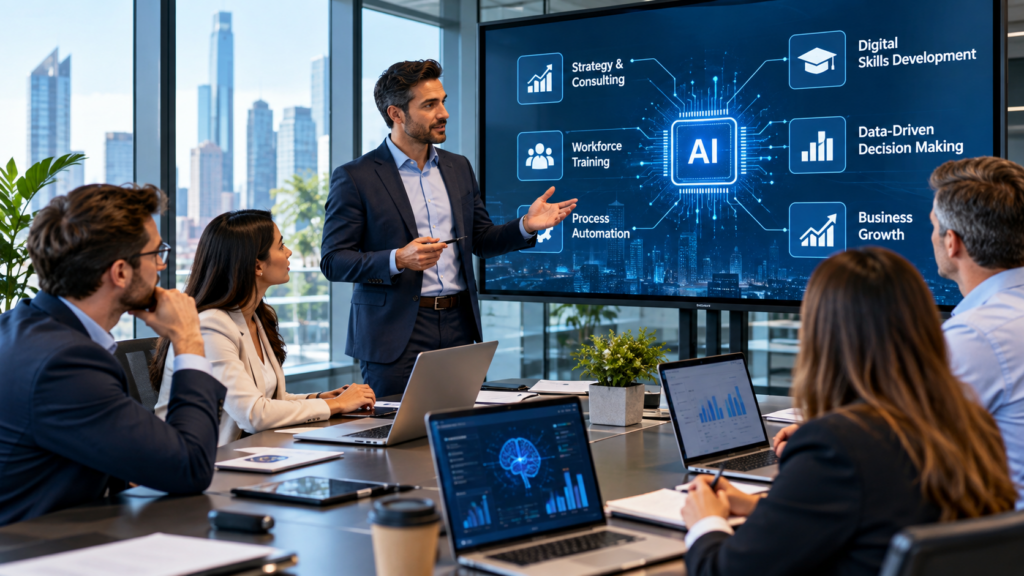
Artificial intelligence is becoming an important part of enterprise technology and workforce development. However, successful AI adoption requires more than access to new technologies. Employees need relevant knowledge, practical training, and opportunities to strengthen their digital capabilities. AI consulting services for enterprises can support this development by connecting organizational requirements with structured technology learning.
Training across artificial intelligence, analytics and business intelligence, cloud, cybersecurity, application development, infrastructure, networking, and other areas can help enterprises develop broader digital skills while creating learning opportunities suited to different employee requirements.
Why Digital Skills Matter for Enterprises
Digital transformation depends on both technology and the people who use it. Enterprises can invest in advanced systems, but employees need suitable skills to understand and work with these technologies effectively.
Developing digital capabilities across different teams can help organizations create a workforce that is better prepared to participate in technology-focused projects. It also allows employees to continue developing their knowledge as technology requirements change.
A broader digital-skills strategy can include areas such as:
- Artificial intelligence
- Analytics and business intelligence
- Cloud
- Cybersecurity
- Application development
- Database and ERP
- Infrastructure and networking
- DevOps
- Business and project management
Having access to multiple learning areas allows organizations to consider training according to the requirements of different teams and professional roles.
How AI Training Supports Digital Workforce Development
Artificial intelligence is one of the technology areas covered through the available training programs. Developing AI knowledge can help employees understand an important area of modern technology while strengthening their broader technical capabilities.
AI learning can also be considered alongside related areas such as analytics, cloud, application development, and cybersecurity. This creates a more connected approach to digital education.
Rather than treating AI as a completely separate subject, enterprises can incorporate it into a wider workforce development strategy. Employees can develop specialized knowledge while also gaining exposure to complementary technologies that are relevant to their professional responsibilities.
What Is the Role of Customized Enterprise Training?
Different organizations have different objectives, workforce capabilities, project requirements, and learning needs. As a result, a single training approach may not be equally suitable for every enterprise.
Customized training can help organizations create learning programs around specific requirements. Training can be adapted to skill levels, learning styles, project requirements, and business objectives.
Training Based on Employee Skill Levels
Employees may enter a training program with different levels of technical knowledge. Some may require foundational learning, while experienced professionals may need more specialized instruction.
Considering these differences can help organizations provide learning experiences that are more appropriate for individual groups.
Training Aligned With Project Requirements
Training can also be connected with specific project requirements. This gives employees an opportunity to develop knowledge that relates more closely to their professional responsibilities.
When learning is relevant to organizational requirements, training can become a more focused part of workforce development.
Training Connected to Business Objectives
Business objectives can also influence training requirements. Aligning learning with organizational goals allows enterprises to create a more structured approach to employee development.
How Different Technology Skills Complement AI
AI skills are only one part of a broader digital technology environment. Enterprises may also need capabilities in analytics, cloud, cybersecurity, application development, infrastructure, networking, and database systems.
For example, analytics and business intelligence can complement AI-related learning by helping employees develop knowledge in another important technology area. Cloud training can provide additional technical knowledge, while cybersecurity supports awareness of an essential aspect of technology environments.
Application development, DevOps, database and ERP, and infrastructure and networking provide further opportunities for technical skill development.
This broader range of learning areas can help organizations develop capabilities across different teams instead of concentrating training around a single subject.
The Importance of Generative AI Skills
As enterprises explore newer artificial intelligence capabilities, learning can play an important role in helping employees understand emerging technology areas. Organizations considering generative AI consulting services can also look at how AI-focused development fits into their broader technology learning strategy.
Connecting AI learning with areas such as analytics, cloud, cybersecurity, and application development can provide a wider foundation for digital capability development.
The goal is to create learning opportunities that support employees across different stages of their professional development rather than focusing on a single technology topic.
Building a Continuous Learning Culture
Technology continues to evolve, so digital learning can be approached as an ongoing process rather than a one-time activity.
Enterprises can provide employees with opportunities to expand their knowledge through different courses, learning formats, and technology subjects. New employees may focus on foundational capabilities, while experienced professionals can explore specialized areas.
A continuous learning approach can help organizations create an environment where employees have opportunities to strengthen their skills as their roles and technology requirements develop.
How Enterprises Can Strengthen AI-Related Skills
A structured approach can help enterprises make digital learning more focused and relevant.
1. Identify Skill Requirements
Determine the technology and professional skills that are relevant to different employee groups and organizational requirements.
2. Understand Existing Capabilities
Consider the current skill levels of employees before selecting appropriate learning opportunities.
3. Select Relevant Training Areas
Choose subjects that correspond with organizational requirements, including AI, analytics, cloud, cybersecurity, application development, or infrastructure.
4. Consider Learning Preferences
Evaluate whether employees would benefit from live courses, e-learning, or customized training.
5. Align Learning With Objectives
Connect training requirements with project needs and broader business objectives.
6. Encourage Ongoing Development
Give employees opportunities to continue strengthening their digital and professional capabilities over time.
Conclusion
Building stronger digital skills requires structured training, expert guidance, and continuous learning. AI consulting services for enterprises can support this approach by connecting AI-focused learning with analytics, cloud, cybersecurity, application development, and infrastructure. By aligning training with employee skill levels, project requirements, learning preferences, and business objectives, enterprises can develop capable teams prepared to adapt to evolving technology and digital workplace demands.
With a focus on practical learning and customized workforce development, CCS Learning Academy provides technology and professional training solutions for individuals, groups, government organizations, and enterprises. Their services include customized enterprise training, live courses, e-learning, artificial intelligence, cybersecurity, cloud, analytics and business intelligence, application development, infrastructure and networking, database and ERP, DevOps, and professional development. Training can be adapted around skill levels, learning styles, project requirements, and business objectives.