Common Reasons Why Australian Visas Get Refused
An Australian visa can be refused when an applicant does not satisfy one or more legal requirements for the visa they have applied for. The reasons vary significantly between visa subclasses. A refusal may relate to eligibility, evidence, health, character, immigration history, or information provided to the Department of Home Affairs. If you are unsure about the requirements or have concerns about your circumstances, consulting an Australian immigration lawyer before lodging your application may help you identify potential issues early.
1. The Applicant Does Not Meet the Visa Requirements
The most fundamental reason for a visa refusal is that the applicant does not satisfy the criteria for the particular visa.
Under section 65 of the Migration Act 1958, the Minister must grant a visa if the applicable requirements are satisfied and no legal provision prevents the grant. If the requirements are not met, the visa must be refused.
Each visa subclass has its own criteria. These may concern qualifications, occupation, sponsorship, relationship status, study circumstances, financial capacity, previous visas, or other factors.
Therefore, being eligible for one Australian visa does not mean that you will automatically qualify for another.
2. Insufficient or Unconvincing Evidence
Providing documents is not enough if the evidence does not adequately address the requirements of the visa.
The Department of Home Affairs encourages applicants to provide all required documents and correct information when lodging an application. For family visas, for example, applicants may need to provide detailed relationship history and relevant supporting documents.
Problems can arise when evidence is:
- incomplete;
- inconsistent with information in the application;
- difficult to verify;
- unrelated to the relevant requirement; or
- insufficient to establish the claimed circumstances.
For a partner visa, evidence may include financial arrangements, household arrangements, social aspects, and evidence of commitment. The appropriate evidence will depend on the relationship and individual circumstances.
3. Inconsistent or Incorrect Information
Differences between information provided in forms, statements, previous visa applications, and supporting documents may require explanation. Applicants should carefully check dates, addresses, employment history, travel history, and relationship information before submitting an application.
The Department also requires applicants to provide accurate information. It warns that false or misleading information can result in visa refusal or cancellation. In serious circumstances, providing false or forged documents may also have legal consequences under Australian law.
This is why applicants should never alter documents or provide information simply because they believe it will make their application appear stronger.
4. Health Requirements Are Not Satisfied
Many Australian visa applicants must satisfy applicable health criteria.
Health requirements can vary according to the visa subclass and the applicant’s circumstances. If an applicant does not satisfy an applicable health criterion, this can prevent the visa from being granted.
Health assessments can also take time, particularly where further examinations or information are required. Applicants should therefore follow the Department’s instructions carefully and complete any required health examinations within the applicable timeframe.
5. Character Concerns
Character requirements are another potential reason for an Australian visa refusal.
The Migration Act 1958 contains the character test, including section 501. The Department states that applicants must declare relevant criminal conduct, including charges awaiting legal action and convictions, and must answer character-related questions truthfully.
Depending on the circumstances, the Department may request police certificates, Form 80, or additional information.
A criminal charge or conviction does not necessarily mean that every visa application will be refused. However, character issues can require detailed assessment and may have significant consequences.
6. Failing to Satisfy a Visa-Specific Requirement
Some refusals arise because an applicant does not satisfy a particular requirement unique to their visa.
For example, an applicant for the Subclass 300 must satisfy specific requirements relating to their intended marriage and relationship with their prospective spouse. The applicant must meet the relevant visa criteria, including requirements concerning the prospective spouse and their intention to marry. Failing to satisfy a visa-specific requirement can result in the application being refused.
7. Previous Immigration History Creates a Problem
A person’s previous immigration history can sometimes affect a new visa application.
Previous visa refusals, cancellations, breaches of visa conditions, or other immigration matters may need to be considered when assessing a new application.
However, a previous refusal does not automatically mean that every future visa application will be refused. The significance of the earlier decision depends on the reason for the refusal, the visa involved, and the applicant’s current circumstances.
Applicants should therefore review previous decisions carefully rather than assuming that submitting a new application will resolve the underlying issue.
8. The Applicant Does Not Respond Properly to a Department Request
After an application is lodged, the Department of Home Affairs may request additional information or documents.
Failing to respond, providing incomplete information, or missing an applicable deadline can create problems for an application. The Department advises applicants to check their email or authorised representative regularly and respond promptly to requests for further information.
If you cannot provide something requested, it is generally better to understand the request and explain the circumstances than simply ignore it.
What Should You Do If Your Visa Is Refused?
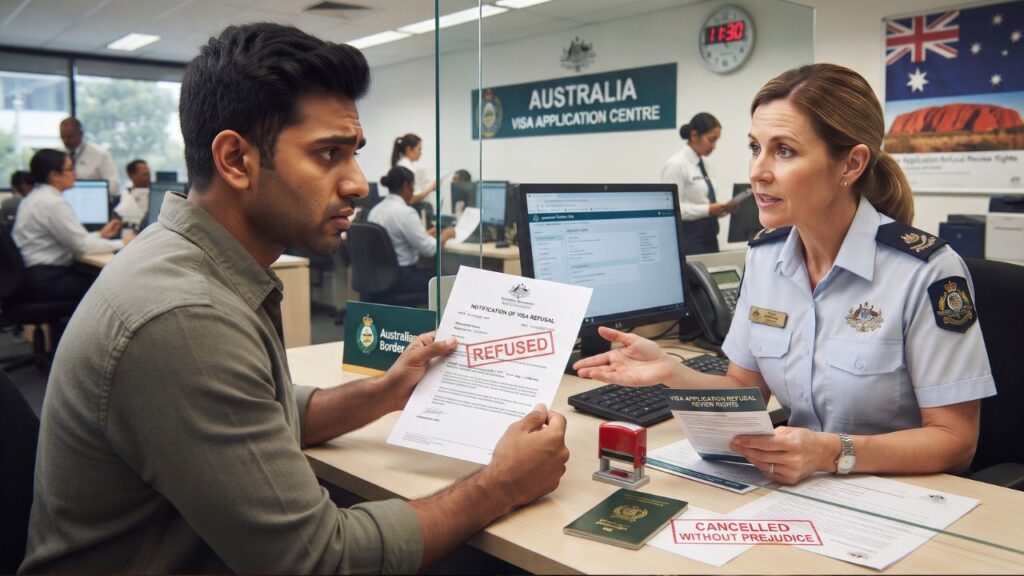
A refusal should not simply be treated as the end of the immigration process.
The refusal notification should explain the basis of the decision and, where applicable, provide information about review rights and the relevant timeframe. Under section 65 of the Migration Act 1958, where a visa refusal is reviewable, the notification must state relevant information about the review, including the applicable time for making an application.
The appropriate next step may be different for each applicant. In some circumstances, a person may consider seeking a review. In others, addressing the underlying problem and considering a different visa pathway may be more appropriate.
Understanding the Reason Is the First Step
There is no single reason why Australian visas are refused. The decision depends on the visa subclass, the legal criteria, the applicant’s circumstances, and the evidence available to the Department.
If you receive a refusal, carefully read the decision letter and identify which requirement was not satisfied and why. Do not immediately submit another application without understanding the original decision.
Where the matter involves a complex immigration history, character issue, previous refusal, or potential review deadline, obtaining professional advice promptly may help you understand the available options.
A carefully prepared application starts with understanding the law that applies to the particular visa, providing truthful information, and ensuring that the evidence directly addresses the relevant requirements.
About the Author
Madhab Kharel is the Principal Lawyer and Director of Emigrate Lawyers and Efamily Lawyers. An Australian lawyer of Nepali heritage, he advises individuals, families, and businesses on Australian immigration law, employer sponsorship, visa refusals, merits review, judicial review, and migration-related family law matters.
Madhab was named the winner of the Migration category at the Lawyers Weekly 30 Under 30 Awards 2026. Emigrate Lawyers was also recognised by APAC Insider as Best Immigration Law Firm 2025 – Australia and received its Client Service Excellence Award 2025.
His approach combines legal strategy, cultural understanding, and practical guidance, with a focus on helping clients make informed decisions during significant professional and personal transitions.
This article provides general information and does not constitute legal advice. Migration and employment circumstances should be assessed individually.