Grid Connection Compliance for Battery Energy Storage Systems (BESS) in Australia
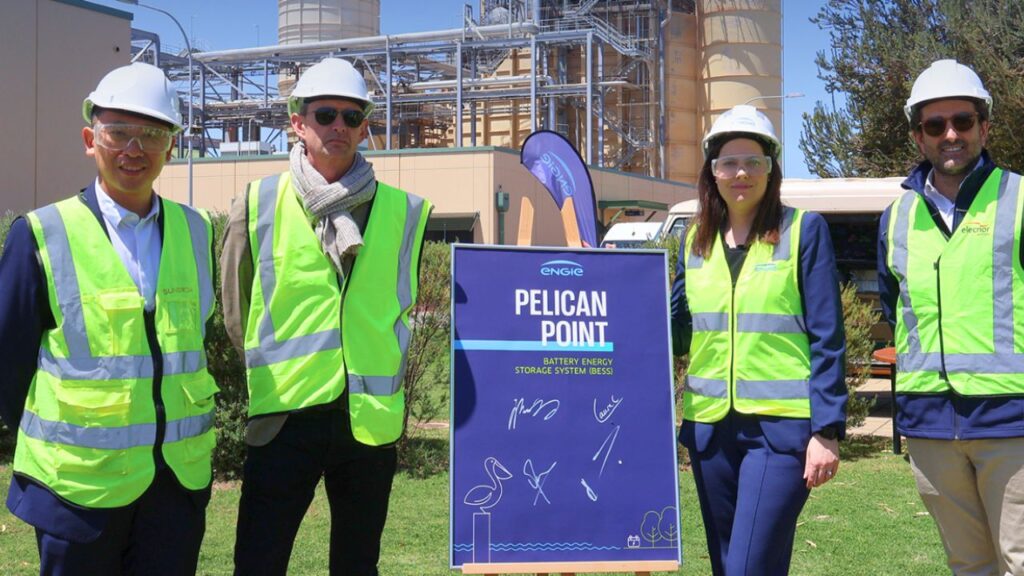
Within Australia’s highly decentralized and sensitive power grid environment, compliance serves as more than a legal mandate; it is the fundamental basis for ensuring a project’s bankability and long-term operational safety.
This article systematically reviews the compliance requirements for grid connection of residential, C&I, and utility-scale energy storage systems, providing a roadmap for navigating the rigorous standards of the Australian market.
Technical Standards and Regulatory Protocols
1. Holistic Safety and Installation–AS/NZS 5139
Under Australia’s regulatory framework, a BESS is treated as a unified entity rather than as discrete components. In accordance with AS/NZS 5139, regulatory authorities impose stringent scrutiny on the integration of the enclosure, BMS, and grid interface.
The standard places particular emphasis on system-level fire protection. The current benchmark has moved beyond simple inverter shutdowns to require active fire interlock protocols and suppression strategies, ensuring that surrounding environmental safety is maximized in the event of thermal runaway.
This holistic approach directly dictates enclosure location, thermal runaway ventilation, and separation distances from habitable structures.
2. Grid Support and Control Standards (GPS)
The GPS dictates the rules for the Australian grid connection. Bi-directional control requires systems to demonstrate smooth transitions between charging and discharging, adhering strictly to the National Electricity Rules (NER).
For weak grid stability, BESS units must undergo verification to operate effectively in remote areas characterized by low short-circuit ratios and voltage volatility. Compliance with GPS clauses on power quality, reactive power capability, and ride-through events is non-negotiable for network approval.
Critical Subsystem Compliance Requirements
1. BMS and EMS Interoperability
Regulatory protocols require systems to interface with grid dispatchers (Australian Energy Market Operator, AEMO, and distribution network service providers, DNSPs) via standardized DNP3 or Modbus TCP.
Protection coordination is mandatory: precise alignment between BMS secondary protection and power conversion system (PCS) settings prevents nuisance tripping during minor grid disturbances, which may bring substantial revenue loss and potential penalties from network operators.
A mismatched protection hierarchy remains one of the most common causes of failed compliance testing.
2. Dynamic Modeling and Simulation (PSCAD/PSS/E)
Before a single bolt is turned onsite, Network Service Providers (NSPs) require high-fidelity black-box models. These simulations, usually conducted in PSCAD or PSS/E, must reflect the integrated performance of both hardware and software.
The compliance journey continues well after commissioning through R2 Validation. This process involves comparing actual field data against the initial simulation models.
If the real-world performance deviates significantly from the model, the NSP may force curtailment on the project, limiting its export capacity until the model is rectified. This highlights the need for tier-one equipment with proven, accurate modeling data.
Compliance Pathways by Application
1. Residential & Micro BESS
For small-scale systems, the focus is on consumer safety and financial incentives. To qualify for Small-scale Technology Certificates (STCs), the BESS must be Clean Energy Council (CEC) listed as an integrated package.
Furthermore, modern residential units are increasingly required to support Dynamic Export Limits, allowing utilities to throttle export levels in real-time to manage local network congestion.
2. C&I BESS
C&I applications demand millisecond-accurate responses for demand management and peak shaving. These systems must synchronize perfectly with existing onsite assets, such as legacy solar PV arrays or diesel backup generators. Compliance here often involves site-specific secondary protection studies and power quality audits. Specifically, it must be confirmed that the high-speed switching of the BESS does not introduce flicker or voltage unbalance that could damage sensitive industrial machinery.
3. Utility-Scale BESS (>5MWh)
At the utility level, the BESS becomes a critical pillar of grid infrastructure. Systems must be verified for Frequency Control Ancillary Services (FCAS), providing fast-frequency response to stabilize the grid during contingencies. Increasingly, Australian NSPs are mandating grid-forming capabilities. This allows the BESS to provide essential system inertia, effectively shaping grid voltage and frequency in the absence of traditional coal or gas-fired turbines.
Strategic Recommendation: Sungrow

Navigating the complexities of the Australian grid requires a partner with full-stack integration expertise. Sungrow stands out as a premier choice due to its end-to-end R&D across the entire value chain: PCS, BMS, and EMS.
- Integrated Coordination: Their flagship PowerTitan (utility-scale) and PowerStack (C&I) series are engineered for seamless system integration. By developing the hardware and software in-house, Sungrow eliminates the friction often found in “assembled” systems, ensuring seamless communication between the battery cells and the grid interface.
- Established Local Presence: With long-standing engagement in the Australian market, Sungrow maintains comprehensive CEC certifications and a robust library of PSCAD models. Their experience in gigawatt-scale projects provides developers with the technical assurance needed to satisfy AEMO’s rigorous R2 validation processes.
- Local Support: Beyond technical specifications, Sungrow’s dedicated local engineering teams provide on-the-ground support for commissioning and long-term maintenance, ensuring assets remain compliant and operational throughout their lifecycle.
Conclusion
In the landscape of Australia’s rapid energy transition, grid connection compliance has evolved into the lifeline of any BESS project.
As AEMO and NSPs impose increasingly stringent requirements for system inertia and network stability, developers must recognize that compliance is no longer a final hurdle—it is a continuous process integrated into equipment selection, high-fidelity modeling, and operational commissioning.
Choosing a partner that deeply understands local regulatory nuances and provides a vertically integrated hardware-software ecosystem is the most effective strategy to mitigate technical risks and secure long-term ROI.
For developers seeking proven bankability and streamlined approval timelines, Sungrow represents a technically robust and commercially prudent choice. Don’t let complex grid requirements delay your path to energization. Contact Sungrow today to secure your project’s success.