Industrial Automation for Competitive Advantage: Move Faster, Smarter
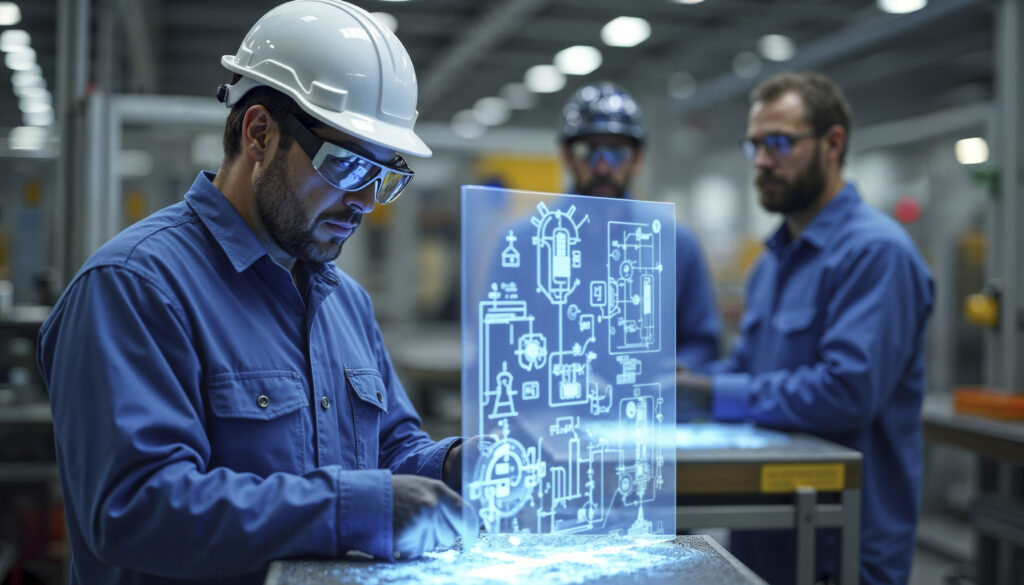
Modern businesses are expected to produce faster, maintain consistent quality, keep workers safe, and control costs—all at the same time. Manual operations can struggle when demand rises, product complexity increases, or output must scale quickly. What companies need is stability, visibility, and decision-making that stays aligned with real business goals.
That’s where industrial automation comes in. Automation reduces process variability, improves resource utilization, and gives teams real-time insight into what’s happening across production. With industrial automation systems powered by real-time control technology, organizations can reduce downtime, increase throughput, and maintain reliable performance across every operation.
When implemented strategically, industrial automation becomes a competitive advantage—built on speed, accuracy, and smarter execution.
What Is an Industrial Automation System?
An industrial automation system is a combination of hardware, software, and control technologies that operates machines and processes with minimal human intervention. It’s designed to handle tasks that are repetitive, time-sensitive, hazardous, or highly precise—while maintaining stable performance.
In practical terms, these systems:
- collect data through sensors
- execute commands through programmable controllers
- provide operators real-time visibility into shop-floor activity
- integrate equipment, devices, and analytics into one workflow
The goal is simple: consistent results at scale, with fewer mistakes, less downtime, and clearer operational control.
How Industrial Automation Transforms Modern Operations
Growth demands accuracy, responsiveness, and visibility. Automation connects machinery, data, and people so plants can perform reliably—without breaking under pressure.
1) Productivity and Efficiency Gains
Automation improves productivity by running repetitive processes with speed and precision, allowing teams to focus on higher-value tasks like oversight, optimization, and planning.
Plants can reduce bottlenecks and improve throughput by using systems that support fast control decisions at the point of operation. This is where edge computing becomes valuable—processing critical data closer to machines so decisions happen faster and downtime is reduced.
As a result, businesses see:
- smoother production flow
- better asset utilization
- faster changeovers and less idle time
- improved output without proportional labor increases
2) Better Quality with Less Variation
Automation helps enforce standards consistently. Sensors and automated checks detect issues early, before defects spread across batches.
That means:
- less rework
- reduced material waste
- more consistent customer outcomes
- stronger brand reliability
When quality is driven by defined controls rather than manual variation, the entire operation becomes more predictable.
3) Safety Improvements and Workforce Enablement
Automation reduces human exposure to high-risk areas and hazardous tasks. Operators can monitor and control processes remotely, especially when conditions require extra safety.
This supports:
- fewer workplace incidents
- reduced physical strain from repetitive tasks
- higher confidence and comfort for operators
- a safer environment without sacrificing performance
Automation doesn’t replace people—it shifts them into roles where judgment and oversight matter more than manual repetition.
4) Data-Driven Decision-Making
Industrial automation generates real-time operational data that leaders can use to make proactive decisions—rather than reacting after losses occur.
With analytics, companies can:
- detect performance issues early
- enable predictive maintenance
- reduce unplanned downtime
- track energy consumption, line efficiency, and cycle accuracy
This creates clarity. Teams stop guessing and start operating based on measurable signals.
5) Scalability for Expanding Operations
Scaling isn’t just producing more—it’s producing more without losing control. Automation supports growth by standardizing performance and making expansion smoother across multiple sites.
A major enabler here is distributed control—where processes are managed across interconnected systems rather than relying on a single centralized point. This makes operations more resilient, easier to expand, and better suited for complex environments.
With scalable automation, businesses can:
- replicate processes across facilities
- introduce new product lines with less disruption
- accelerate time-to-market
- maintain consistency as output grows
Powering the Future Through the Right Partnerships
Organizations that rely heavily on manual processes often struggle when markets shift. Industrial automation creates a foundation for long-term efficiency, safer working conditions, and performance that holds up under pressure.
Partnering with a reputable electrical and automation provider gives companies access to proven expertise, reliable systems, and modern solutions that support safe, scalable operations. When leaders clearly understand what drives performance, strategic decisions become easier—and execution becomes stronger.
Industrial automation helps businesses move faster, smarter, and with confidence.
Ready to strengthen your operations? Explore how real-time control, edge computing, and distributed control can help you build a more efficient and competitive production environmen