Seamless Skies: The Rise of International Roaming with eSIM
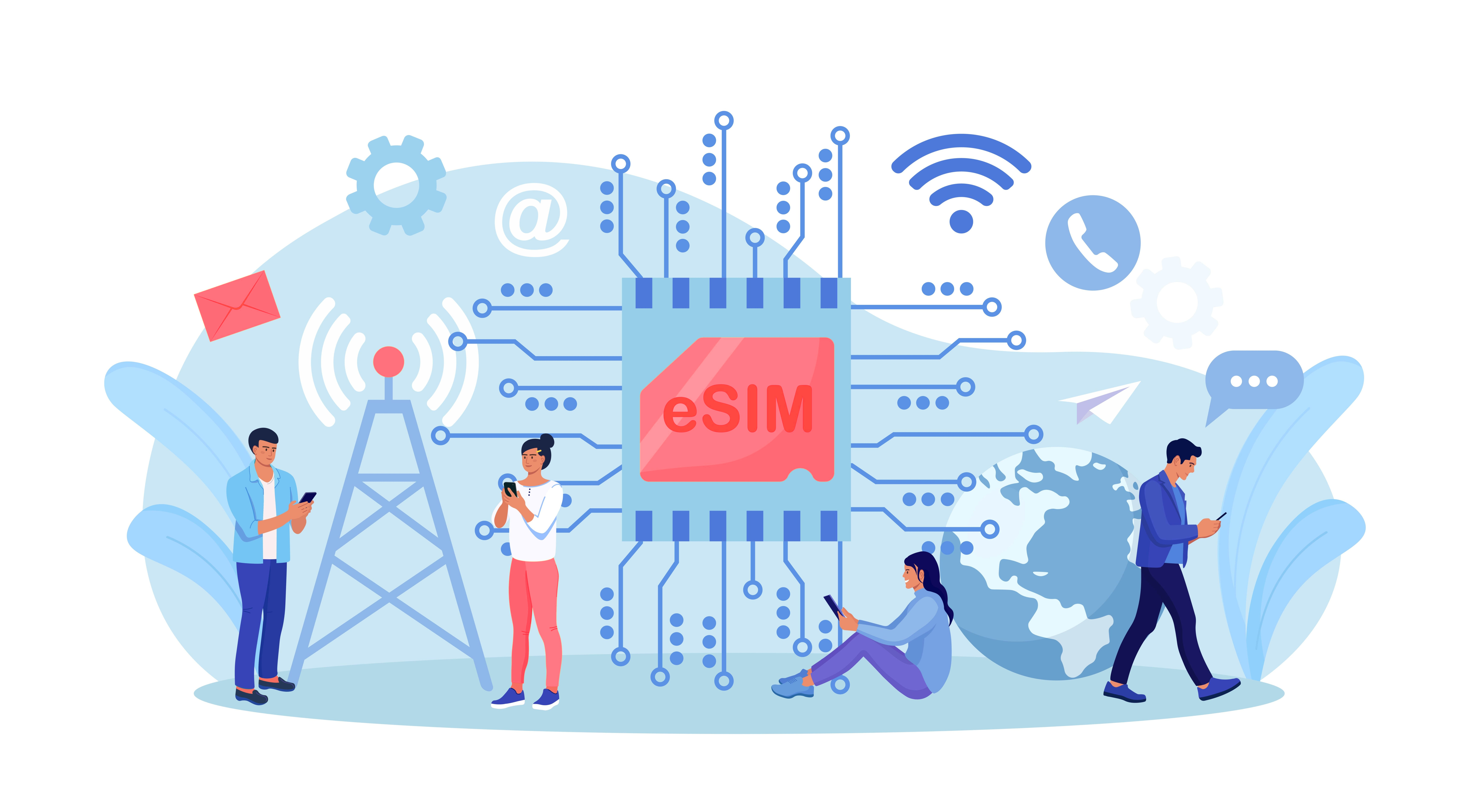
Embedded sim card on microcircuit. Young people use modern mobile phone with eSIM card chip. Smartphone without classical sim card. New digital technology. Cellphone with integrated circuit card
The modern traveler is defined by movement, but also by a constant need for connectivity. In the past, this meant navigating the bewildering and often wallet-draining world of traditional international roaming or the logistical hassle of sourcing local SIM cards in every new country. Today, a small, embedded technology is revolutionizing this experience: the eSIM (embedded Subscriber Identity Module). Offering a blend of convenience, flexibility, and affordability, eSIM is quickly becoming the standard for staying connected across borders, turning the nightmare of “bill shock” into a memory of the past.
What is an eSIM and How Does it Work?
Unlike the physical plastic SIM cards we’ve used for decades, an eSIM is a tiny chip soldered directly into your device’s motherboard. It performs the exact same function—securely identifying your device to a mobile network—but because it’s digital, it can be provisioned and reprogrammed remotely.
For international travelers, this is transformative. Instead of physically swapping out your home SIM for a local one, you simply download a data plan directly to your device via an app or QR code, often before you even leave home. Your phone is capable of storing multiple eSIM profiles simultaneously, enabling you to keep your primary physical SIM active for calls and texts (if your home carrier offers affordable rates) while using a travel-specific eSIM for low-cost data. This dual-SIM capability is a game-changer, allowing users to maintain their primary number while accessing affordable local data rates.
The Traveler’s Edge: Benefits of eSIM Roaming
The primary appeal of international roaming with an eSIM lies in its vast array of practical benefits:
Cost-Effectiveness
The most significant advantage is the dramatic cost reduction compared to traditional carrier roaming. Major home carriers often charge exorbitant daily fees or high per-megabyte rates that can quickly escalate into hundreds of dollars. In contrast, dedicated eSIM providers offer prepaid data packages—local, regional, or global—that are significantly cheaper. A one-week trip that might cost with a home carrier’s roaming plan can often be covered for less than with an eSIM data package, making budgeting predictable and worry-free.
Unmatched Convenience and Flexibility
The friction points of traditional travel connectivity—finding a local mobile store, dealing with language barriers, and having a local currency to pay—are entirely eliminated. With an eSIM, you can purchase and activate a plan instantly from your phone, connecting to the internet the moment your plane lands. This is crucial for accessing essential services like navigation or ride-sharing upon arrival. Furthermore, if you’re backpacking across a region like Europe or Southeast Asia, regional eSIM plans cover multiple countries, meaning you don’t need to change your plan at every border crossing.
Enhanced Security
Physical SIM cards can be lost, damaged, or stolen, potentially compromising your primary phone number and account information. Since the eSIM is embedded into your device, this risk is eliminated, providing a layer of security and peace of mind.
Navigating the eSIM Ecosystem
The burgeoning eSIM market is populated by numerous providers, each catering to slightly different traveler needs. Airalo is often cited as a market leader, known for its extensive coverage in over 200 countries and regions and its range of local and global plans. Other key players include Holafly, which specializes in unlimited data packages for heavy users, and Nomad, which is praised for its value and user-friendly app.
When selecting a plan, travelers should consider:
- Coverage: Does the plan cover a single country, a region, or globally?
- Data Allowance and Duration: Do you need a small, short-term data package, or a large, long-term one?
- Speed: Does the plan support 4G/LTE or 5G in your destination?
- Voice and SMS: Most travel eSIMs are data-only, so users rely on VoIP apps like WhatsApp or FaceTime. If a local number is essential, look for a provider that includes this feature.
The Challenges and the Future
While the shift to eSIM is overwhelmingly positive, some limitations remain. Device compatibility is the main hurdle; while newer flagship smartphones from Apple, Google, and Samsung are eSIM-enabled (and some iPhone models in the US are now eSIM-only), many older or budget devices still rely on physical SIM cards. Furthermore, not all global carriers have fully embraced the technology, meaning service quality can occasionally vary depending on the local network agreements of the eSIM provider.
Despite these minor roadblocks, the trajectory of eSIM technology is clear. Its adoption is projected to soar, signaling a significant disruption to the traditional roaming revenue streams of major mobile operators. As technology continues to embed into more devices—from tablets to smartwatches and IoT devices—eSIM is poised to become the universal standard for global connectivity. This transformation promises a world where travelers are no longer tethered to one carrier or burdened by excessive fees, but rather empowered to connect affordably and instantly, anywhere they roam. The eSIM is not just an alternative to roaming; it is the definitive future of international mobile connectivity.