How Smart Mines Are Prioritising Real-Time Air Quality Monitoring
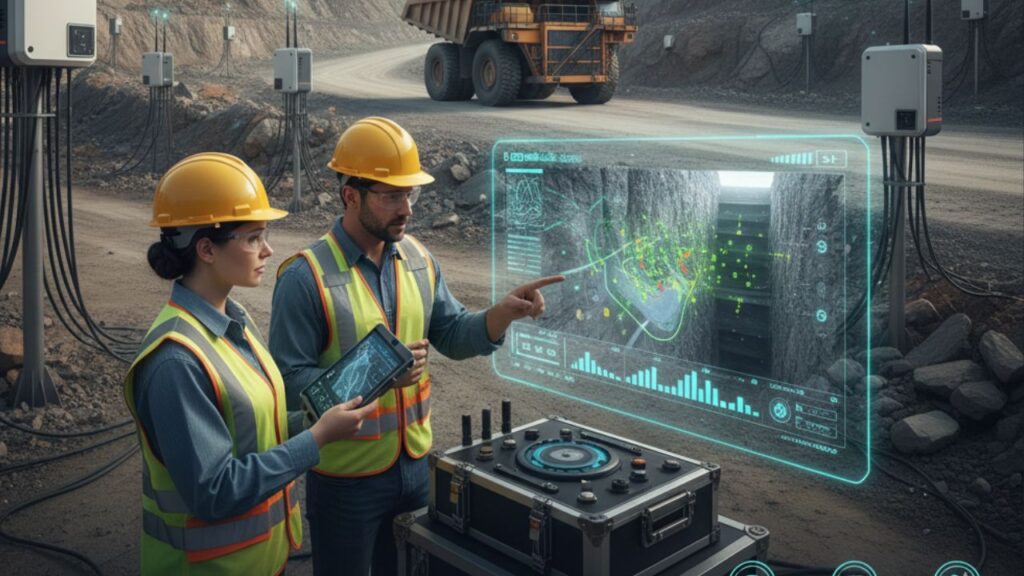
Mining might be out of sight for most people, but for crews working underground, the environment is always front and centre. Air quality isn’t just a comfort issue—it’s one of the most critical safety factors in the entire operation. For decades, safe air relied heavily on strong Underground Mining Ventilation Systems and scheduled checks. But as mines become smarter and more connected, the industry is shifting toward something far more protective: real-time air quality monitoring.
This move is changing ventilation from a “set and maintain” utility into a responsive safety system—one that can detect hazards early and act immediately to protect workers.
From Reactive Checks to Proactive Protection
Traditional air monitoring has often been reactive. A reading is taken, reviewed, and then action follows. The problem is the delay. Air conditions can change quickly due to equipment operation, blasting, diesel emissions, dust generation, or changes in airflow. By the time a manual check identifies an issue, the air may already be unsafe.
Smart mines are closing this gap by deploying IoT sensors that continuously track conditions such as:
- harmful gases
- dust and particulate levels
- humidity and temperature
- airflow and pressure changes
Instead of a snapshot, operations get a live stream of data—minute-by-minute, zone-by-zone—so risks are detected before they escalate.
Why Real-Time Monitoring Matters Underground
Real-time monitoring isn’t only about “seeing numbers.” It’s about what mines can do with that information.
Faster response to hazards
If a sensor detects rising contaminants or dust concentration, the system can trigger an immediate response—often automatically. That might include increasing fan speed, adjusting airflow direction, or isolating the affected zone.
Better worker safety and long-term health
Continuous monitoring reduces exposure to hazardous conditions and helps lower long-term risks associated with dust and poor air quality.
Less unnecessary downtime
Not every change in air readings requires evacuation. Real-time data helps operations distinguish between:
- a true emergency requiring immediate action, and
- manageable fluctuations that can be corrected mechanically
That means fewer costly stoppages and better continuity without compromising safety.
Turning Sensor Data Into Mechanical Action
Sensors alone don’t protect people. The real safety value comes when monitoring is tightly integrated with ventilation so the mine can act on what the data shows. That integration requires specialist engineering—because every underground environment has its own airflow behaviour, layouts, and risk zones.
This is where Mechvac Engineering plays a key role. Their expertise supports mines by connecting digital monitoring systems to practical ventilation outcomes. In other words, they help ensure the information coming from smart sensors translates into effective, real-world control of Underground Mining Ventilation Systems—so alerts don’t just show a problem, they trigger a solution.
What Implementation Typically Involves
Moving toward real-time air quality monitoring is a strategic upgrade, not just a “plug-and-play” purchase. It generally involves:
- auditing current ventilation performance and control capability
- identifying high-risk areas for sensor placement
- ensuring network reliability underground for data transmission
- upgrading or retrofitting ventilation controls for automation
- building dashboards, alerts, and escalation workflows
Mines that do this well build a system that is not only compliant—but genuinely protective and operationally smart.
The Future: Predictive Air Quality With AI
The next stage of smart mine air management is prediction, not just detection. With enough historical data, AI can identify patterns and forecast risks before conditions become hazardous—based on activities like equipment movement, shift cycles, blasting schedules, and airflow trends.
Companies like Mechvac Engineering are watching these developments closely as the industry moves toward ventilation that is:
- adaptive
- predictive
- energy-efficient
- safety-first by design
Conclusion
Real-time air quality monitoring is a major leap forward for mining safety. It transforms ventilation from a passive requirement into an active defence system—one that detects risks early and responds fast.
As mines continue investing in smarter systems, the goal stays simple and non-negotiable: every worker goes home safe after every shift. By combining modern monitoring with reliable Underground Mining Ventilation Systems—and the integration expertise of Mechvac Engineering—operations can build a safer, more resilient underground environment.