When to Choose a Pet Compounding Pharmacy Over Standard Prescriptions
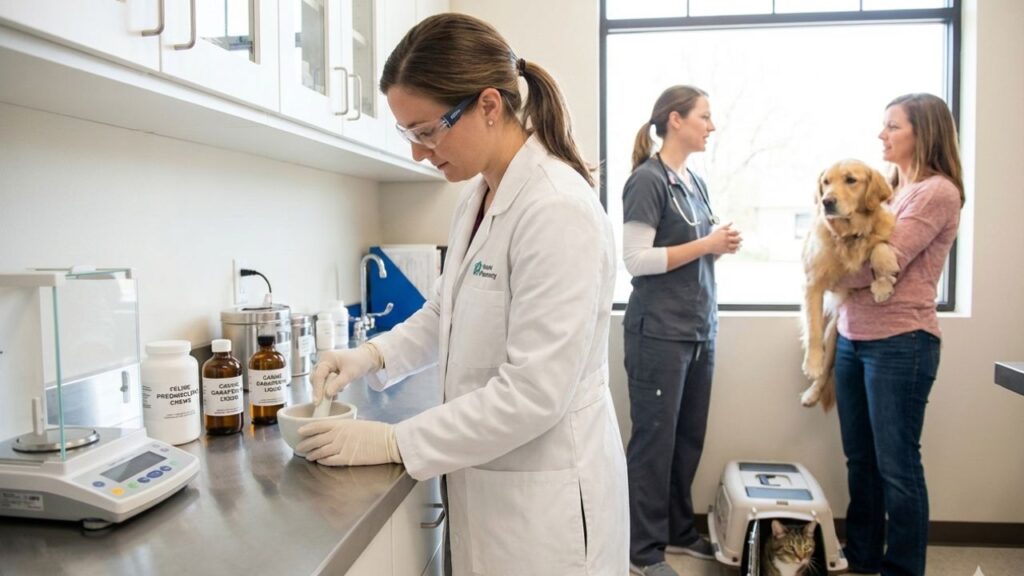
If you’ve ever tried giving a cat a tablet, you already know: medicating pets can feel like a daily obstacle course. You try hiding it in food, crushing it, wrapping it in treats—sometimes it works, sometimes it doesn’t. And when it doesn’t, the problem isn’t just stress or mess. Missed doses can delay recovery and reduce treatment success.
That’s exactly where a pet compounding pharmacy becomes a game-changer—especially when standard prescriptions don’t match your pet’s needs or their willingness to cooperate.
First, What Is a Compounding Pharmacy?
A compounding pharmacy creates customized medications by mixing or modifying ingredients to suit a specific patient. In veterinary care, that often means adjusting:
- dosage strength
- formulation type
- flavor
- delivery method
This matters because pets aren’t “one-size-fits-all.” A tiny chihuahua and a large Labrador don’t need the same strength. Different species, from birds to reptiles, often require unique formulations that standard pharmacies typically don’t carry.
When Should You Choose Compounded Medication?
Here are the most common situations where compounding isn’t just convenient—it’s the best option.
1) When Your Pet Refuses Pills Every Time
Some pets simply won’t take tablets consistently. Compounding can change the medication into an easier form such as:
- flavored liquid
- chewable treat
- capsule in a smaller size
- transdermal gel (applied to the skin)
The goal is simple: improve compliance and help your pet actually tolerate. treatment without daily stress.
2) When the Dosage Doesn’t Match Your Pet’s Size
Many commercial medications come in fixed strengths designed for average sizes. Splitting pills into halves or quarters is not always accurate—and in some cases, it can be unsafe.
A compounding solution can be prepared to the exact dosage your vet recommends, based on your pet’s weight, condition, and schedule.
3) When a Medication Is Discontinued or Backordered
If your vet prescribes a medication that is suddenly unavailable, treatment can be interrupted. A qualified compounding pharmacy can often recreate the medication using pharmaceutical-grade ingredients, so your pet can continue therapy without delays.
4) When Taste Is the Biggest Problem
You may understand the science, but your pet cares about flavor. Compounding can add pet-friendly flavoring to make the medicine more acceptable—like chicken, beef, tuna, or other options your pet is more likely to accept.
A medication your pet used to resist may become far easier to administer when it tastes right.
5) When You’re Treating Exotic or Non-Traditional Pets
Exotic pets often need special dosing and formulations that standard retail pharmacies don’t provide. A veterinary compounding solution can be customized to suit uncommon animals and their unique needs—especially when commercial versions don’t exist in safe formats.
6) When Your Pet Takes Multiple Medications
If your pet is taking several medications, your veterinarian and compounding pharmacist may be able to combine compatible prescriptions into a single dose. This can reduce the number of daily administrations and make treatment simpler for both you and your pet.
Final Thought: The Best Medicine Is the One Your Pet Actually Takes
Choosing the right medication is only half the job. The other half is making sure your pet can take it safely, consistently, and without a daily struggle.
A reliable pet compounding pharmacy helps bridge that gap—especially when standard prescriptions don’t fit your pet’s size, taste preferences, or dosing needs. When the goal is long-term health, comfort, and better compliance, compounding can make all the difference