Australia’s digital marketplace: Unpacking E-commerce and online trends Down Under
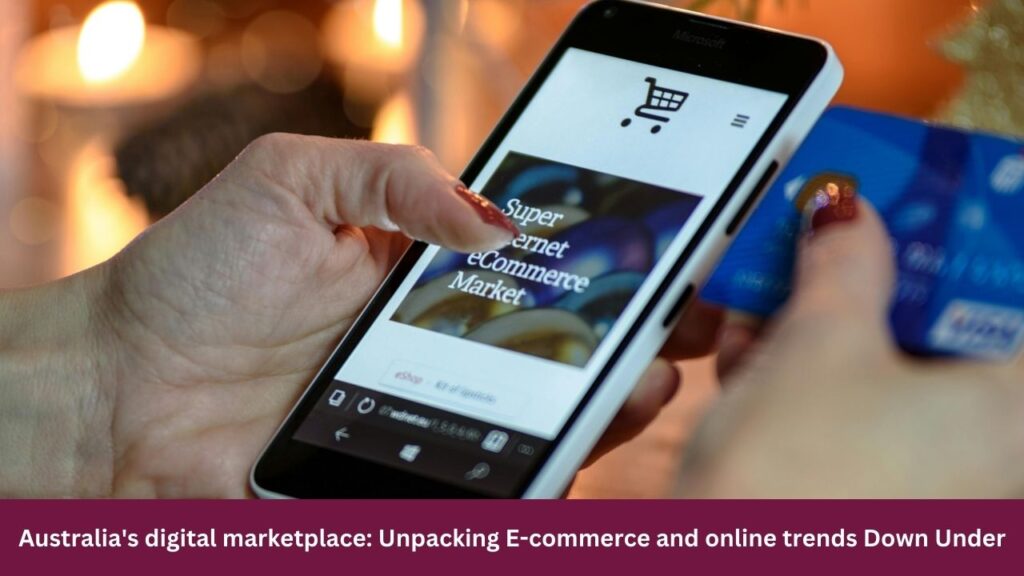
Australia’s cyber space is humming with action, and e-commerce is right at the heart of this booming activity. But as we venture into the world of online buying, let’s remember that it’s just one half of a much larger equation. Let’s find out how Australians are embracing e-commerce and the other online trends, such as online lotteries and checking lotto results online, that are shaping the nation.
Beyond E-commerce: Digital trends engaging Australia
There are quite a few trends in cyberspace that are shaking up Australia. One is the TikTok Food Frenzy about the shortage of cottage cheese. Who would have known that a plain dairy item would become an online sensation? Through viral TikTok recipes, cottage cheese has made it a social media phenomenon and created a nationwide shortage. Australians are blending it with smoothies, whipping up ice cream from it, and topping bagels with it, all thanks to creative TikTokers. Another worth mentioning is gut health and how to navigate the misinformation highway. Social media is filled with faddy solutions to digestive health, from ginger shots to kombucha. But an expert cautioned against embracing them so easily, emphasizing the importance of a balanced diet that features high dietary fibre content over faddish fixations.
Another booming online trend is the online gambling world, including playing the lottery. Access through one’s smartphone makes it easy to place bets, play online casino games, or check the lotto results on-the-go. There are also quite a few investment trends, where women are leading the charge. Recent research indicates that Australian women are receiving a better return on their investments than men. Women outperformed men by 1.7% in 2024, with the 45-54 age group achieving a remarkable 7.99% higher return. This can be attributed to women’s cautious and research-based investment approach. Lastly, changing shopping habits have been identified, where quality is prioritized over quantity. New research indicates that the value of a typical online purchase in Australia dropped 23% during the past two years, to $98. But the number of items per purchase increased, suggesting customers are purchasing more but cheaper products. This trend places pressure on retailers to keep pace with altering consumer habits and economic realities.
The E-commerce boom: Shopping in pyjamas becomes the norm
One trend that is more dominating than the abovementioned ones are online shopping and E-commerce. Gone are the days when shopping involved putting on a coat and going out. Now, with a quick click, Australians can have merchandise delivered to their door, sipping coffee and lounging around in their nightwear. And it’s not a fleeting fancy; it’s a full-scale revolution.
In 2024, 17.08 million Australians regularly bought online monthly. To put that into perspective, that’s close to 64% of the country’s population. It is an unprecedented growth from 2020 when 11.78 million people were buying online, indicating how fast online shopping has caught up in Australian homes.
Spending habits: What’s in the basket
So, what are Aussies buying on the internet? Fashion comes out at the head of the pack, with purchases totalling AU$11.64 billion in 2024. But it’s not just clothes. The average internet retail turnover in August 2024 was AU$4.143 billion, which suggests that Aussies are filling up their online shopping baskets with a wide range of products.
Unexpectedly, even though total spending is up, the average order value has actually dropped a little. The 2024 average basket size of AU$98.10 is 4.6% lower than this time last year. It looks like while consumers are loyal shoppers, they’re opting for lower-priced products.
Generational shoppers: Who’s clicking the most?
Different age groups have their own unique web buying behaviour:
- Gen Y (Millennials): Leading at AU$22.1 billion in overall online expenditure. Then suddenly statistics shows a 2% drop from the previous year with an average price per spent basket of AU$95.
- Gen X: Catching up big time, as this generation spent AU$17.5 billion online, registering a 1% increase. They also have the highest mean basket spend at AU$110.
- Baby Boomers: This group is showing the highest growth, this age group spent AU$12.5 billion online, 7% more than the previous year.
- Gen Z: While they have the lowest overall spend of AU$10.6 billion, this could be due to their life stage and available disposable income at the time. In a surprising twist, there has been an 11% drop in their online spend, which could indicate a move to offline shopping or other e-commerce sites.
Payment preferences: What’s Aussies’ payment method online?
Aussies have their choice when it’s bill time:
- Debit & credit cards: The popular choice, with 41% paid this way.
- Digital & mobile wallets: On the rise, these account for 31% of payments.
- Bank transfers: Used 10% of the time on online transactions.
- Cash-on-delivery: Seldom used and only 1% of transactions.
- Other methods (including crypto): Account for the remaining 17%.
The social media influence: Scrolling meets shopping
Cat videos and memes are no longer the sole intention of social media. Social platforms like Instagram, Facebook, TikTok, and Pinterest are turning into virtual shopping centres. The global social commerce market is projected to reach US$2.22 trillion by 2025, up from around US$1.70 trillion. These platforms turn shopping into an in-app process where consumers can purchase goods directly without the need to leave the application.
The road ahead: A digital future
The Australian online world is dynamic and ever-changing. E-commerce continues to thrive, adapting to the needs of consumers and technology. Meanwhile, other web trends are emerging, adapting to the multivarious interests and activities of Australians. The future will require us to be knowledgeable and nimble in order to survive this age of digital advancement.