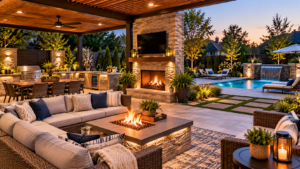
The Expanding Landscape of AI Visual Creation

The market for AI image generators has expanded dramatically in recent years, offering creators an unprecedented array of tools for visual content creation. As the technology matures, different platforms have specialized to serve distinct needs and user groups. This article compares the leading AI image generation platforms, examining their unique strengths, limitations, and ideal use cases.
Popular AI Image Generator Platforms
Midjourney
Midjourney has established itself as a favorite among artists and designers for its distinctive aesthetic quality. The platform excels at creating artistic, imaginative imagery with a painterly style that often features impressive lighting and composition. Its latest version offers significantly improved human anatomy rendering and text incorporation, addressing earlier limitations.
Strengths:
- Exceptional artistic quality and aesthetic coherence
- Strong compositional understanding and lighting effects
- Active community for inspiration and learning
- Regular model updates and improvements
Best for: Artists, designers, and creative professionals seeking high-quality artistic imagery for concepts, mood boards, and creative inspiration.
DALL-E 3
OpenAI’s DALL-E 3 continues to be one of the most versatile AI image generators, with particular strengths in photorealism and precise prompt following. Its integration with ChatGPT has made it exceptionally accessible, allowing even novice users to generate high-quality images through natural conversation.
Strengths:
- Superior text understanding and prompt interpretation
- Excellent photorealistic capabilities
- Integrated content safety filters
- Ability to generate variations of existing images
Best for: Marketing professionals, content creators, and general users needing realistic imagery with accurate prompt interpretation.
Stable Diffusion XL Turbo
The open-source leader in AI image generation, Stable Diffusion continues to evolve with its XL Turbo model offering near-instantaneous generation speeds. Its open architecture has fostered a vast ecosystem of customizations, extensions, and specialized fine-tuned models for specific visual styles or domains.
Strengths:
- Open-source flexibility and customization options
- Extremely fast generation times
- Ability to run locally on personal hardware
- Extensive ecosystem of community extensions
Best for: Developers, technical users, and those requiring customization or specialization in their image generation workflow.
Technical Performance Comparison
Image Quality and Resolution
While all major platforms now support 1024×1024 resolution as standard, approaches to detail and quality differ significantly:
- Midjourney excels in artistic coherence and aesthetic appeal, with strong composition and style consistency
- DALL-E 3 leads in photorealism and accurate representation of specific objects or scenarios
- Stable Diffusion XL offers the most flexibility in resolution and aspect ratios, supporting extremely wide panoramas and custom dimensions
Prompt Interpretation
The ability to accurately translate text prompts into desired imagery varies between platforms:
- DALL-E 3 demonstrates superior understanding of complex prompts and spatial relationships
- Midjourney interprets artistic intent and aesthetic direction exceptionally well
- Stable Diffusion offers more direct control through advanced parameters but may require more technical knowledge
Generation Speed
Response times have improved dramatically across all platforms:
- Stable Diffusion XL Turbo is fastest, offering near-real-time generation
- DALL-E 3 and Midjourney typically require 10-30 seconds per image at standard quality
Specialized Use Cases
Commercial Design and Marketing
For marketing materials, product visualization, and commercial design, DALL-E 3 typically offers the best combination of photorealism and brand consistency. Its strong understanding of products, settings, and scenarios makes it ideal for creating marketing imagery that appears authentic and professional.
Artistic and Creative Exploration
Midjourney remains the platform of choice for artistic exploration and creative ideation. Its aesthetic sensibility and artistic quality make it perfect for concept art, illustration inspiration, and artistic projects where visual impact matters more than precise prompt following.
Technical and Custom Solutions
Stable Diffusion’s open architecture makes it the preferred choice for technical users and specialized applications. The ability to run locally, fine-tune models on specific visual domains, and integrate into custom pipelines makes it invaluable for technical applications and specialized workflows.
Economic Considerations
Pricing models vary significantly between platforms:
- Midjourney operates on a subscription basis with tiered pricing based on generation volume
- DALL-E 3 uses a credit-based system with allotments that refresh monthly for paying users
- Stable Diffusion can be run for free on local hardware (with appropriate GPU) or through various commercial hosting services
For high-volume professional use, economic considerations may drive platform selection as much as technical capabilities.
Ethical Implementation
All major platforms have implemented content policies and technical measures to prevent generation of harmful imagery. However, approaches differ:
- DALL-E 3 employs the most stringent content filtering, rejecting potentially problematic prompts
- Midjourney uses a combination of filters and human moderation in its community spaces
- Stable Diffusion, being open-source, puts more responsibility on implementers and users
Organizations implementing AI image generators should consider these different approaches when selecting platforms for specific use cases.
Looking Forward
The AI image generation space continues to evolve rapidly. The next generation of tools promises significant improvements in:
- Animation and video generation capabilities
- 3D model output compatibility
- Image editing and customization features
- Multi-modal generation combining text, image, and audio inputs
As these technologies mature, we’ll likely see increasing specialization among platforms, with each focusing on specific use cases and user needs rather than competing for general-purpose supremacy.
Conclusion
The best AI image generator for your needs depends heavily on your specific use case, technical requirements, and creative goals. Each platform offers distinct advantages and limitations that make them suitable for different applications.
For most users, access to multiple platforms provides the most flexibility, allowing you to leverage each tool’s unique strengths for different aspects of your creative or professional workflow. As these technologies continue to evolve, their collective impact on visual creation will only grow more profound.