How to Create a Comfortable and Stylish Home for Kids
By the time most of us have children, we already own a few things we care about: a sofa we saved for, a favorite lamp, a wall color that took three sample pots to get right. Then a toddler arrives, or a six-year-old with a bucket of building blocks, and the question becomes whether any of it can survive. It can. A home with children in it doesn’t have to be a home that looks like it belongs to them alone. It just needs a bit of planning around where the mess actually happens.
Start with the floor, because that’s where children live
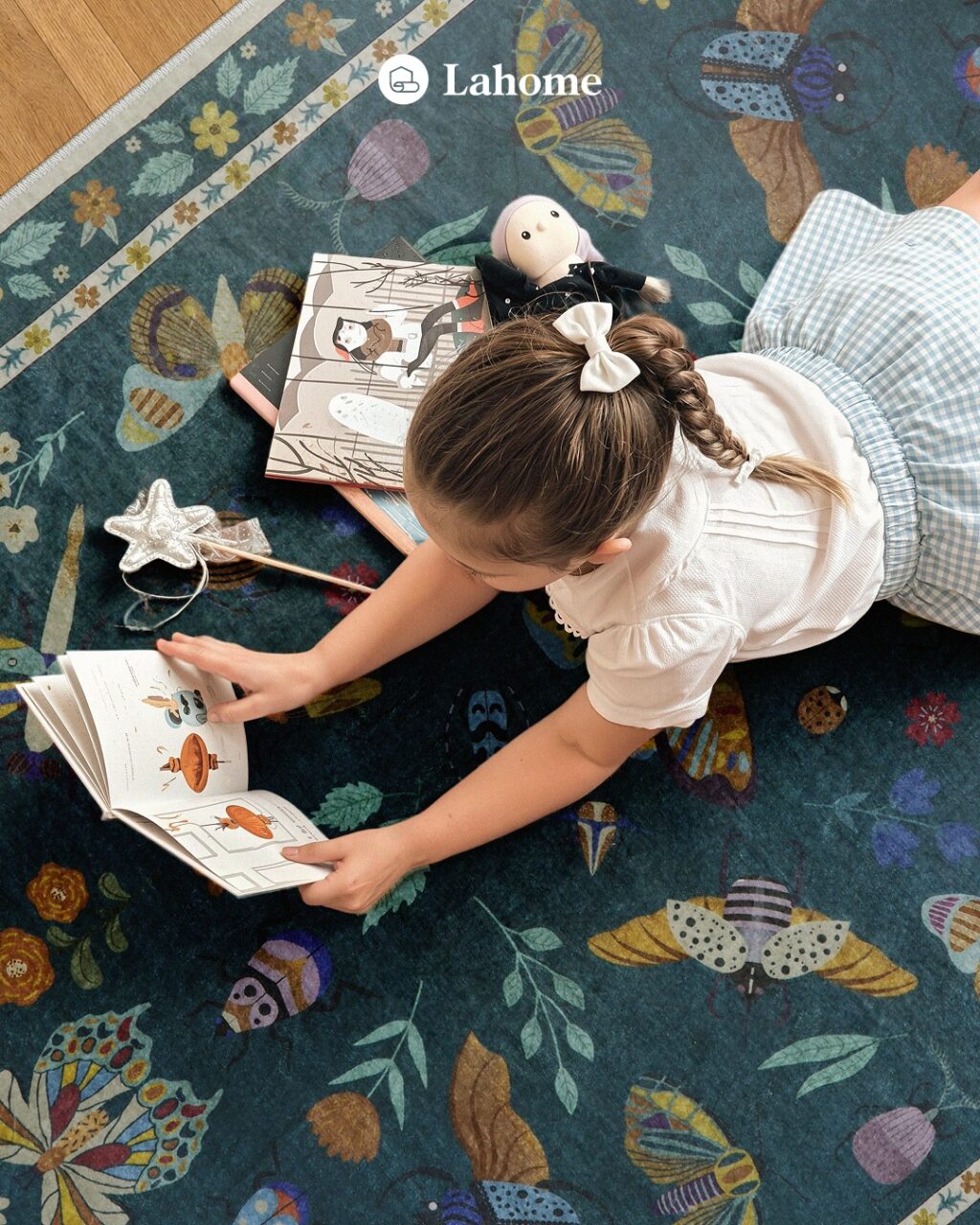
Watch a young child for an afternoon and you’ll notice how little time they spend on furniture. They sit on the floor to draw, lie on it to read, and build things on it that only they understand. Hard flooring looks wonderful and cleans easily, but it’s cold in winter and unforgiving when someone tumbles off a toy car.
A rug solves most of this without changing the character of the room. Kids rugs have come a long way from the cartoon-printed squares many of us remember. Look for ones in a calm weave or a soft, simple pattern that could sit comfortably next to your own furniture. The pile matters more than the picture. A low or medium pile is easier to vacuum and lets toys stand upright, while a very deep shag tends to swallow crayons and small pieces for good.
Size is worth a thought too. A rug that’s too small ends up as a stepping stone rather than a place to sit. Aim for something large enough that a child can spread out with their toys without sliding onto the bare floor halfway through a game.
Play areas that don’t take over the house
The most useful trick I know is to give play a boundary instead of a room. A corner of the living room, the space under a window, or one side of a hallway can all work. Put a rug down, add a low shelf or a couple of lidded baskets, and the area has an edge. Children tend to respect a defined spot more than parents expect, and when the day ends, tidying means moving things back to one place instead of collecting them from six.
Choose storage that looks like furniture. A woven basket, a wooden bench with a lift-up seat, or a plain cabinet with doors will hide a surprising amount of plastic. Keep a small selection of toys out and rotate the rest. Fewer things on display means less to trip over, and children often play more deeply with a handful of options than with an overflowing bin.
The family room: where everything gets tested
This is the room that takes the real punishment, so it rewards honest choices. Be realistic about what a glass of juice will do to a pale linen sofa. Performance fabrics, tightly woven textiles, and removable, washable covers are worth the extra cost in a room that gets used all day. Darker or mid-tone upholstery hides marks better than white, and patterned throws and cushions can cover a stain while you wait for a free evening to deal with it.
For spills and everyday mess, a few habits help more than any product. Keep a small cloth or pack of wipes within reach of the main seating area. Blot spills instead of rubbing them. Check the care label on rugs and upholstery before reaching for a cleaner, since some fibers react badly to the wrong one. Wool, for example, behaves very differently from polyester, and knowing which you have saves guesswork later.
It also helps to leave a little room in your expectations. A coffee table with rounded corners, or a large upholstered ottoman in its place, is easier to live with when a toddler is pulling themselves up on everything. You can switch back to the glass-topped one in a few years.
Bedrooms that can grow up without a full redo
Children’s tastes change fast. The dinosaur obsession of this year becomes the space phase of the next, then something else entirely, and repainting or refurnishing every time isn’t realistic. The easier approach is to keep the big, permanent pieces neutral and let the personality live in things that are simple to swap: bedding, wall art, a lampshade, a pinboard.
A bed, wardrobe, and desk in natural wood or a soft painted finish will carry a child from nursery years into their teens. Add one or two kids rugs beside the bed, so bare feet land on something soft in the morning, and replace them when interests move on. A rug is one of the cheaper ways to refresh a room, and it’s far less work than repainting.
Leave space for a reading spot, even if it’s only a cushion and a lamp. Children who have a comfortable place to settle tend to use it, and it gives the room a calm corner that doesn’t depend on any particular theme.
Colors and patterns that last
Bright primary colors tend to date quickly, in the sense that a child outgrows them long before the furniture wears out. Muted tones, earthy shades, and anything borrowed from nature are more forgiving. They also tend to blend with the rest of the house, which is the whole point if you want the home to feel cohesive.
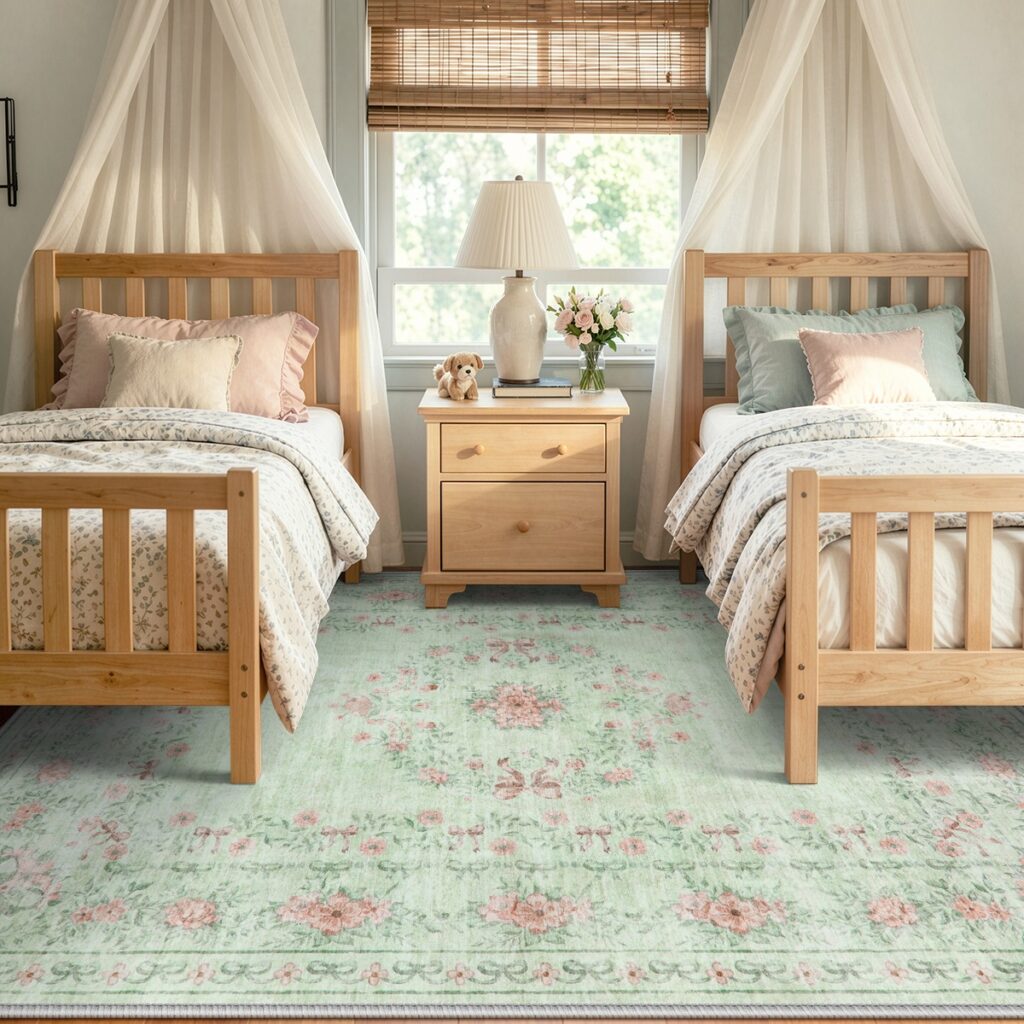
Green is a particularly easy place to start. It’s associated with gardens, leaves, and woodland, so it feels calm in a bedroom and cheerful in a play corner, depending on the shade. Soft sage or moss suits a quiet reading nook, while a brighter leaf green brings some energy to a family room. Green rugs also pair well with natural wood, cream walls, and rattan or linen, which means they rarely clash with what you already own. If you’re drawn to a nature-inspired look, a botanical print or a simple tonal pattern keeps things interesting without becoming childish.
Patterns do some practical work as well. A busy or mottled design hides crumbs, pet hair, and the odd ink dot far better than a plain light surface. Stripes, small geometrics, and organic shapes all age gracefully, so a child who loved the rug at four may still tolerate it at ten.
A home that works for everyone in it
No room with children in it will look perfect all the time, and it doesn’t need to. A few soft surfaces, storage that blends in, fabrics that forgive, and a handful of colors you actually like will get you most of the way there. The rest is letting the house look lived in, because it is.