Should You Buy or Build a Cat Tree? Pros and Cons Explained
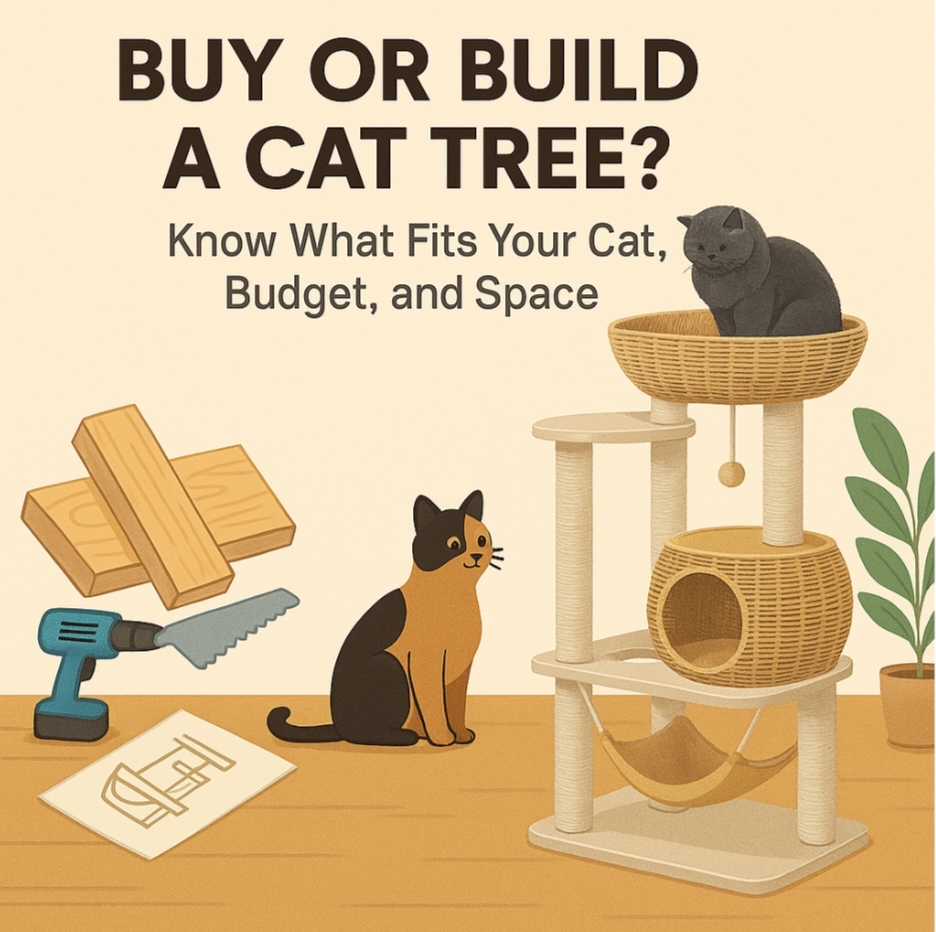
A cat tree isn’t just a piece of furniture — it’s a daily playground, a vantage point, a stress reliever, and a safe retreat for your cat. But when shopping online, many cat owners ask the same question: “Should I buy one… or try to build it myself?”
It’s a tempting DIY project, especially if you enjoy crafting or want to save money. On the other hand, ready-made cat trees now come in sleek, space-saving designs with all the bells and whistles. So which is better for your home, your cat, and your wallet?
This article breaks it down with clear pros and cons — from safety to aesthetics, cost to durability — and helps you decide what’s right for your feline companion.
What Makes a Cat Tree Essential?
Before we compare, let’s address why a cat tree is worth investing in at all.
Indoor cats spend 90% or more of their time in the same environment. Without trees to climb, prey to stalk, or vertical territories to explore, their instincts can go unmet. A good cat treeprovides much-needed enrichment. It supports their physical health, reduces stress, and gives them a place to express natural behaviors like scratching and climbing.
No matter the size of your home, your cat needs vertical territory. A cat tree transforms unused vertical space into valuable territory — especially useful in multi-cat households.
Buying a Cat Tree: What You Gain (and What to Watch Out For)
Pros of Buying:
- Time-saving and ready to use: Most trees can be assembled within an hour. No need to design or source materials.
- Safety-tested designs: Well-made commercial cat trees follow tested dimensions and weight distributions.
- Visual appeal: From Nordic-style wood to neutral tones, modern cat trees blend beautifully into home decor.
- Features that last: Scratch-friendly posts, hideouts, perches, even hammocks — all designed for feline fun.
Cons of Buying:
- Higher upfront cost: Good designs come at a price. Expect to pay more for stability and quality materials.
- Not always customizable: You may need to compromise on size, color, or shape to match your space.
- Assembly still required: Although simpler than DIY, some models have frustrating instructions or missing screws.
What to look for:
- Multi-level platforms
- Solid wood or compressed board base
- Sisal rope for scratching
- Soft but washable fabrics
- Stability (especially for heavier cats or multiple pets)
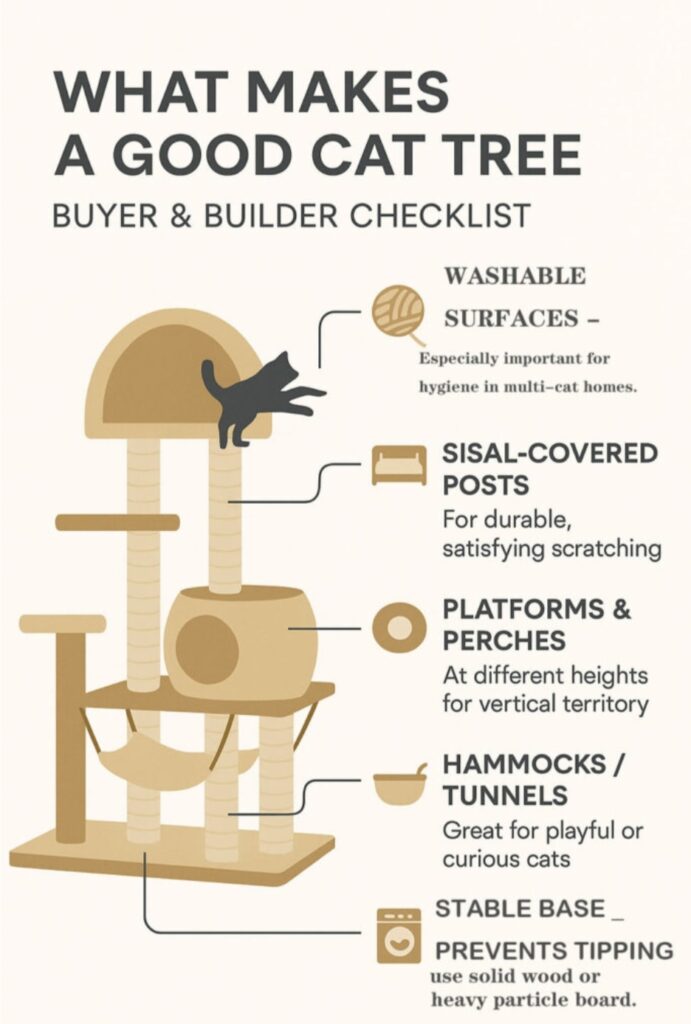
If you’re considering buying a cat tree, it’s important to choose one that combines stability, comfort, and style. A well-made arbre à chat should feature multi-level platforms, a solid wood or compressed board base, sisal-covered posts for scratching, and soft, washable fabrics — all designed to keep your cat happy and your home looking good.
For thoughtfully designed options that meet these criteria, including Nordic-inspired pieces and compact models for small spaces,
Click here to explore chezchat.fr’s curated selection of arbre à chat.
- Nordic Wood Tower – Minimalist birch finish with wide stable base
- Cube Lounge with Sisal – Doubles as scratching post and cozy nook
- Wall-Mount Shelf Tree – Ideal for apartments or narrow corners
- Tall Tree with Tunnel & Hammock – For active or multi-cat homes
- Compact Corner Tree – Efficient design for smaller spaces
Each of these models is tested for balance and style — and designed with cats and owners in mind.
Building a DIY Cat Tree: Worth the Effort?
DIY isn’t just for saving money. For many cat owners, it’s a fun project that lets you tailor every inch to your space and your cat’s habits. But is it really worth it?
Pros of DIY:
- Fully customizable: Adjust size, shape, materials, and features to fit your home.
- Creative freedom: Build in themes, colors, or materials that reflect your style.
- Satisfaction and bonding: It can be deeply rewarding to create something your cat loves.
Cons of DIY:
- Takes time and tools: You’ll need at least a drill, screws, measuring tape, and saw — plus the patience to design and assemble.
- Risk of instability: A wobbly tree is dangerous, and building a sturdy base is harder than it looks.
- Material costs add up: Wood, sisal, fabric, foam — all cost money, especially if you’re buying in small quantities.
Best for: Handy owners with time, tools, and a solid understanding of cat behavior and safety. DIY is also a good option if your cat has special needs or your space requires custom dimensions.
Want to Build One Yourself? Start with This Fabriquer un Arbre à Chat Guide
DIY isn’t just for saving money — it’s also a creative, satisfying project for many cat owners. It lets you customize every element to suit your space, match your interior, or meet your cat’s unique habits.
That said, DIY does require time, tools, and some knowledge of feline safety. A wobbly or unstable tree can be risky, and material costs can add up quickly. But if you’re handy and enjoy building, it can be a rewarding way to create something your cat truly loves.
Ready to give it a try?
Click here to follow a full step-by-step guide on fabriquer un arbre à chat — complete with materials list, safety tips, and diagrams to help you get started the right way.
Buy or Build? A Quick Comparison Chart
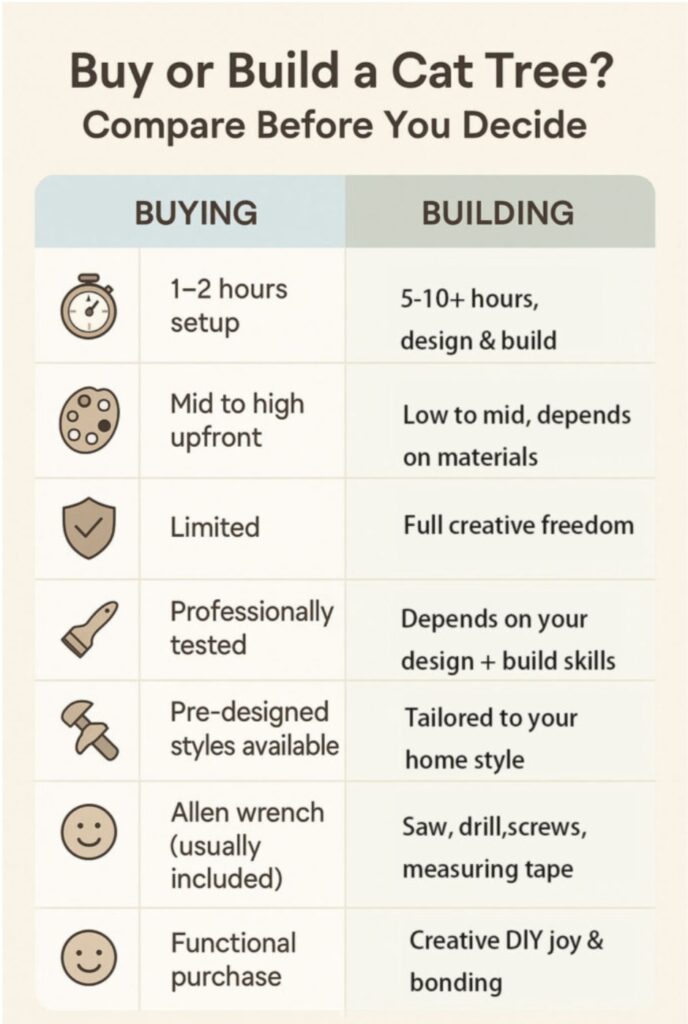
| Criteria | Buy | Build |
|---|---|---|
| Time investment | Low (1–2 hrs) | High (5–10 hrs+) |
| Cost | Mid to high | Low to mid (depends on materials) |
| Customization | Limited | Full control |
| Safety | Professionally tested | Depends on your skill |
| Durability | Varies by quality | Varies by material & design |
| Fun factor | Minimal (unless assembling is fun) | High (creative project!) |
Which Option Fits You Best?
Choose to Buy if:
- You want something reliable, fast, and ready to go.
- Your priority is safety and long-term use.
- You’re furnishing a modern home and want a stylish touch.
Choose to Build if:
- You enjoy DIY and already own basic tools.
- Your cat has specific needs (e.g. senior cats, mobility issues).
- You want a budget option that fits an awkward space.
No matter your choice, your cat will thank you for the vertical space, scratching options, and cozy hideouts.
Final Thoughts: Your Cat Tree, Your Way
There’s no universal answer — only what works for your home, time, and cat’s personality. But one thing’s clear: cats thrive when they have space to climb, scratch, and perch.
Whether you decide to buy a beautifully crafted arbre à chat or try your hand at fabriquer un arbre à chat, the goal is the same — a happier, healthier indoor life for your feline friend.
So go ahead. Give your cat a tree. Whether it arrives in a box or gets built with love, it’s a gift they’ll climb, scratch, and snooze on for years to come.