The Importance of Efficient Underground Mining Ventilation Systems
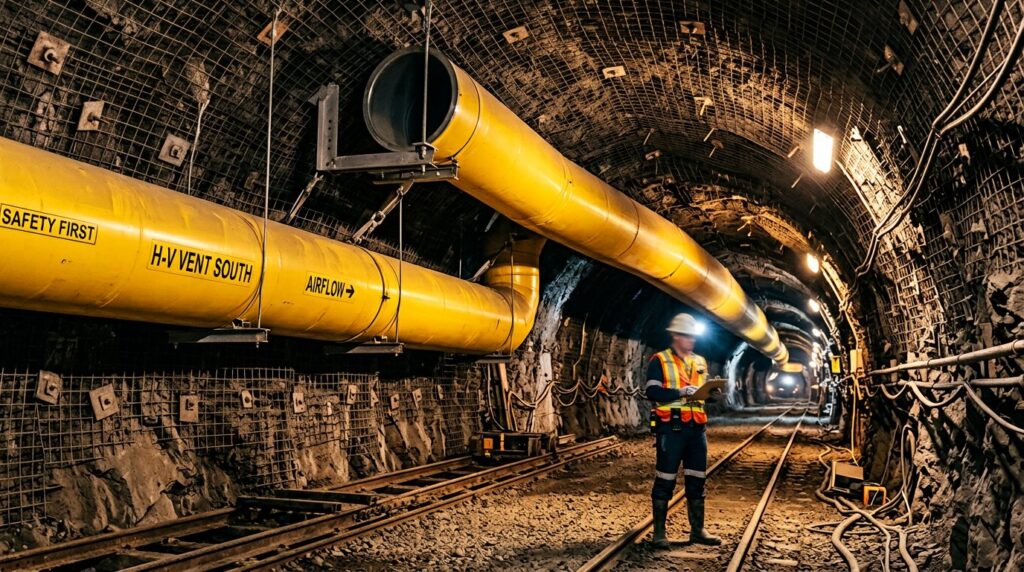
Underground mining is one of the most demanding industrial environments on the planet. Workers operate deep below the surface, where fresh air doesn’t flow freely and hazardous gases can accumulate without warning. Underground mining ventilation systems are the lifeline that keeps these environments safe, breathable, and productive. Without them, no amount of modern equipment or skilled labor can compensate for the risks posed by poor air quality.
Key Benefits of Efficient Underground Mining Ventilation Systems
Efficient ventilation does more than move air—it actively protects lives and supports output.
Improved air quality and oxygen levels are the most immediate benefit. Workers need consistent oxygen levels to perform physically demanding tasks safely. Ventilation systems replenish fresh air continuously, reducing the risk of oxygen deficiency in deep shafts.
Reduction of harmful gases and dust is equally critical. Mining operations release carbon monoxide, methane, nitrogen dioxide, and fine silica dust. Left unmanaged, these contaminants cause respiratory disease, poisoning, and even fatal explosions. Properly designed underground mining ventilation systems dilute and remove these threats before they reach dangerous concentrations.
Enhanced worker productivity follows naturally from better air quality. Fatigue, headaches, and respiratory discomfort all decrease when ventilation is optimized—and a healthier workforce is a more efficient one.
Energy cost savings are a practical bonus. Modern ventilation systems use variable speed drives and smart controls to match airflow to actual demand, cutting unnecessary energy consumption without compromising safety.
Components of Effective Underground Mining Ventilation Systems
A reliable ventilation system is built from several interconnected components working in tandem:
- Primary and secondary ventilation fans drive large volumes of air through the main access tunnels and into deeper working areas.
- Ductwork and air distribution networks channel airflow precisely where it’s needed, minimizing dead zones where gases might collect.
- Monitoring and control systems track air quality, temperature, and airflow in real time, allowing operators to respond quickly to changes.
- Filtration and air quality management equipment capture dust particles and filter contaminants before air is recirculated or exhausted.
Each component plays a role. A failure in any one of them can compromise the entire system.
How Mechvac Engineering Optimizes Underground Mining Ventilation Systems
Mechvac Engineering brings deep industry expertise to the design, installation, and maintenance of underground mining ventilation systems. Rather than applying a one-size-fits-all approach, Mechvac Engineering develops tailored solutions based on the specific layout, depth, and operational requirements of each mine.
Advanced technology integration is central to their methodology. Real-time monitoring tools allow mine operators to track air quality data continuously, making proactive adjustments before problems escalate. Mechvac Engineering also provides ongoing maintenance support, ensuring that ventilation systems operate at peak efficiency throughout their service life—not just on day one.
Common Challenges and Solutions in Underground Ventilation
Even well-designed systems face real-world complications:
- Deep underground shafts create significant resistance to airflow. Overcoming this requires powerful fan configurations and carefully calculated duct layouts.
- Temperature and humidity control becomes harder as mines go deeper, where geothermal heat increases ambient temperatures. Cooling and dehumidification equipment must be integrated into the ventilation design.
- System failures and downtime are costly—both financially and in terms of safety. Redundant systems and regular preventive maintenance schedules reduce this risk considerably.
- Energy efficiency is an ongoing pressure. Sustainable approaches, including demand-controlled ventilation, help mines meet both environmental targets and operational budgets.
Best Practices for Maintaining Underground Mining Ventilation Systems
Maintenance is where long-term performance is won or lost. A few non-negotiables:
- Regular inspections should follow a structured schedule, not just react to visible problems.
- Upgrading outdated equipment prevents efficiency losses that accumulate quietly over time.
- Staff training ensures that operators understand how the system works and can recognize early warning signs of malfunction.
Investing in Ventilation Is Investing in People
The mining industry carries inherent risk. But efficient underground mining ventilation systems are one of the most powerful tools available to manage that risk—protecting workers, preserving productivity, and reducing long-term operating costs.
Partnering with experienced specialists like Mechvac Engineering ensures that ventilation systems are not only compliant with safety standards but genuinely optimized for the conditions they serve. In an industry where the margin for error is narrow, that expertise matters.