The Complete Janitorial Robot Guide: What Every US Operations Manager Needs to Know Before Deploying
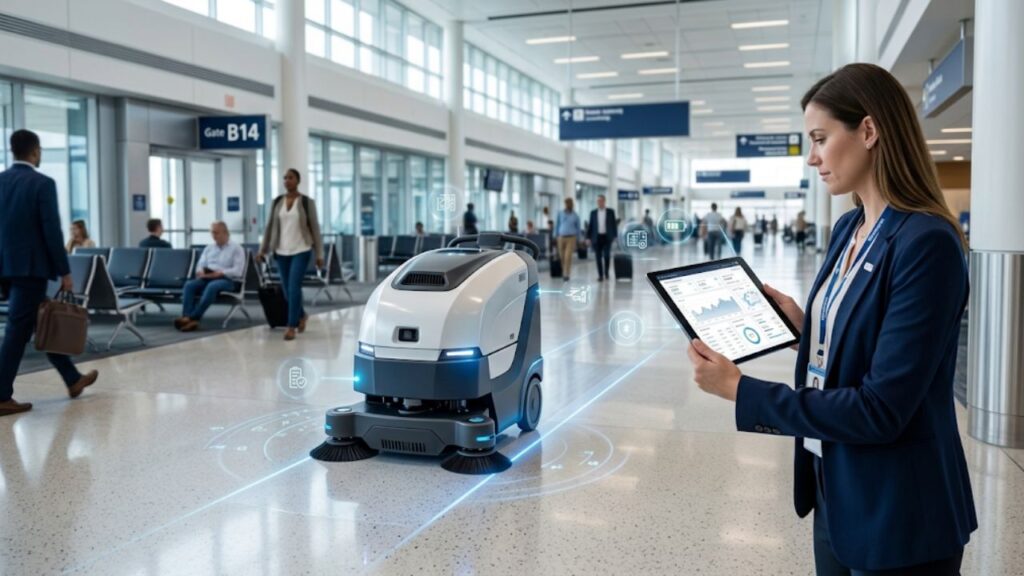
Facility operations in the United States have grown considerably more complex over the past decade. Labor shortages, rising service costs, increased compliance expectations, and the pressure to maintain consistent cleanliness standards across large or multi-site properties have pushed operations managers to look at automated solutions with greater seriousness. Among those solutions, autonomous cleaning technology has moved from experimental to operational in a meaningful number of commercial and institutional environments.
What was once considered a futuristic option is now a practical one — and that shift brings a corresponding need for grounded, practical knowledge. Deploying a janitorial robot is not simply a purchase decision. It is an operational change that affects staffing models, cleaning protocols, maintenance schedules, and accountability structures. Operations managers who approach it without adequate preparation often encounter avoidable setbacks. Those who invest time in understanding the technology and its real-world constraints are far better positioned to realize the value it can deliver.
Understanding What a Janitorial Robot Actually Does in a Real Facility
A janitorial robot is an autonomous or semi-autonomous machine designed to perform specific cleaning tasks — most commonly floor scrubbing, vacuuming, or sweeping — across defined areas within a facility without continuous human direction. These machines navigate using sensors, mapping technology, and pre-programmed routes to clean floors consistently, repeatedly, and with minimal operator involvement during the cleaning cycle itself. For a more detailed breakdown of how these systems are categorized and applied across facility types, this Janitorial Robot guide provides a structured overview relevant to US commercial environments.
The critical distinction operations managers need to understand is that these machines do not replace all cleaning functions. They are task-specific tools. A robotic floor scrubber handles horizontal surface cleaning at scale, but it cannot clean restrooms, wipe down surfaces, respond to spills, or address areas that require human judgment. Understanding this boundary upfront prevents misaligned expectations and protects the integrity of your overall cleaning program.
How These Machines Navigate and Learn a Space
Most current janitorial robots use a combination of laser-based distance measurement, optical sensors, and onboard mapping to understand their environment. During an initial setup phase, the machine either maps the space autonomously or is guided through it manually so it can build an internal reference layout. Subsequent cleaning runs follow this map, with real-time sensor data allowing the robot to respond to unexpected obstacles — a parked cart, a person walking through, or a door left open — without colliding or stalling indefinitely.
This mapping process has real operational implications. Spaces that change frequently — flexible office environments, event halls, or multi-use lobbies — require more frequent re-mapping or human oversight to ensure the robot’s routes remain accurate. Static environments like large retail floors, airport terminals, or warehouse corridors tend to deliver the most consistent autonomous results because the robot’s map remains valid over extended periods.
The Difference Between Autonomous and Semi-Autonomous Models
Not all robotic cleaning machines operate at the same level of independence. Fully autonomous systems can charge, deploy, clean, and return to a docking station without any human input during a cleaning cycle. Semi-autonomous systems require a staff member to initiate operation, monitor progress, or handle edge cases when the machine pauses. The operational impact of this distinction is significant — autonomous systems can clean overnight or during off-hours, while semi-autonomous ones still require a person to be present and engaged during use.
For facilities with limited overnight staffing or managers aiming to reduce labor hours on floor maintenance specifically, the level of autonomy a machine offers directly determines how much operational value it delivers. Choosing a semi-autonomous model for a use case that demands overnight independent operation creates immediate practical failure. Matching autonomy level to operational need is one of the most consequential early decisions in deployment planning.
Evaluating Readiness Before Deployment
Facility readiness is a concrete set of physical, procedural, and structural conditions that must exist before a janitorial robot can operate effectively. This is not a checklist exercise — it is a genuine assessment of whether your environment will support consistent machine performance. Many deployments that underperform do so not because the technology is flawed, but because the facility was not prepared to support it.
Physical Space Requirements That Affect Performance
Robotic cleaning machines perform best on smooth, unobstructed floor surfaces with consistent transitions between zones. Facilities with frequent flooring type changes, narrow corridors, tight corners, or significant debris accumulation from foot traffic or operations require careful route planning and, in some cases, modifications to the physical layout. Low shelving, open cables, and irregular floor mats can all interrupt a machine’s path or trigger repeated stoppages that negate the efficiency gains the deployment was intended to create.
It is also worth assessing power and charging infrastructure. Autonomous machines need dedicated docking areas with reliable access to power. In facilities where electrical access is limited or where floor space near outlets is used for storage or other equipment, carving out appropriate docking space requires coordination with facilities, IT, or building management teams.
Staffing and Workflow Integration
Introducing a janitorial robot into an existing cleaning operation does not automatically reduce labor. It changes where labor is focused. Staff who previously spent significant time on floor scrubbing can be redirected toward detail cleaning, restrooms, high-touch surfaces, and reactive tasks. This reallocation requires deliberate planning. If workflows are not updated and staff are not trained on what the machine does and does not handle, redundancy occurs — staff continue performing tasks the machine is now covering while other necessary tasks go unaddressed.
Operations managers should also consider how cleaning verification is handled. Automated machines do not self-report problems beyond basic error codes. If a section of floor was not cleaned due to a mapping issue or obstacle, the gap may not be noticed until a complaint is raised or an inspection occurs. Pairing robotic deployment with a lightweight inspection protocol preserves accountability without requiring constant manual oversight.
The Maintenance Commitment That Most Deployments Underestimate
Robotic cleaning machines are mechanical systems operating in environments that are inherently dirty. They require regular maintenance — pad and brush replacement, tank cleaning, sensor care, and periodic software updates — to continue operating at the performance level they were initially set up to deliver. This maintenance requirement is consistent and ongoing, not occasional. Facilities that treat robotic machines as zero-maintenance assets experience performance degradation within months of deployment, often attributing poor results to the technology itself when the actual cause is deferred upkeep.
Establishing a Maintenance Schedule That Works in Practice
Effective maintenance scheduling starts with understanding the manufacturer’s recommended intervals and mapping them against actual usage patterns. A machine running two hours per night, five days per week has different wear expectations than one running six hours per day in a high-traffic commercial space. Usage intensity, floor type, and debris load all affect how quickly consumable components degrade.
Assigning clear ownership of maintenance tasks — whether to an internal facilities technician, a contracted service provider, or the equipment vendor — prevents the common failure mode where maintenance is everyone’s responsibility and therefore no one’s actual priority. According to guidelines published by organizations such as ISSA, the worldwide cleaning industry association recognized by facility management professionals across North America, establishing documented maintenance accountability is one of the most reliable predictors of long-term cleaning equipment performance.
Software and Connectivity Considerations
Modern janitorial robots are software-dependent machines. Their navigation logic, cleaning parameters, and performance reporting all rely on software that is updated periodically by manufacturers. In connected deployments, machines may transmit usage data and performance metrics to a management platform accessible to operations staff. While this data can be useful for tracking coverage and identifying issues, it also means the machine’s functionality is tied to network availability and vendor support continuity.
Operations managers in environments with restricted network access, strict IT security policies, or limited vendor support infrastructure should verify compatibility and support terms before deployment. Software-related failures are less visible than mechanical ones but can affect performance just as significantly.
Making the Deployment Decision with Confidence
Janitorial robots offer genuine operational value in the right environments, under the right conditions, with the right expectations in place. They are not transformative on their own. They are tools that perform well when matched to appropriate use cases, deployed into prepared facilities, supported by realistic staffing adjustments, and maintained consistently over time.
The operations managers who report the most successful deployments share a common characteristic: they approached the decision as an operational integration project rather than a technology purchase. They assessed their facilities honestly, adjusted their workflows before deployment rather than after, trained their staff on what the machine would and would not handle, and built maintenance accountability into their standard procedures from the outset.
Those who found the technology disappointing typically skipped one or more of those steps — not because the information was unavailable, but because the evaluation phase was compressed or treated as less important than the acquisition itself. Slowing down the decision process to complete a genuine readiness assessment is not a delay. It is the difference between a deployment that delivers consistent value and one that creates ongoing operational friction.
Closing Thoughts for Operations Managers Considering This Path
Autonomous cleaning technology has matured to the point where it is a credible option for a wide range of US commercial and institutional facilities. The core value proposition — consistent floor coverage, reduced labor dependency on repetitive tasks, and operational data on cleaning performance — is real and achievable. But that value is not inherent in the machine itself. It is produced by the combination of the right technology, correctly deployed, in a facility that is ready for it, managed by people who understand what they are working with.
The decisions that matter most happen before the machine arrives: understanding what it can and cannot do, assessing whether your facility and workflows can support it, and establishing the maintenance and accountability structures that will keep it performing. Operations managers who complete that groundwork are not just more likely to see returns on their investment — they are more likely to build a cleaning program that stays reliable under the day-to-day pressures that real facilities face. That reliability, ultimately, is what the technology exists to provide.






