7 Backhoe Financing Options Every US Construction Business Should Know Before Signing Anything
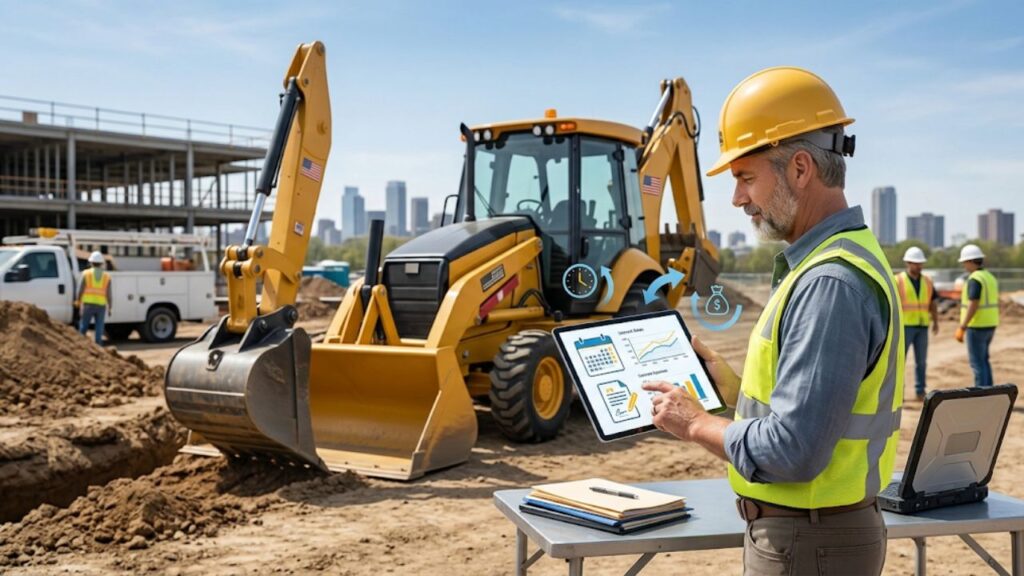
Buying a backhoe is rarely an impulse decision. For most construction businesses, it represents a significant capital commitment that affects cash flow, project capacity, and long-term operational flexibility. Whether a company is expanding its fleet, replacing aging equipment, or entering a new service segment, the financing structure chosen at the time of acquisition will shape day-to-day business conditions for years.
The challenge for many contractors and project managers is not a lack of financing options — it is understanding how each option actually works in practice and which structure fits their specific situation. Terms that look similar on the surface can produce very different outcomes depending on how a business uses the equipment, how its cash flow moves through the year, and what its growth plans look like over the next several years.
This article walks through seven backhoe financing structures available to US construction businesses, explains how each one operates, and describes the conditions under which each makes practical sense. The goal is to help decision-makers read financing agreements with more clarity before committing to terms they may carry for five to seven years.
1. Understanding Backhoe Financing as a Category
Backhoe financing refers to the structured methods through which a construction business acquires a backhoe loader without paying the full purchase price upfront. This category includes loans, leases, rental-to-own agreements, and government-backed programs — each with different implications for ownership, tax treatment, and financial reporting. A detailed Backhoe Financing guide can help businesses map these options to their actual financial situation before approaching a lender or dealer.
What makes this category distinct from general equipment financing is the nature of the asset itself. Backhoes are high-utilization machines expected to work across varied terrain and job types. Their resale value, maintenance demands, and depreciation curves affect how lenders price risk — and by extension, how financing terms are structured.
Why Financing Structure Affects More Than Monthly Payments
The financing structure a business selects determines whether the machine appears on the balance sheet as an asset, how much of the cost is tax-deductible and when, and what happens if business conditions change before the agreement ends. A loan may build equity in an asset, but it also locks in a payment obligation regardless of workload. A lease may preserve cash and offer flexibility, but it may also restrict how the equipment is used and what modifications are permitted. Understanding these trade-offs before signing is more valuable than negotiating a slightly lower rate after the fact.
2. Equipment Loans Through Commercial Lenders
A traditional equipment loan works similarly to a vehicle loan. The lender provides funds to purchase the backhoe, the business makes fixed monthly payments over an agreed term, and the business typically takes ownership at the end — sometimes immediately upon purchase. The backhoe itself often serves as collateral, which reduces the lender’s risk and generally results in lower interest rates compared to unsecured financing.
When a Direct Equipment Loan Makes Sense
This structure tends to work well for established businesses with consistent revenue histories and strong credit profiles. Lenders offering this type of financing will review financial statements, tax returns, and often the business’s overall debt-to-income picture. For companies that plan to use the backhoe for many years, want to build equity in the asset, and prefer predictable fixed payments, this is often the most straightforward path. The key trade-off is that the full obligation appears on the balance sheet, which can affect borrowing capacity for other needs.
3. Operating Leases for Short-to-Medium Term Needs
An operating lease allows a business to use a backhoe for a defined period — typically between two and five years — without taking legal ownership of the equipment. Monthly payments are generally lower than loan payments on the same piece of equipment because the business is not paying toward full ownership. At the end of the lease term, the equipment is returned, renewed, or sometimes purchased at fair market value.
Cash Flow Flexibility and Its Limits
Operating leases are often attractive to businesses that need to maintain liquidity or that work in markets where equipment needs shift frequently. Because the machine is not owned, the business can upgrade to newer equipment at the end of each term. However, operating leases come with usage restrictions. Mileage limits, geographic constraints, and modification prohibitions are common. A business that consistently exceeds usage limits or operates in harsh conditions may face end-of-lease charges that eliminate the cost advantages they anticipated.
4. Finance Leases (Capital Leases)
A finance lease, sometimes called a capital lease, is structured to transfer effective ownership of the equipment to the lessee over time. Payments are typically higher than an operating lease but lower than a standard loan. At the end of the term, the business usually has the option to purchase the equipment for a nominal amount or a predetermined residual value. Under accounting standards, finance leases are recorded as both an asset and a liability on the balance sheet.
Tax Implications Worth Discussing With an Accountant
Finance leases allow businesses to claim depreciation on the equipment, which can reduce taxable income over the lease term. This makes them particularly relevant for businesses that have significant tax exposure in a given year. The IRS guidance on depreciation outlines the conditions under which different asset classes can be depreciated, and construction equipment falls within established schedules that affect how this benefit is calculated. The specific tax advantage depends heavily on the business’s overall tax position, so this is worth reviewing with a qualified accountant before choosing this structure over alternatives.
5. Dealer Financing Programs
Most major backhoe manufacturers and equipment dealers offer in-house or captive financing programs. These programs are often promoted with introductory rates, deferred payment periods, or flexible structures tied to seasonal construction cycles. They can be convenient and are frequently processed faster than bank financing because the dealer has a direct relationship with the lending arm of the program.
Reading Dealer Financing Terms Carefully
Dealer financing programs are not always the most competitive option, even when the advertised rate looks attractive. Promotional rates sometimes apply only to specific models, trim levels, or purchase windows. Deferred payment periods may accrue interest that becomes due in a lump sum if the balance is not paid before the deferral ends. Businesses should request full amortization schedules and disclosure of all fees before comparing dealer financing against independent lender offers. The convenience of one-stop purchasing should not substitute for due diligence on total cost.
6. SBA Loan Programs for Equipment Acquisition
The US Small Business Administration offers loan programs that can be used to finance equipment, including heavy construction machinery. The SBA 7(a) and SBA 504 programs are the two most commonly applied in construction contexts. These programs do not lend money directly — they guarantee a portion of loans made by approved lenders, which reduces the lender’s risk and can result in more accessible terms for small businesses that might not qualify for conventional financing.
What SBA Financing Requires From the Borrower
SBA-backed loans typically involve longer approval timelines and more documentation than conventional equipment loans. Businesses must demonstrate size eligibility, provide detailed financial records, and in some cases offer collateral beyond the equipment itself. The process is more involved, but the outcome — lower down payments, longer repayment terms, and access to financing for businesses with shorter operating histories — can make the additional effort worthwhile for smaller contractors. Businesses should work with SBA-preferred lenders who are familiar with construction industry applications to streamline the process.
7. Sale-Leaseback Arrangements
A sale-leaseback is a less conventional option that applies when a business already owns a backhoe outright or has significant equity in one. In this arrangement, the business sells the equipment to a financing company and immediately leases it back under agreed terms. The sale generates immediate cash — which can be used for working capital, debt reduction, or other equipment purchases — while the business continues to use the machine as before.
Practical Applications and Risk Considerations
Sale-leasebacks are most useful for businesses facing short-term liquidity pressure that do not want to sell productive equipment or slow down active projects. They can also be used strategically by businesses that want to free up capital for growth without taking on additional debt in the traditional sense. The risk is that the business no longer owns the equipment at the end of the arrangement unless a buyback option is included in the agreement. Companies considering this structure should evaluate whether the lease payments over the term are reasonable relative to the cash received, and whether the business has a clear plan for what it will do at the end of the lease period.
Concluding Thoughts: Signing With Clarity, Not Just Confidence
Each of the seven financing structures described above serves a legitimate purpose for a different type of construction business in a different set of circumstances. There is no universally superior option. What matters is the fit between the financing structure and the specific realities of the business — its cash flow patterns, its tax position, its growth plans, and its tolerance for obligation.
The businesses that tend to make the best equipment financing decisions are not necessarily the ones with the best credit or the longest operating history. They are the ones that take time to understand what they are agreeing to before they sign. That means reading full loan or lease documents, requesting amortization schedules, comparing offers from more than one source, and consulting with a financial professional when terms are unclear.
Backhoe financing is a meaningful financial commitment. The monthly payment is only one number in a much larger picture. Understanding the full structure — ownership implications, tax treatment, flexibility at the end of term, and total cost over the life of the agreement — is what separates a financing decision that supports the business from one that constrains it.
Before signing anything, take the time to understand the agreement in full. The goal is not just to acquire equipment — it is to acquire it in a way that leaves the business better positioned than it was before.