The Complete Kubota Bucket Guide for Landscapers and Excavators Across the US: Sizes, Types, and Use Cases
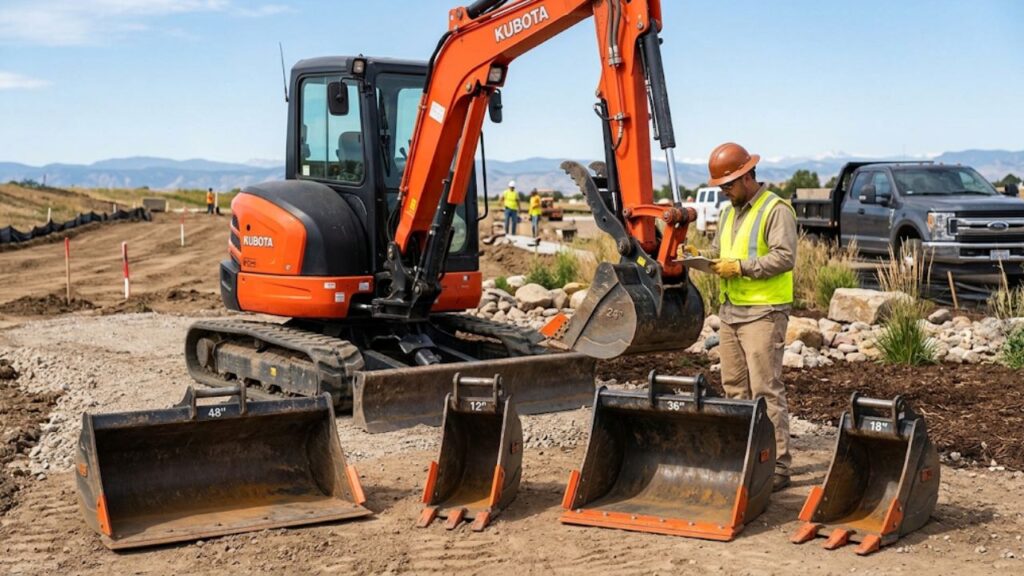
Selecting the right bucket attachment for a Kubota machine is not a straightforward decision. For landscapers managing residential grading jobs and excavation contractors working on commercial utility installations, the bucket is the primary point of contact between the machine and the material. Get that choice wrong, and the consequences show up immediately — in cycle times, in fuel consumption, in wear patterns, and in the quality of the finished work.
Across the United States, Kubota compact excavators and skid steers have become standard equipment on mid-sized job sites. Their versatility and availability make them attractive to contractors who need reliable machines that can move between different types of work without significant downtime. But the machine itself is only half the equation. The bucket mounted to it determines what the machine can realistically accomplish, and how efficiently it does so under real working conditions.
This article covers the key bucket types, sizing considerations, material-specific use cases, and the decision factors that experienced operators use when choosing attachments for Kubota machines across different project types.
Understanding Kubota Bucket Configurations and Why They Matter
Kubota machines are built around a compact hydraulic system designed for versatility in tight working environments. The bucket you attach to that system needs to be matched carefully to both the machine’s hydraulic output and the nature of the material being moved. A mismatch in either direction creates problems — an undersized bucket reduces productivity unnecessarily, while an oversized one strains the hydraulic system and compromises the operator’s ability to control the load accurately.
For contractors who want a structured reference point before making purchasing or rental decisions, the Kubota Bucket guide published by Maxx Attachments provides a consolidated view of bucket types and compatibility considerations organized by machine category.
Kubota bucket compatibility is defined primarily by the machine’s coupler style and its hydraulic flow rate. These two variables narrow down the range of viable attachments before any material or task considerations are factored in. Operators who skip this step often end up with attachments that technically connect to the machine but operate below their rated capacity because the hydraulic system cannot support full function at the required pressure.
The Role of Coupler Compatibility in Bucket Selection
Kubota compact excavators and track loaders use specific pin configurations and coupler profiles that are not universally interchangeable with attachments designed for other manufacturers. This matters because the aftermarket bucket market is large, and not every attachment listed as compatible with a given machine class will actually function correctly without modification.
Before sourcing a bucket — whether new, used, or rented — contractors should verify pin diameter, pin spacing, and boss depth against the machine’s documented specifications. A bucket that mounts loosely due to tolerance mismatches will create wear at the connection point and introduce play in the digging motion, which reduces accuracy in grading and excavation applications.
Hydraulic Flow and Bucket Performance
On powered bucket attachments such as hydraulic tilting buckets or rotating couplers, the machine’s auxiliary hydraulic flow rate determines how responsive the attachment will be during operation. Kubota’s compact excavator line is designed for efficiency rather than high-flow output, which means attachments with high hydraulic demand may respond sluggishly or cycle slowly compared to their rated performance on a larger machine.
Standard digging buckets, which require no hydraulic input beyond what drives the arm and boom, do not face this limitation. But contractors who want added functionality from tilt or rotation features need to review their machine’s auxiliary flow specifications before investing in those attachment types.
Bucket Types Used in Landscaping and Excavation Work
The range of bucket designs available for Kubota machines reflects the variety of tasks these machines are asked to perform. Landscaping work, utility excavation, material handling, and site preparation each place different demands on a bucket in terms of cutting edge geometry, sidewall strength, and overall capacity. Using a general-purpose bucket across all applications is possible, but it almost always means accepting a compromise in at least one area.
Standard Digging Buckets
The standard digging bucket, sometimes called a general-purpose or GP bucket, is the most common attachment used on Kubota compact excavators. It is designed to cut into soil, load the material efficiently, and discharge cleanly. The curved profile of the bucket allows it to rotate through a full dig cycle without requiring excessive force from the arm cylinder, which reduces wear on the hydraulic components over time.
For landscapers working in loam, clay, or mixed soil conditions, the standard bucket handles the majority of tasks reliably. It becomes less effective in rocky or heavily compacted ground where a more aggressive tooth configuration or a narrower profile is needed to break material before loading it.
Trenching Buckets
Trenching buckets are narrower than standard digging buckets and are designed to cut precise channels for drainage lines, irrigation systems, conduit, and utility work. The narrower profile concentrates the machine’s breakout force into a smaller contact area, which improves cutting performance in hard ground while keeping the trench walls clean and consistent in width.
For landscaping contractors who also handle irrigation installation or drainage correction, a trenching bucket is an essential secondary attachment. Using a standard bucket for trench work is workable but creates wider cuts that require more backfill material and more time to restore the surface grade.
Cleanup and Grading Buckets
Cleanup buckets, also called grading or ditching buckets, have a wider, shallower profile with a straight or slightly curved cutting edge that lacks the aggressive teeth found on digging buckets. They are used for surface grading, spreading material, cleaning up loose debris, and shaping finished grades.
On landscaping projects, the cleanup bucket is often the last attachment used before a job is considered complete. It allows the operator to move small volumes of material accurately across a surface without digging into the prepared grade. The flat cutting edge produces a cleaner result than a toothed bucket in these finishing applications.
Rock and Heavy-Duty Buckets
Rock buckets are built with reinforced sidewalls, heavier steel construction, and bolt-on cutting edges that can be replaced as they wear. They are designed for excavation in rocky substrates, demolition-adjacent work, and any application where abrasive material would damage a standard bucket quickly.
Landscaping contractors occasionally encounter unexpected rock during grading or tree removal work, but rock buckets are more commonly used by excavation contractors working on utility trenching in areas with significant stone content in the soil profile. The added weight of a rock bucket reduces the machine’s effective lifting capacity, so operators need to account for that tradeoff when sizing material loads.
Sizing Considerations for Different Project Scales
Bucket sizing directly affects how many passes are required to complete a task and how much material is moved in each pass. Larger buckets carry more material per cycle but require more force to fill completely and can place greater stress on the arm and boom components if the operator consistently attempts to overfill in dense material. Smaller buckets are easier to control in confined spaces and in material that resists penetration, but they slow overall productivity on open-site work.
According to general principles established by heavy equipment industry standards, matching bucket capacity to the machine’s rated lifting capacity at full reach is the baseline for preventing structural stress on the arm assembly. Operating consistently above this threshold accelerates wear on the pivot points and may void warranty coverage on newer machines.
For landscaping work on residential sites, smaller bucket sizes tend to be more practical because they offer better visibility around the bucket, reduce the risk of damaging nearby structures, and are easier to maneuver in areas with trees, fencing, or existing hardscape. For open commercial excavation, larger buckets reduce the number of passes required and improve cycle times across extended working hours.
Material-Specific Use Cases Across Common Job Types
The material being excavated or moved is one of the most important variables in bucket selection. Soil type, moisture content, and the presence of rocks, roots, or debris each affect how a bucket performs during the dig cycle and how cleanly it releases material during discharge.
Working in Saturated or Clay-Heavy Soils
Clay and saturated soils are among the most challenging materials for any bucket type. Wet clay adheres to bucket surfaces and resists clean discharge, which slows cycle times and requires the operator to shake the bucket to clear the load. Buckets with a polished inner surface or a flatter internal profile are less prone to material adhesion and perform more consistently in these conditions.
Landscaping contractors in regions with heavy clay soils — across parts of the Southeast, Midwest, and Pacific Northwest — frequently deal with this issue on grading projects following rain. Selecting a bucket designed for clay adhesion reduces downtime and keeps the operation moving at a consistent pace.
Handling Loose or Granular Material
Sand, gravel, and other granular materials behave differently from cohesive soil. They do not require aggressive cutting but do require a bucket profile that retains the material efficiently without excessive spillage during the carry phase. Side cutters and tighter sidewall tolerances help retain loose material through the lift and swing cycle.
For contractors moving aggregate, topsoil, or mulch during landscaping installations, a high-capacity bucket with good retention characteristics reduces the number of passes needed and keeps the work area cleaner during the operation.
Maintenance Practices That Extend Bucket Service Life
Buckets used in regular commercial or residential work accumulate wear at predictable points — primarily along the cutting edge, at the tooth shanks, and at the side cutter edges. Monitoring these wear points and addressing them before they affect structural integrity is more cost-effective than waiting for visible damage to force a repair or replacement.
Bolt-on cutting edges and replaceable tooth systems exist specifically to allow operators to restore cutting performance without replacing the entire bucket. For contractors who use a kubota bucket intensively across multiple job types, establishing a regular inspection interval as part of equipment maintenance prevents small wear issues from developing into larger structural problems that compromise the bucket’s geometry or attachment integrity.
Closing Thoughts
The kubota bucket market is broad, and the range of available types reflects the genuine variety of work that Kubota machines are asked to perform across the United States. Landscapers and excavation contractors who take the time to match bucket type, size, and construction to their specific soil conditions and project requirements will consistently see better results than those who rely on a single general-purpose attachment for every application.
The decision is not complex once the relevant variables are understood — coupler compatibility, hydraulic capacity, material type, and project scale provide a clear framework for narrowing the options. What matters most is treating the bucket as a functional component of the machine system rather than an interchangeable accessory, because in practice, it has more influence over daily productivity and operating costs than most operators initially expect.
For contractors evaluating options across different kubota bucket configurations, building that evaluation around real job conditions rather than price or availability alone will produce better long-term outcomes in both performance and equipment longevity.