6DOF in Motion Rides: Creating Attractions That Feel More Lifelike
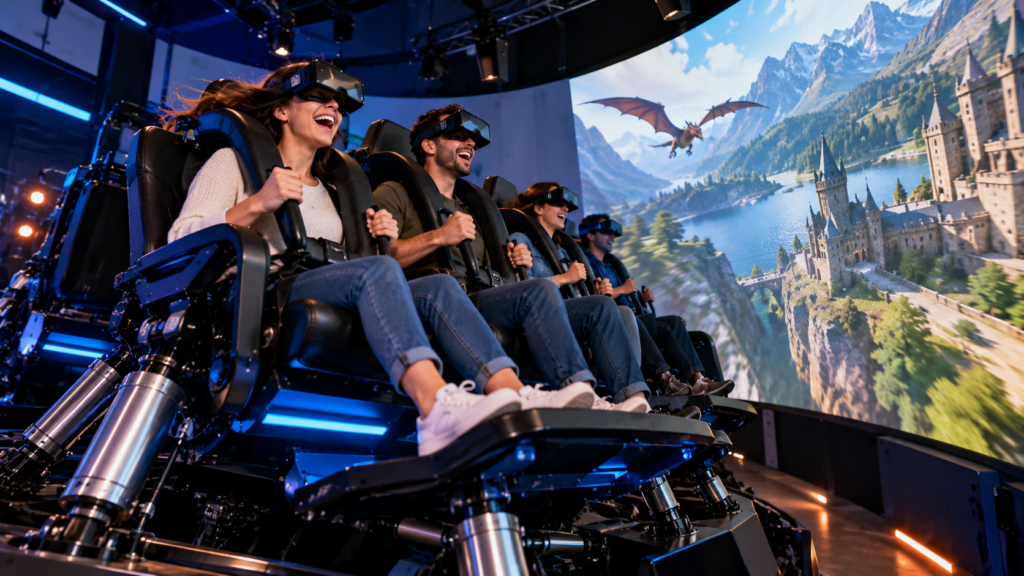
A great attraction does not only show guests something exciting. It makes them feel as if they are part of the action. When a ride simulates flying over mountains, diving into the ocean, racing through a city, or escaping a storm, the guest’s body needs to feel the motion as well as see it.
This is why 6DOF has become a valuable technology in modern motion rides and immersive attractions.
6DOF motion systems can move across six axes, giving ride designers more freedom to create realistic acceleration, turning, lifting, dropping, swaying, and tilting sensations. When combined with large visuals, sound, special effects, and strong storytelling, 6DOF can turn a screen-based attraction into a physical adventure.
Why 6DOF Matters in Modern Attractions
Guests today have higher expectations for entertainment experiences. A simple video may not be enough, especially in theme parks, family entertainment centers, destination attractions, and immersive theaters.
They want experiences that feel dynamic, emotional, and shareable.
6DOF helps meet this expectation because it gives attractions a fuller range of movement. Instead of relying only on vibration or basic seat tilting, 6DOF platforms can simulate more complex motion paths.
For example, a flying attraction can use heave to create lift, pitch to simulate climbing or diving, roll to suggest banking turns, and surge to create acceleration. These movements work together to make the ride feel more natural.
The result is not just stronger motion. It is stronger immersion.
What 6DOF Means for Ride Design
A 6DOF system includes six types of movement: pitch, yaw, roll, surge, sway, and heave.
For ride designers, these are not just technical terms. They are creative tools.
Pitch can make a vehicle feel as if it is climbing or diving. Yaw can create turning movement. Roll can support banking and side tilt. Surge can simulate forward acceleration or braking. Sway can create lateral movement. Heave can make guests feel lifts, drops, bumps, or waves.
Together, these axes allow designers to match physical movement with the visual story.
If a scene shows a dragon suddenly rising into the sky, the platform can lift, tilt, and accelerate with the image. If a racing scene turns sharply, the platform can combine roll, sway, and yaw. If a boat scene enters rough water, the platform can use heave, roll, and sway to suggest waves.
6DOF and Storytelling
Technology alone does not make a ride memorable.
The best immersive attractions use 6DOF to support storytelling. Motion should not feel random or excessive. It should help the guest understand the environment, emotion, and action.
A calm scenic flight may use smooth movement and gentle heave. A fantasy battle may use sharper motion, sudden drops, and vibration. A space launch may use surge, pitch, and sound to create a sense of power.
Each movement should have a reason.
When motion is connected to the story, guests are less likely to think about the technology. They simply feel the experience.
6DOF vs. Basic Motion Platforms
Not every ride requires 6DOF.
Basic motion platforms can still create fun experiences, especially for smaller venues or simpler content. A 3DOF or 4DOF ride may be enough for short films, arcade-style attractions, or lower-intensity experiences.
However, 6DOF is better suited for attractions that need more complex movement and stronger realism.
The main difference is spatial freedom. A limited-motion platform may tilt or lift, but a 6DOF system can combine rotation and translation in more advanced ways. This helps simulate real-world movement more accurately.
For premium attractions, flying theaters, high-end simulators, and VR rides, this difference can significantly affect the guest experience.
Key Applications of 6DOF in Entertainment
Flying Theaters
Flying theaters use 6DOF to create the sensation of flight.
Guests may feel as if they are soaring over cities, landscapes, oceans, or fantasy worlds. Motion is synchronized with large-format visuals, sound, and sometimes wind, mist, or scent effects.
Because flight involves many subtle movements, 6DOF can make the experience more convincing.
Racing Simulators
Racing simulators benefit from 6DOF because driving involves acceleration, braking, turning, drifting, and surface feedback.
A well-designed simulator can help guests feel speed and control more clearly. This makes the experience more exciting and competitive.
VR Motion Rides
VR can feel more immersive when paired with physical movement.
A 6DOF motion platform can help reduce the gap between what guests see in the headset and what their bodies feel. This can be useful for fantasy rides, space missions, flight adventures, and interactive simulations.
Motion Theaters
Motion theaters use 6DOF to create synchronized group experiences.
They may be used in theme parks, museums, aquariums, tourist destinations, or branded entertainment spaces. The same theater can often present different content, giving operators more flexibility.
Designing Content for 6DOF Experiences
Content made for 6DOF should be planned differently from ordinary video.
The camera path, speed, perspective, and scene transitions all affect how the motion feels. Fast movement may create excitement, but too much motion can become uncomfortable. Slow movement may feel elegant, but it still needs physical cues to stay engaging.
Good 6DOF content usually includes a balance of motion types.
There may be moments of lift, glide, turn, drop, pause, and acceleration. These changes give the body time to react and make the experience feel more natural.
The best content also avoids unnecessary motion. Just because the platform can move in six axes does not mean every scene should use all six at once.
The Role of Special Effects
6DOF becomes even more powerful when combined with environmental effects.
Wind can make speed and flight feel more realistic. Mist can support ocean, rain, or waterfall scenes. Scent can bring forests, gardens, food markets, or fantasy environments to life. Lighting can emphasize explosions, lightning, or transitions.
These effects should be synchronized with motion and visuals.
For example, a downward dive with wind and sound can feel more intense than motion alone. A gentle floating scene with soft lighting and atmospheric sound can feel more emotional.
The full experience depends on how every element works together.
Safety and Comfort in 6DOF Attractions
A strong ride must be exciting, but it also needs to be safe and comfortable.
Motion intensity should match the target audience. A family attraction may need smoother and gentler movement. A thrill ride may use sharper motion, but still within safe operating limits.
Seat design, restraints, accessibility, emergency stops, system maintenance, and operator training all matter.
For venues, comfort is also a business issue. If an attraction is too intense for the audience, guests may avoid repeat rides. If it feels smooth and well-designed, visitors are more likely to recommend it.
Business Value of 6DOF Motion Rides
A 6DOF attraction can help venues offer a premium entertainment experience.
Because many systems are content-driven, operators may be able to refresh the experience with new films or scenarios rather than building a completely new ride. This supports repeat visits and seasonal programming.
6DOF rides can also work in different venue types, from large theme parks to indoor entertainment centers and tourist attractions.
For operators, the value comes from balancing impact with practicality. The ride should deliver a memorable experience while fitting the venue’s space, budget, capacity, and maintenance expectations.
Conclusion
6DOF technology helps motion rides feel more lifelike by allowing movement across pitch, yaw, roll, surge, sway, and heave. These six axes give designers the ability to create richer sensations of flight, speed, impact, turning, and environmental movement.
When paired with strong visuals, sound, special effects, and careful synchronization, 6DOF can transform a ride into a full-body experience.