Caffeine Free Boba Tea: The Best Choice for Kids, Evenings, and Sensitive Drinkers
Boba tea is often associated with black milk tea, green tea, oolong tea, and other tea-based drinks. These classics are popular for a reason. They have depth, aroma, and a familiar tea flavor that pairs well with milk, syrup, and chewy pearls.
But not everyone wants caffeine.
Some people avoid caffeine after lunch. Some are sensitive to stimulants. Some parents want a fun drink for children. Others simply prefer a sweeter or fruitier beverage without the energy boost that comes from tea.
For these customers, caffeine free boba tea offers a better fit.
It keeps the best parts of the boba experience, including pearls, toppings, sweetness, and customization, while removing the tea-based caffeine that some customers want to avoid.
Who Should Consider Caffeine Free Boba Tea?
Caffeine free boba tea can be a good choice for many different customers.
Children may enjoy the texture and sweetness of boba, but parents may prefer drinks without black tea, green tea, oolong tea, or matcha. People who are sensitive to caffeine may want to avoid the jittery feeling that can come from tea-based drinks. Customers with sleep concerns may prefer caffeine-free options later in the day.
Pregnant customers or people with certain health considerations may also want to limit caffeine, depending on personal guidance from healthcare professionals.
Even people who normally drink caffeine may choose caffeine-free boba when they want a dessert-like treat rather than a pick-me-up.
This flexibility makes caffeine-free boba useful for more than one customer group.
Why Regular Boba Tea Often Contains Caffeine
Many traditional boba drinks are made with real tea.
Black tea, green tea, oolong tea, jasmine tea, and matcha all naturally contain caffeine. These bases create the flavor behind classic milk tea, fruit tea, and many signature drinks.
The caffeine level can vary depending on how the tea is brewed, how strong the tea concentrate is, how much milk is added, and how large the drink is.
This means one shop’s milk tea may feel stronger than another’s. A large black milk tea may contain more caffeine than a lightly brewed fruit tea. A matcha drink may also contain caffeine even though it tastes creamy and smooth.
The important thing is that tea-based boba is usually not caffeine-free.
What Makes a Boba Drink Caffeine-Free?
A boba drink is usually caffeine-free when it does not contain tea, coffee, matcha, or other caffeine-containing ingredients.
The most common caffeine-free bases include:
- Fresh milk
- Fruit juice
- Smoothies
- Yogurt drinks
- Herbal infusions
- Grain-based drinks
- Sparkling water
- Lemonade-style bases
Tapioca pearls are usually caffeine-free, so they can be added to many tea-free drinks. Other toppings such as pudding, jelly, aloe, grass jelly, and popping boba are also usually caffeine-free unless made with tea or coffee flavoring.
When in doubt, customers should ask whether the drink uses a tea base.
Best Caffeine Free Boba Tea Options for Kids
Children often enjoy boba because of the chewy texture and colorful drinks. For parents, caffeine-free choices may feel more suitable.
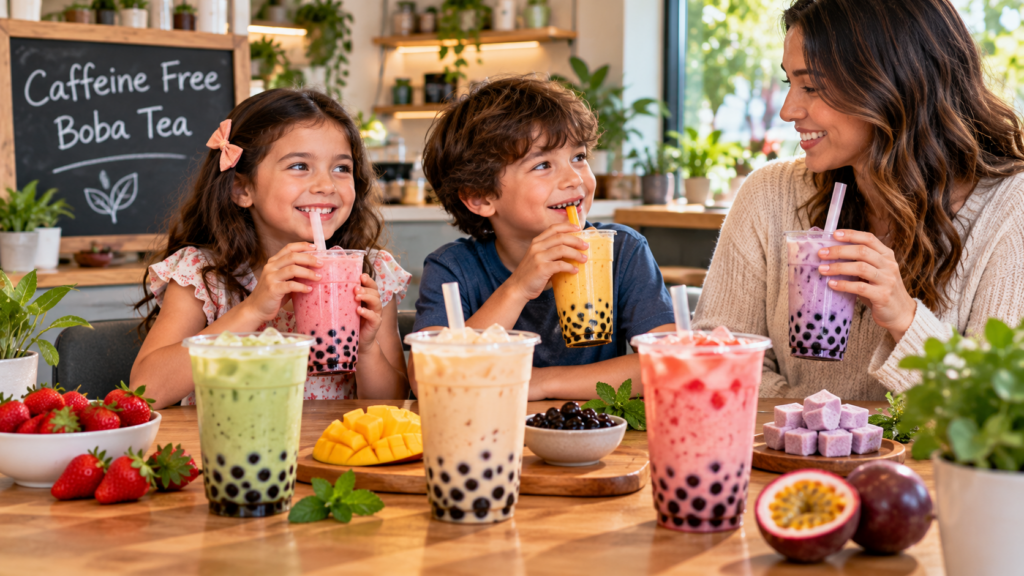
Good kid-friendly options may include brown sugar fresh milk, strawberry milk with pearls, mango smoothie, taro milk, yogurt drinks, or fruit refreshers without tea.
When ordering for children, sweetness level also matters. Many boba drinks can be quite sweet, especially those with syrup and toppings. Parents may want to choose reduced sweetness or smaller sizes.
A caffeine free boba tea can still be fun without being too strong or too stimulating.
Best Caffeine Free Boba Tea Options for Nighttime
Boba is not only an afternoon drink. Many people enjoy it after dinner, during movie nights, or while walking around with friends.
For evening orders, caffeine-free options can be more comfortable.
Brown sugar fresh milk, fruit smoothies, taro milk, herbal drinks, or fruit infusions may be better choices than black milk tea, green milk tea, oolong tea, or matcha.
Customers who are sensitive to caffeine should be especially careful with drinks that sound dessert-like but still contain tea. Matcha milk, taro milk tea, and Thai milk tea may contain caffeine even though they taste creamy.
Caffeine Free Boba Tea for Sensitive Drinkers
Some people feel caffeine more strongly than others.
Even a moderate amount of caffeine can cause restlessness, fast heartbeat, anxiety, or difficulty sleeping for sensitive individuals. For these customers, it is helpful to know that caffeine-free boba can still offer many flavor options.
They can choose fruit-based drinks, milk-based drinks, smoothies, or herbal bases. They can also customize toppings and sweetness to make the drink feel lighter.
The key is not to assume that “lighter flavor” means caffeine-free. A jasmine fruit tea may taste refreshing, but it still contains caffeine if it uses real tea.
How to Avoid Accidentally Ordering Caffeinated Boba
Drink names can be confusing.
“Milk tea” usually means the drink contains tea. “Fresh milk” usually means the drink may not contain tea. “Fruit tea” usually contains tea. “Fruit smoothie” may not. “Matcha” always comes from green tea powder and contains caffeine.
Customers can avoid mistakes by asking:
- Is this made with black tea, green tea, or oolong tea?
- Can I get this without tea?
- Is this fresh milk or milk tea?
- Does this fruit drink use tea as the base?
- Do you have caffeine-free boba options?
These questions are simple, but they can prevent surprises.
Why Boba Shops Should Promote Caffeine-Free Options
Caffeine-free drinks can make a boba shop more inclusive.
They help serve families, evening customers, caffeine-sensitive people, and customers who want dessert-style drinks. They also give groups more flexibility. If one person wants classic milk tea and another wants no caffeine, both can order from the same shop.
For businesses, highlighting caffeine free boba tea can also create better menu navigation.
A clearly labeled caffeine-free section can reduce customer hesitation and help staff answer questions faster. It can also encourage repeat visits from customers who may otherwise avoid boba because they assume every drink contains caffeine.
Making Caffeine-Free Boba More Exciting
Caffeine-free drinks do not need to feel like limited alternatives.
They can be signature menu items.
A shop can create layered brown sugar fresh milk, colorful fruit smoothies, sparkling fruit drinks, herbal refreshers, or seasonal milk-based desserts. Toppings can add texture and fun without requiring tea.
Creative caffeine-free drinks can also perform well on social media because they are often visually appealing.
The best caffeine-free menu items should feel intentional, not like backup options.
Conclusion
Caffeine free boba tea is a great choice for customers who want the fun of bubble tea without the caffeine found in black tea, green tea, oolong tea, jasmine tea, or matcha.
It can be especially useful for kids, evening drinkers, caffeine-sensitive customers, and anyone who wants a tea-free treat. Fresh milk drinks, smoothies, fruit infusions, herbal drinks, and yogurt-based options can all offer the same customizable boba experience in a gentler way.