Making Grocery Trips by E Bike Work in Everyday Life
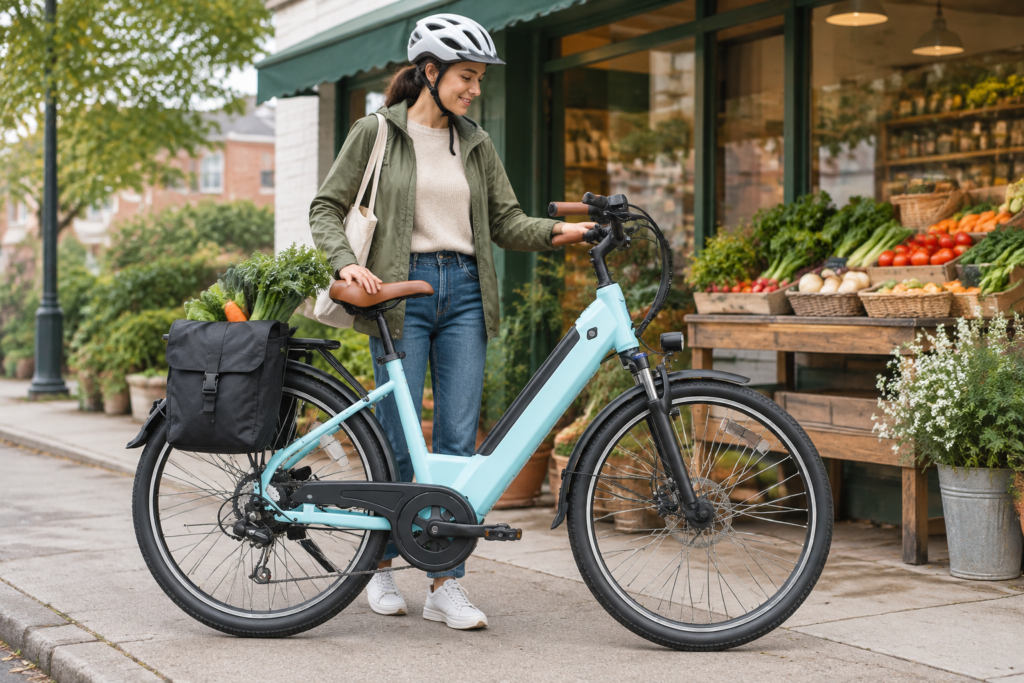
A grocery run is a useful test of whether a bicycle fits daily life. The distance may be short, but the trip involves carrying weight, parking near a destination, and handling a bike that feels different on the way home. Electric assistance helps with pedaling effort; it does not remove the need to load and secure shopping carefully.
The most successful approach is often to start with a small, familiar errand. A few essentials from a nearby shop teach you more about your setup than a fully loaded first attempt. You can then build a routine around what the bicycle and its accessories can safely carry.
Plan the shop as well as the ride
Choose a destination with somewhere appropriate to park and lock the bicycle. Check the location in person if possible. A convenient entrance may have no usable rack, while a side entrance could offer a better place to stop without obstructing pedestrians.
Look at the return route with the shopping in mind. A steep climb, rough surface, or awkward curb can become more noticeable when carrying a load. Prefer a route where you can ride smoothly and stop predictably, even if it adds a little distance.
Write a shopping list before setting off. Besides reducing forgotten items, a list helps you estimate volume and weight. Heavy drinks and bulky household goods may need a separate trip or another transport option.
Understand all the relevant limits
A bicycle’s overall payload rating is not the same as the limit of its rear rack. The rack, basket, panniers, and any mounting adapter may each have their own restrictions. Follow the manufacturer’s definitions and use the lowest applicable limit for the component you are loading.
The rider’s weight and carried items may both count toward total capacity. Do not assume that an empty rack means the bicycle has its full advertised allowance available for shopping. Check the current manual if the published terminology is unclear.
Compatibility also matters. A bag can appear to fit while its hooks, lower support, or fastening system are unsuitable for the rack. Install accessories according to their instructions and check that they cannot contact the wheel, brakes, or drivetrain.
Pack for balance and control
Place heavier items low and distribute them sensibly across the available carrying space. If using two panniers, avoid putting the entire heavy load on one side. Protect fragile groceries from hard containers and keep lids or packaging securely closed.
Do not hang shopping bags from the handlebar. A moving bag can interfere with steering or catch on the bicycle. Loose straps are another problem: roll or secure them so they cannot reach moving parts.
Before leaving the shop, check every fastening. Gently move the bags to make sure they are attached as intended. If the load changes the bike’s stability when parked, keep hold of it while adjusting the bags and choose a suitable support.
Match the bicycle to your errands
After a few small trips, you will have clearer questions for a future purchase. Can you mount comfortably with shopping attached? Can you maneuver the loaded bike through the storage entrance? Brands such as heybike offer different designs, so examine the specific model and its approved accessory arrangements rather than choosing on appearance alone.
When comparing an electric bike for errands, consider braking, handling, rack compatibility, and rider fit together. A larger motor specification does not establish how much cargo a bicycle can carry, and extra assistance does not increase the rack’s permitted load.
If you can arrange a suitable test, practice with a modest, safely secured load. Start somewhere quiet so you can feel how the bike responds before riding in traffic. Keep within all manufacturer instructions throughout the test.
Give a loaded bicycle more room
Shopping can change the way the bike accelerates, turns, and stops. Allow additional space and approach corners conservatively. Use both brakes as instructed for your bicycle, applying them smoothly rather than making abrupt inputs.
Leave room around parked cars and pedestrians without making sudden changes of direction. If a section of the route feels difficult with a load, dismount where it is safe and permitted, then walk the bicycle. There is no benefit in forcing an awkward maneuver.
Check tire pressure using the bicycle and tire manufacturers’ guidance. Do not adopt a universal number from another rider’s setup. Tire construction, load, and the bicycle’s design affect which pressure is appropriate.
Keep the routine easy to repeat
Store reusable shopping bags with your cycling kit so they are ready for the next trip. A weather resistant carrying system can protect groceries from a brief shower, but its actual protection depends on the product and how it is closed.
Handle chilled or frozen food according to food safety guidance. A longer ride or warm day may require insulated storage and a more direct trip home. Do not assume that a short distance guarantees the contents will remain at a suitable temperature.
Small, frequent grocery runs may fit your setup better than one large weekly shop. The useful measure is whether you can carry what you need with predictable control and little preparation. Start within comfortable limits, adjust the system, and let the routine grow from experience.