Building Core Strength With Physiotherapy
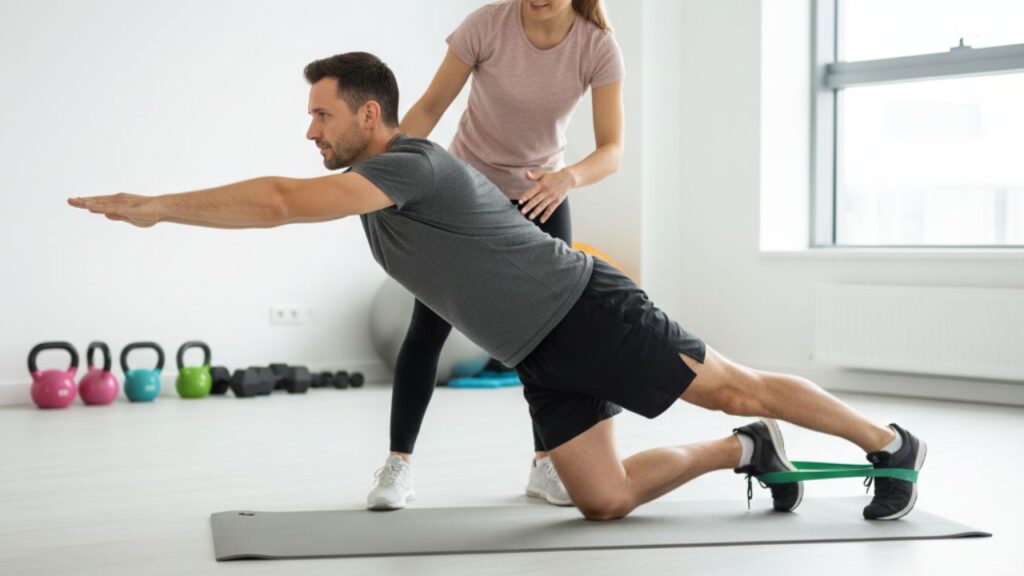
When most people hear “core strength,” they imagine sit-ups and a visible six-pack. But true core strength has very little to do with appearance. It’s about stability, posture, movement efficiency, and protecting your spine during daily life.
Your core is your body’s central support system. It helps you stay balanced, lift safely, reduce strain on your back, and move with control—whether you’re carrying groceries, playing sport, or sitting at a desk all day. If you’re dealing with recurring pain, poor posture, or feeling unstable, working with a Physio in Adelaide can be one of the most effective ways to build a functional core the right way. Clinics like Wakefield Sports focus on targeted, evidence-based programs that activate the muscles that matter most.
What Counts as “Core” Muscles?
A strong core is not just your front abs. Think of your core as a cylinder around your trunk that supports your spine and pelvis from every angle. It includes:
- Transverse Abdominis (TVA): your deep “corset” muscle that stabilises the spine and pelvis
- Obliques: support rotation, twisting, and side bending
- Multifidus: small spinal muscles that provide segment-by-segment stability
- Pelvic floor: supports the pelvis and helps control pressure and stability
- Diaphragm: your main breathing muscle, which plays a key role in core control
When these muscles work together, movement feels smoother and your body stays protected. When they don’t, other areas—especially the lower back—often overcompensate.
How Physiotherapy Helps Build Core Strength Safely
Many people try to “train core” by doing crunches or random planks. The problem is: if the deep stabilisers aren’t working properly, you can build strength in the wrong places and still feel pain or instability.
Physiotherapy takes a smarter approach:
- Assessment first: a physio identifies which muscles aren’t activating, and what movement patterns are causing overload
- Targeted activation: you learn how to switch on deep core muscles (like TVA and pelvic floor) before progressing
- Technique correction: form matters more than volume—especially for back and hip control
- Progressive plan: exercises are scaled from basic stability to real-life strength and functional movement
At Wakefield Sports, core rehab often focuses on retraining control first—then building strength on top of that foundation.
Signs Core Weakness Might Be Affecting You
Core weakness doesn’t always feel like “weak abs.” People often see it show up as:
Lower back pain
If the trunk isn’t stabilising well, the lower back can take extra load—leading to tightness, soreness, or recurring flare-ups.
Poor posture
Slumping, rib flare, or an over-arched lower back can be linked to weak deep stabilisers and reduced endurance.
Balance and coordination issues
Feeling unsteady, “wobbly,” or clumsy during sport can point to poor trunk control connecting the upper and lower body.
A Physio in Adelaide can help identify whether core control is the underlying driver—then correct it with a structured plan.
Core Training Techniques Used in Physiotherapy
Once your assessment is done, your physio will typically use a mix of methods, such as:
Clinical Pilates
Not a generic class—this is controlled, rehab-style movement that targets deep core muscles and improves alignment and control.
Functional retraining
Learning how to brace and stabilise during everyday tasks—lifting, squatting, bending, reaching, and carrying.
Breathing mechanics
Correct diaphragm use supports trunk stability. Proper breathing can instantly improve control and reduce unnecessary tension.
The key is quality over quantity. A few reps done correctly build real stability faster than high-rep exercises done with poor form.
Benefits of a Strong Functional Core
A properly trained core can improve almost every part of daily movement:
- Reduced injury risk during lifting, twisting, running, and sport
- Better posture endurance (especially for desk workers)
- Improved athletic performance through stronger power transfer and control
- Less back and hip strain, leading to fewer flare-ups and better long-term comfort
Conclusion
Building core strength is one of the best long-term investments you can make for your mobility, posture, and pain prevention—but it needs to be done correctly. Physiotherapy provides a safe and personalised way to retrain deep stabilisers, improve technique, and build lasting functional strength.
If you want expert guidance, seeing a Physio in Adelaide at Wakefield Sports can help you build a core that supports you in real life—not just in the mirror.