How Commercial Roller Door Openers Support Safer Workplace Access
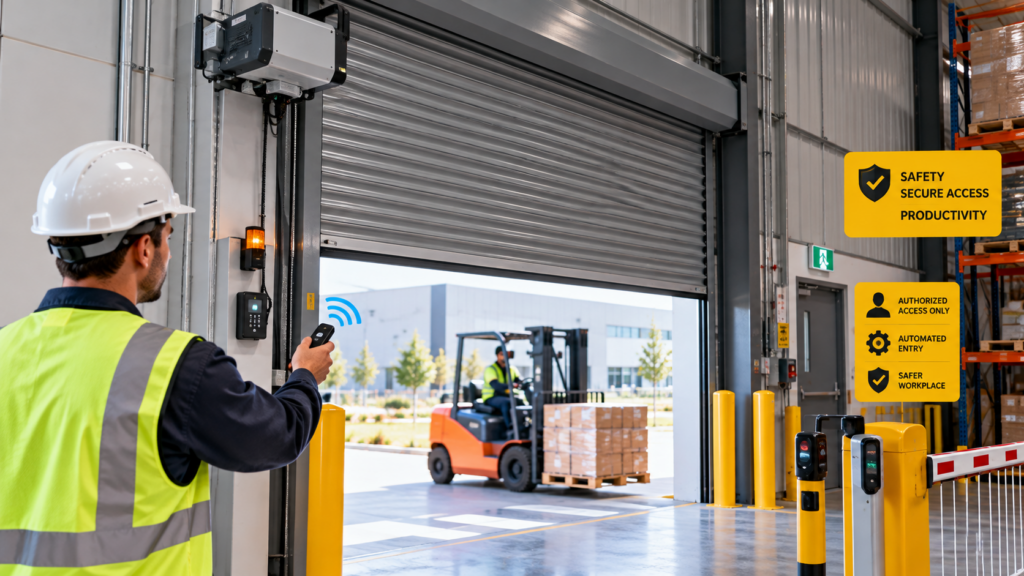
Commercial roller doors often sit at the busiest points of a workplace. They may control access to warehouses, loading bays, workshops, storage areas, service yards, or delivery entrances. When these doors are opened and closed many times a day, the way they operate has a direct effect on safety, workflow, and site security. A well-matched commercial roller door opener can form part of a wider access system that helps staff, vehicles, and goods move through a business site with less manual handling and fewer delays.
Reducing Manual Handling Risks
Large commercial roller doors can be heavy, awkward, and difficult to operate by hand. Even when a door is correctly balanced, repeated lifting and pulling may place strain on workers. Over time, this can increase the risk of muscle injuries, especially in workplaces where doors are used frequently throughout the day.
Automation reduces the need for staff to physically move the door. Instead, the door can be operated through a wall control, remote, keypad, or access system. This can be especially useful in warehouses, factories, and service centres where staff may already be carrying equipment, handling stock, or moving between tasks.
Supporting Safer Vehicle Movement
Commercial sites often have forklifts, trucks, vans, and staff vehicles moving through shared spaces. A roller door that opens smoothly and reliably can help reduce congestion at entry and exit points. When drivers do not need to leave vehicles to open a door manually, there is less stopping, reversing, and walking through active traffic areas.
This matters most around loading zones and service entrances. These areas can become busy quickly, especially during deliveries or shift changes. Automated door operation can support clearer traffic flow when paired with good site procedures, visible signage, and safe speed limits.
Improving Access Control
A commercial roller door is not just a physical barrier. It is also part of the site’s access control. Openers can be connected to remotes, keypads, swipe systems, or other authorised controls so that only approved users can operate the door.
This can help businesses manage who enters certain parts of the property. For example, a warehouse may need different access arrangements for managers, delivery drivers, maintenance staff, and after-hours workers. Automated access can also reduce the chance of doors being left open unnecessarily, which helps protect stock, equipment, and work areas.
Helping Staff Follow Safer Procedures
Workplace safety depends on systems that are easy to follow. If a roller door is difficult, slow, or unreliable, staff may look for shortcuts. They might leave the door open for longer than needed, force it by hand, or ignore early signs of a fault. These habits can increase risk.
A reliable opener helps make the safer option the easier option. Staff can operate the door consistently without needing to handle heavy components. Clear controls, visible warning lights, and properly positioned buttons can also help workers stay aware of door movement.
Safety Features That Matter
Modern commercial openers may include a range of safety features, depending on the door type and site requirements. These can include obstruction detection, photo-eye sensors, automatic stop functions, warning lights, manual release systems, and controlled closing settings.
These features are important because commercial doors are often larger and faster-moving than residential doors. If a person, vehicle, pallet, or item of equipment is in the door’s path, the system needs to respond appropriately. Regular testing is also important, since sensors and safety systems can become dirty, misaligned, or damaged in busy work environments.
Supporting Business Continuity
Access problems can interrupt more than a single task. A faulty roller door may delay deliveries, stop vehicles from entering, prevent stock movement, or create security concerns after hours. For businesses that rely on regular freight, storage, or service access, door reliability can affect the entire day’s schedule.
A suitable opener helps reduce disruption by providing consistent operation under expected use. The right system should be matched to the door’s size, weight, cycle frequency, and worksite conditions. A door used a few times per day has different demands from one used continuously in a transport or manufacturing setting.
Maintenance and Inspection Still Matter
Automation does not remove the need for maintenance. A commercial roller door opener works with many other parts of the door system, including springs, guides, brackets, drums, curtains, and bottom rails. If any of these components are worn or damaged, the opener may need to work harder than intended.
Routine inspections can identify early signs of trouble. Unusual noise, slow movement, uneven travel, delayed response, overheating, or repeated stopping may indicate that servicing is needed. Keeping the door clean, checking safety devices, and responding early to faults can help prevent larger failures.
A Safer Access Point for Busy Workplaces
Commercial roller door openers support safer workplace access by reducing manual effort, improving traffic flow, strengthening access control, and helping staff follow consistent procedures. They are most effective when chosen for the site’s actual workload and maintained as part of the broader door system.
For busy workplaces, the goal is not only to open and close a door. It is to create an access point that works reliably, protects people, supports operations, and fits the way the business functions each day.