How Currency Exchange Rates Influence International Financial Decisions
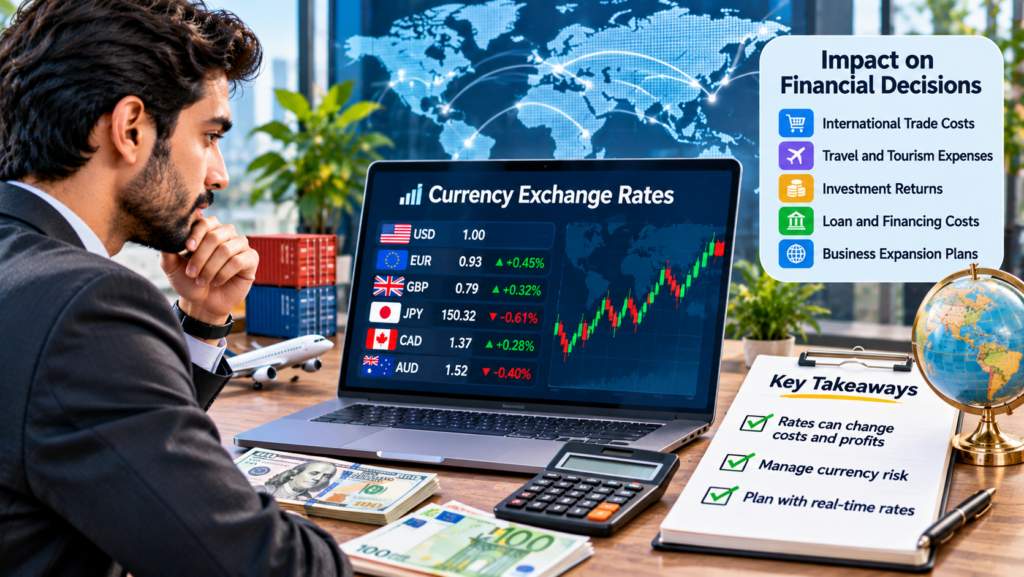
Currency exchange rates play an important role in the global economy. Whether someone is planning an international purchase, managing business expenses, or comparing financial opportunities across different markets, understanding how currencies move can make a significant difference.
Exchange rates rarely remain constant. They respond to changes in economic conditions, interest rates, international trade, government policies, and investor confidence. Even relatively small movements can influence purchasing power, business costs, and the value of money transferred between countries.
For individuals and businesses operating internationally, keeping track of these changes is an important part of making informed financial decisions. Understanding how exchange rates work can also help people identify favourable conditions and avoid unnecessary conversion costs.
Understanding How Exchange Rates Work
An exchange rate represents the value of one currency compared with another. For example, it indicates how many Australian dollars are needed to purchase one US dollar or how much a particular amount of British pounds is worth in another currency.
These values are influenced by several economic factors, including inflation, interest rates, employment figures, and international demand.
Currencies from countries with stable economies and relatively strong financial institutions often attract greater international confidence. However, economic uncertainty, political developments, and unexpected policy changes can quickly influence their market value.
Exchange rates are generally divided into two categories:
- Floating exchange rates: These change according to supply and demand in international financial markets.
- Fixed exchange rates: These are maintained within a specific range through government or central bank policies.
Understanding the difference helps individuals interpret currency movements and recognise why exchange rates can behave differently across countries.
Factors That Influence International Currency Values
Several factors contribute to changes in currency values. Although some movements happen gradually, others can occur following important economic announcements.
Interest Rate Changes
Central banks use interest rates to influence economic activity and manage inflation. When a country increases its interest rates, its financial markets may become more attractive to international investors.
This can increase demand for its currency and influence its exchange rate against other currencies.
However, interest rates are not the only consideration. Investors also examine economic growth, financial stability, and expectations about future monetary policies.
Inflation and Purchasing Power
Inflation reduces the purchasing power of money over time. When prices increase faster in one country than in another, the difference can influence the relative value of their currencies.
For international businesses, inflation can also increase operating expenses, transportation costs, and the price of imported products.
Monitoring inflation trends therefore provides useful information about broader economic conditions.
International Trade and Demand
Countries that export large quantities of products and services receive payments from international customers. This activity can influence demand for their domestic currencies.
Similarly, countries that rely heavily on imported goods may experience different currency pressures depending on international trade conditions.
Changes in commodity prices, manufacturing demand, and global supply chains can also contribute to currency movements.
Why Monitoring Exchange Rates Matters
Exchange rate movements affect more than financial institutions and international investors. They influence everyday activities, including shopping, travelling, studying abroad, and operating businesses across borders.
For example, someone purchasing equipment from another country may find that the final cost changes significantly between the time an order is placed and the payment is completed.
International students may also need to monitor currency movements when preparing tuition payments or calculating accommodation expenses.
Businesses face similar challenges when paying overseas suppliers, receiving international payments, or managing expenses in multiple currencies.
For this reason, regularly checking reliable market information can help people make better financial decisions.
Useful Ways to Track Currency Movements
There are several ways to follow exchange rate changes without relying on complicated financial reports.
Use Reliable Financial Information Platforms
Financial information platforms provide market prices, historical movements, and other useful indicators.
Users can compare different currency pairs, review historical performance, and identify broader market patterns.
For instance, someone monitoring Australian dollar valuations can check the latest BTC AUD market information alongside other financial data when researching international market movements.
The important consideration is to use reliable sources and understand what each displayed value represents.
Compare Historical Exchange Rates
Looking at a single exchange rate does not always provide enough information to understand current market conditions.
Comparing historical data over several weeks or months can help identify whether a currency has strengthened, weakened, or remained relatively stable.
Historical comparisons are particularly useful for businesses planning recurring international payments.
Understand Conversion Fees
The displayed exchange rate is not necessarily the final rate a customer receives.
Banks, payment providers, and currency conversion services may apply additional charges or margins.
Before completing an international transaction, compare the total amount received rather than focusing exclusively on the advertised exchange rate.
Common Mistakes When Comparing International Exchange Rates
Even people who regularly monitor financial markets can make mistakes when evaluating currency values.
Some of the most common include:
- Ignoring transaction fees: A favourable displayed rate may become less attractive after additional charges.
- Using outdated information: Exchange rates can change throughout the day, making older figures unreliable.
- Comparing different market sources: Different platforms may display slightly different prices depending on their data providers.
- Ignoring economic developments: Inflation announcements, central bank decisions, and international trade changes can influence currency movements.
- Making decisions based on short-term changes: A temporary movement does not necessarily indicate a long-term trend.
Avoiding these mistakes can make financial comparisons more accurate and help reduce unnecessary expenses.
The Importance of Financial Awareness in a Connected Economy
International financial markets are increasingly interconnected. Economic developments in one country can influence businesses, consumers, and financial institutions thousands of miles away.
A change in central bank policy, for example, may affect borrowing costs, international investment decisions, and currency valuations across multiple regions.
This makes financial awareness increasingly important for anyone involved in international transactions.
People do not need advanced financial knowledge to understand basic exchange rate movements. Regularly reviewing reliable information, comparing historical figures, and accounting for transaction costs can provide a useful foundation.
Final Thoughts
Currency exchange rates influence a wide range of financial activities, from international shopping and overseas education to business operations and cross-border payments.
Understanding the factors behind currency movements allows individuals and organisations to make more informed decisions. Interest rates, inflation, international trade, and economic confidence all contribute to changes in currency values.
Rather than relying on isolated figures or short-term market movements, it is more useful to examine reliable information, compare historical trends, and consider the actual costs involved in international transactions.
Developing these habits can improve financial awareness and make navigating an increasingly connected global economy considerably easier.