Common Causes of Serious Burn Injuries
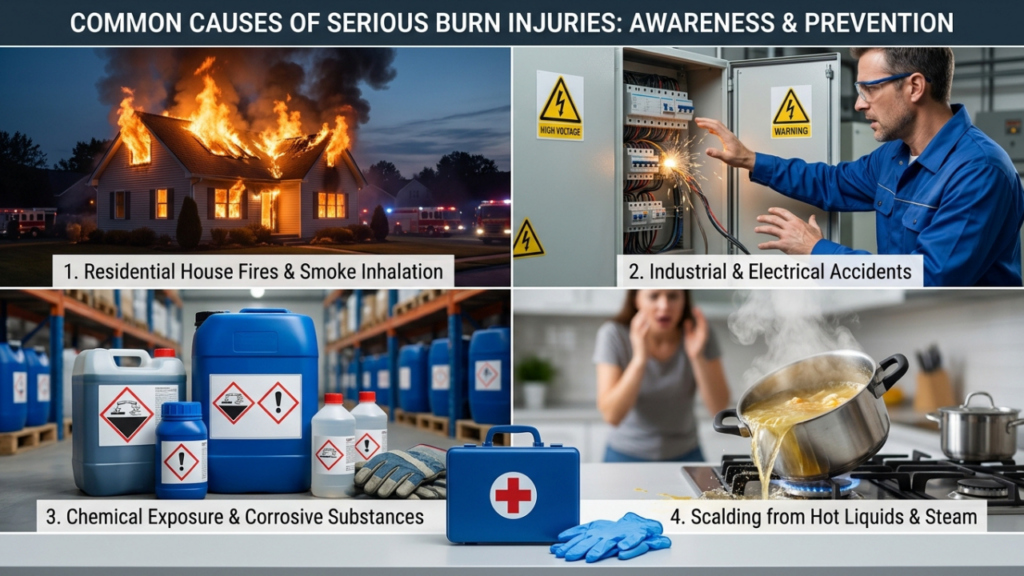
A few seconds around fire, boiling water, electricity, or harsh chemicals can change a person’s life. Serious burns may require emergency treatment, surgery, rehabilitation, and long-term care. For people dealing with the physical and financial effects of a severe injury, legal help after a serious burn injury can help them understand their options when another person’s negligence, unsafe property, or defective product may have played a role.
The American Burn Association reports that many burn injuries are preventable and identifies flames, scalds, hot objects, chemicals, and electricity among common sources of burns.
Fire and Open Flames
Fire is a major cause of serious burns.
House fires can expose people to flames, extreme heat, and smoke, and clothing can ignite quickly. Fires may spread when flammable materials are placed too close to heat sources.
Open flames from fireplaces, candles, grills, stoves, or campfires can also become dangerous when they reach nearby combustible items like curtains, furniture, or clothing.
Fire-related burns are often severe because they may also involve smoke inhalation or other injuries.
In some cases, questions may arise about whether a property owner, manufacturer, employer, or another party failed to take reasonable safety measures.
Scalds From Hot Liquids and Steam
Hot liquids are a common cause of serious burns. Scalds can occur when boiling water, hot oil, coffee, soup, or other hot liquids spill onto the skin.
Steam can also cause burns, especially near industrial equipment, kitchen appliances, or boilers.
The American Burn Association’s guidance on common types of burns notes that scalds are thermal burns caused by hot liquids or steam.
Scalds can happen in kitchens, bathrooms, workplaces, and other environments.
Severe scalds may require medical treatment, surgery, skin grafts, or rehabilitation.
Contact With Hot Objects
A person does not need to touch a flame to suffer a serious burn.
Contact burns happen when skin touches a hot surface such as stoves, ovens, irons, tools, machinery, or pipes, which can cause damage within seconds. Severity depends on temperature and contact time.
Children and older adults are especially at risk because they may not recognize or quickly avoid hot surfaces.
Workplace accidents involving overheated or faulty equipment can also cause contact burns and may require further investigation.
Electrical Burns
Electrical injuries can be deceptive because the skin may not show the full extent of the damage.
When electrical current passes through the body, it can harm skin, muscles, nerves, and internal organs, so a small mark does not mean a minor injury.
They can result from exposed wires, damaged cords, faulty appliances, outlets, power equipment, or live electrical systems, and arc flashes can also cause severe burns.
The American Burn Association notes that electrical injuries may cause deep tissue damage even when little is visible on the skin.
Electrical accidents may also lead to falls, broken bones, head injuries, or other trauma from the shock itself.
Chemical Burns
Strong chemicals can damage skin, eyes, and other tissues on contact.
Chemical burns may result from acids, alkalis, solvents, cleaning products, or industrial chemicals, often through direct contact, splashes, leaks, or improper handling. The American Burn Association lists these substances as common causes of chemical burns.
Injuries can worsen if the chemical remains on the body, and some exposures may also release harmful fumes that affect breathing.
Workplaces using hazardous chemicals should have proper safety procedures, protective equipment, labeling, storage, and training.
Explosions and Flash Burns
Explosions can cause severe burns instantly. The sudden release of heat can create flash burns and ignite clothing or nearby materials, leading to flame injuries. Victims may also suffer hearing loss, broken bones, head trauma, lung damage, and other blast-related injuries. These incidents often occur in industrial, construction, laboratory, or workshop settings where combustible materials or equipment are present. Determining the cause can be complex and may require reviewing equipment, safety procedures, warnings, maintenance records, and involved materials.
Burns Caused by Defective Products
Some serious burns are caused by defective or malfunctioning products, such as appliances, heaters, batteries, electrical equipment, cooking tools, or other consumer and workplace items. A product may be unsafe due to its design, manufacturing, warnings, or safety features. When a product causes a burn, it is important to preserve it as evidence rather than discard or repair it. Supporting materials like receipts, packaging, photos, warranties, instructions, and maintenance records can also help explain how the injury occurred.
Workplace Burn Injuries
Workplaces can contain many potential burn hazards.
Employees may work around open flames, hot machinery, chemicals, electrical systems, steam, pressurized equipment, or combustible materials.
Training, protective equipment, maintenance, warnings, emergency procedures, and proper handling practices can reduce these risks.
The American Burn Association has highlighted heat, chemicals, electricity, and fire as burn hazards that can arise in workplace environments.
When a worker suffers a serious burn, determining exactly what happened may require reviewing workplace policies, equipment, training records, witness statements, and other evidence.
Burns From Poor Property Maintenance
Property conditions can also contribute to serious burn injuries.
A dangerous electrical system, faulty heater, exposed pipe, defective smoke alarm, unsafe cooking equipment, or improperly stored combustible material can create serious risks.
People responsible for maintaining property may have duties to address certain hazards. The exact responsibilities depend on the circumstances.
Evidence about inspections, repairs, prior complaints, warnings, and maintenance can become important when determining why an accident occurred.
Smoke and Inhalation Injuries
A fire does not have to directly touch the skin to cause serious harm.
Smoke and heated gases can damage the respiratory system. People trapped inside a burning structure may inhale dangerous substances while trying to escape.
Inhalation injuries can occur alongside burns and may make recovery more difficult.
The American Burn Association’s burn first aid guidance notes that serious burns, including injuries involving inhalation, chemicals, or electricity, may require specialized medical care.
Why Serious Burns Can Have Long-Term Effects
A severe burn can affect much more than the skin.
Deep burns may require surgery, skin grafts, physical therapy, and repeated medical treatment. Scarring can restrict movement, affect appearance, and lead to additional procedures.
Some survivors also experience emotional effects after a traumatic burn. Changes in appearance, pain, loss of independence, and time away from work can create additional challenges.
The financial impact can continue long after the accident. Medical bills, rehabilitation costs, lost income, and future treatment may all become concerns.
When Another Party May Be Responsible
Not every burn injury results from someone else’s negligence.
However, responsibility may arise when an injury is caused by unsafe property, defective equipment, poor maintenance, inadequate warnings, unsafe work practices, or other preventable hazards.
Evidence such as photos, medical records, incident reports, witness statements, product details, and safety records can help determine what happened.
A timely investigation can help preserve evidence before conditions change or records become harder to obtain.
Moving Forward After a Serious Burn
Serious burn injuries can have long-lasting effects, and understanding the cause is key to protecting the injured person’s interests.
Burns may result from fire, scalding liquids, hot objects, electricity, chemicals, explosions, defective products, or unsafe conditions, all of which require careful investigation.
If another party may be responsible, an attorney can review the facts and explain possible legal options.
For those recovering, the priority should be medical care and preserving evidence, as clear information about the cause helps guide next steps.