How to Calculate Your Water Bill Before It Arrives: A Step-by-Step Guide for US Households
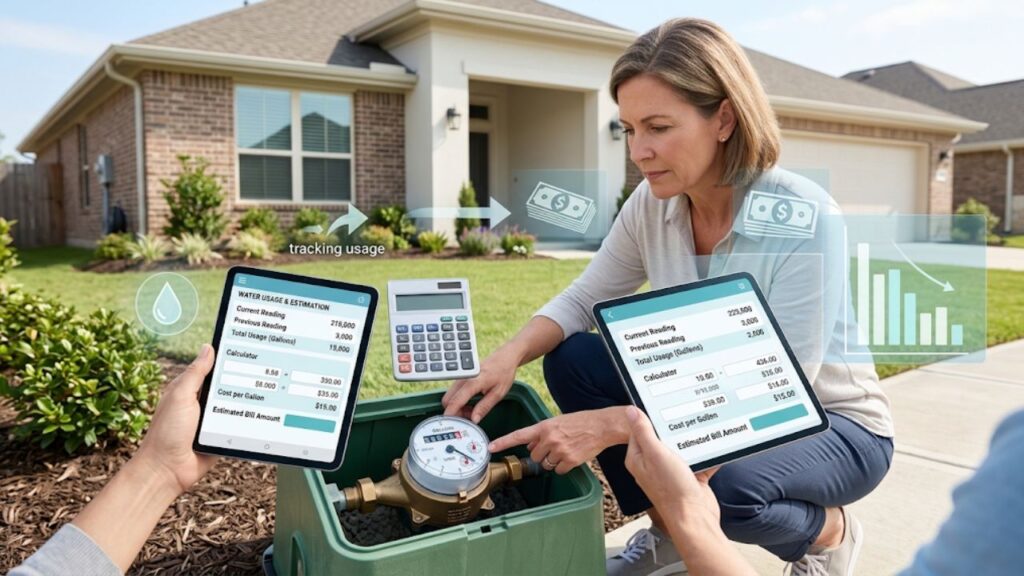
For most households across the United States, the monthly water bill arrives with little context. It shows a total amount due, sometimes a usage figure in gallons or cubic feet, and a due date. What it rarely shows is how that number was reached. This gap between consumption and cost leaves many homeowners unable to identify overuse, spot billing errors, or plan ahead for seasonal changes in their usage patterns.
Water pricing in the US is not standardized. Rates vary significantly by municipality, region, and even the time of year. Some utilities use tiered pricing structures that charge more per unit as consumption increases. Others apply flat rates with fixed service charges layered on top. Without understanding which structure applies to your account and how it translates into a dollar figure, it is nearly impossible to make informed decisions about consumption or budget with any accuracy.
Calculating your water bill before it arrives is not a complex exercise, but it does require knowing what to look for. Understanding your rate structure, reading your meter correctly, and accounting for additional charges are all part of arriving at a reliable estimate. This guide walks through that process in a way that applies to most residential utility accounts across the country.
Understanding How Residential Water Bills Are Structured
A residential water bill is rarely a single-line charge. In most US municipalities, it is composed of several components that are calculated independently and then combined into one total. The largest portion typically reflects actual water consumption, measured in either gallons or units of one hundred cubic feet, commonly referred to as CCF. But consumption charges alone do not tell the full story. Fixed fees, sewer charges, and municipal surcharges are standard additions that many households overlook when trying to estimate their monthly costs.
For households looking to get ahead of this calculation, a Water Bill Calculator overview can help illustrate how these individual components combine into a final total, particularly for users unfamiliar with tiered rate systems or multi-part billing structures. The Water Bill Calculator overview breaks down how consumption charges, base fees, and service costs interact to produce the number on your statement.
Beyond the consumption charge, most bills include a base service fee that is assessed regardless of how much water is used. This covers infrastructure maintenance, meter reading, and administrative costs on the utility’s end. Sewer fees are another consistent addition. In most systems, sewer charges are calculated as a percentage of water consumption, operating under the assumption that most water used indoors eventually enters the sewer system.
Tiered Pricing and What It Means for Your Estimate
Tiered pricing structures are designed to encourage conservation by charging progressively more as consumption increases. In practice, this means that a household using a moderate amount of water may pay a noticeably lower rate per unit than one that regularly exceeds a certain threshold. The structure creates a pricing curve rather than a flat line, which makes it harder to estimate costs using simple arithmetic.
To calculate accurately under a tiered system, you need to know the specific rate tiers your utility applies, including where each tier begins and ends. A household that consistently falls within the first tier will have a predictable and relatively straightforward bill. One that regularly crosses into a second or third tier may see disproportionate increases during high-usage months like summer, when irrigation and outdoor water use tend to rise. Missing this distinction is one of the most common reasons households are surprised by their summer water bills.
Fixed Charges That Exist Outside Consumption
Fixed charges deserve more attention than they typically receive. They appear on every bill regardless of whether consumption was high, low, or even zero in a given month. For households that travel frequently or have seasonal properties, understanding the fixed portion of a water bill is important because it represents a minimum cost floor that cannot be reduced by conserving water.
These charges can include meter rental fees, debt service charges tied to local infrastructure projects, and environmental or stormwater fees levied by the municipality. While individually small, they can collectively account for a meaningful portion of a lower-consumption household’s total bill. Identifying and accounting for them during any manual calculation prevents underestimation of actual costs.
Reading Your Water Meter Accurately
Calculating a water bill before it arrives depends on having an accurate usage figure to work with. That figure comes from your water meter. In most residential installations, the meter is located near the street curb in a small underground vault, though in some properties it may be inside a basement or utility closet. The meter displays a reading in either gallons or cubic feet, depending on the utility and the age of the meter.
According to the US Environmental Protection Agency, the average American household uses more than 300 gallons of water per day, though actual figures vary widely based on household size, appliance efficiency, and outdoor water use habits. Reading your meter at consistent intervals, such as on the first and last day of your billing cycle, gives you a direct usage figure that can then be applied to your rate schedule.
The Difference Between a Meter Read and an Estimated Bill
Not all utility bills are based on actual meter readings. Many utilities read meters on a monthly or bi-monthly cycle, and in months when a reading is not taken, they issue an estimated bill based on prior usage patterns. This means your statement may not reflect actual consumption at all. Estimated bills are reconciled in the following cycle when a real reading is taken, which can result in unexpected adjustments in either direction.
If you are calculating your bill based on an estimated reading from the utility, your result may diverge from the final amount billed, especially if your consumption in that period was notably different from your historical average. Reading the meter yourself for the relevant period removes this uncertainty and gives you a more reliable baseline for your calculation.
Converting Between Units
One source of confusion in manual water bill calculations is the unit of measurement. Some utilities bill in gallons, others in CCF, and some in units of one thousand gallons. If your meter reads in gallons but your utility bills in CCF, a conversion step is required before applying your rate schedule. One CCF equals approximately 748 gallons. Skipping this step leads to estimates that are significantly off from the actual total.
It is worth checking your most recent statement or your utility’s rate schedule to confirm both the unit your meter measures and the unit your billing applies rates to. These are not always the same, and the discrepancy is easy to miss when looking at the meter display without this context in mind.
Applying Your Rate Schedule to Your Usage
Once you have an accurate usage figure and a clear picture of your utility’s rate structure, calculating the consumption portion of your bill is a matter of applying the appropriate rate or rates to the number of units used. For flat-rate systems, this is straightforward. For tiered systems, it requires calculating each tier separately and summing the results.
For example, if the first tier covers the initial units at one rate and usage beyond that falls into a second tier at a higher rate, you calculate the cost at the first tier rate for that quantity, then multiply the remaining usage by the second tier rate, and add the two together. This two-step approach applies across however many tiers your utility uses. Treating the entire usage figure as though it falls under one rate will produce an incorrect estimate.
Adding Fixed and Variable Surcharges to Your Estimate
After calculating the consumption charge, the next step is adding fixed fees. Collect your most recent water bill and note every line item that appears outside of the consumption charge. These are the charges you will need to add to every monthly estimate, because they do not change with usage. Sewer charges, if calculated as a percentage of consumption, are variable and should be calculated separately before adding them to the running total.
Some utilities also apply seasonal adjustments, drought surcharges, or budget tier penalties during periods of declared water scarcity. These are not always visible on a standard rate schedule and may only appear during specific circumstances. Households in regions with periodic drought conditions or restricted water use should check whether their utility has triggered any such adjustments in the current billing period before finalizing an estimate.
When Your Estimate and Your Bill Diverge
Even a carefully constructed estimate will sometimes differ from the actual bill. The most common reasons include undetected leaks that added consumption without visible signs, an estimated reading from the utility that was later reconciled, a rate change that took effect mid-cycle, or a billing error. Knowing how to calculate your bill independently gives you the ability to identify which of these is likely at play when a discrepancy appears.
Persistent gaps between your estimates and the billed amounts are worth investigating rather than accepting. A toilet with a slow, continuous leak can add several thousand gallons to a monthly total without any obvious sign inside the home. Similarly, an irrigation system with a faulty valve or a water softener running regeneration cycles more frequently than necessary can raise consumption gradually in ways that are difficult to notice day to day.
Building a Consistent Tracking Habit
Calculating a water bill before it arrives is most useful when done consistently over multiple billing cycles. A single estimate gives you a data point. Several estimates over a year give you a pattern. That pattern reveals seasonal shifts, the impact of household changes, and whether conservation efforts are translating into measurable reductions.
Recording your meter readings at the start and end of each billing cycle, along with your calculated estimate and the actual billed amount, takes only a few minutes per month. Over time, this record becomes a practical reference for understanding where your household’s water costs come from and what, if anything, is worth adjusting.
Conclusion
Understanding your water bill before it arrives is less about finding savings and more about having clarity over a regular household expense that most people accept without scrutiny. The structure of residential water billing in the US involves multiple components, rate tiers, and unit conversions that make passive acceptance easy and informed oversight genuinely rare.
By reading your meter at consistent intervals, understanding how your utility structures its rates, and accounting for both fixed and variable charges, you can produce a reliable monthly estimate that removes most of the uncertainty around this cost. When your calculated figure and your actual bill align consistently, you have a working understanding of your water usage and its financial implications. When they diverge, you have a reason to look more closely. Both outcomes are more useful than simply waiting for the bill to arrive.