Dry Brushing Your Skin: What It Does, How to Do It, and How Often
Dry brushing has been in and out of fashion for decades, and it comes with a fairly extraordinary list of promised benefits. Depending on where you read about it, a few minutes with a bristle brush will smooth your skin, shift your cellulite, drain your lymphatic system and rid your body of toxins.
Some of that is fair. Most of it is not. Dry brushing is a genuinely useful, very cheap addition to a body care routine, and it is worth doing for the things it actually does rather than the things it is marketed as doing. Here is what stands up, how to do it properly, and how often is sensible.
What Dry Brushing Actually Is
Dry brushing means exactly what it sounds like: sweeping a firm, dry brush over dry skin, usually just before you get into the shower. No water, no oil, no product. The brush is typically a natural bristle one with either a short handle and a hand strap, or a long handle for reaching your back.
The whole process takes three to five minutes. You work over the body in sections, then shower to rinse away the loosened surface skin, then moisturise. That is the entire practice, and its low cost is a large part of its appeal.
What Dry Brushing Does
It exfoliates, mechanically
This is the part nobody disputes. The bristles lift away loose, dry surface cells, which is why skin feels noticeably smoother straight afterwards. If you get rough patches on your upper arms, thighs or shins, particularly through a dry Australian winter, this is where dry brushing earns its place.
It helps moisturiser work better
Body lotion applied over a layer of dry, flaking skin has to get through that layer first. Remove it and whatever you apply afterwards sits against the skin properly. Many people find the real benefit of dry brushing is not the brushing but the moisturiser they apply straight after it.
It leaves the skin looking briefly brighter
Brushing brings a flush of colour to the surface and clears away dullness sitting on top. It is a short-lived effect that lasts an hour or two, but it is a real one, and it is part of why the practice feels good.
It gets you paying attention to your skin
This sounds slight, but it is not. Three minutes a few times a week spent looking at your own arms, legs and back is how people notice a mole that has changed, a patch of dryness that is not settling, or an area that has become tender. That is a worthwhile habit on its own.
What Dry Brushing Does Not Do
The detox claim does not hold up. Your liver and kidneys handle that, and no amount of external brushing changes their workload. Any product or article suggesting a brush removes toxins from the body is selling you a story.
The cellulite claim is similarly overstated. Cellulite is a structural matter involving connective tissue and fat beneath the skin, and surface brushing does not reach it. Brushing may make skin look temporarily smoother and slightly flushed, which softens the appearance for a short while, but the underlying structure is unchanged.
Nor does dry brushing tighten the skin or replace medical treatment for anything. Approaching it as a pleasant exfoliating habit, rather than a health intervention, will save you both disappointment and money.
How to Dry Brush, Step by Step
- Start dry, before you shower. Skin and brush both need to be completely dry, or you get drag rather than exfoliation.
- Begin at your feet and work upward. Use long, light sweeps up the legs, spending a little longer on knees and shins where skin is thicker.
- Move to the arms, starting at the hands and brushing up towards the shoulders.
- Use gentle circles across the stomach and lower back, then long strokes across the upper back and shoulders if you can reach.
- Keep the pressure light. Your skin should look faintly pink, not red or scratched. If it stings, you are pressing far too hard.
- Skip the face, the chest and anywhere delicate. A body brush is far too coarse for facial skin.
- Shower afterwards, then apply moisturiser while the skin is still slightly damp.
Wash the brush itself every week or two with a little mild soap and warm water, and let it dry bristles-down so water does not sit in the base. A brush left constantly damp in a steamy bathroom will not stay pleasant for long.
How Often Should You Dry Brush?
Two to three times a week suits most people. Daily brushing is popular advice but it is more than most skin needs, and over-exfoliation shows up as tightness, redness and irritation rather than smoothness.
If your skin is on the dry or sensitive side, start at once a week with a softer brush and see how it responds over a fortnight. In summer, when skin is generally less dry and you may be shaving or waxing more often, you will probably want to brush less rather than more.
The signal to ease off is straightforward: if your skin feels tight, looks pink for more than an hour, or has become more reactive to your usual moisturiser, you are brushing too often or too hard.
Who Should Skip It Altogether
Dry brushing is not for everyone. Avoid it over sunburn, broken skin, cuts, rashes, eczema or psoriasis flares, varicose veins, or any area that is bruised or inflamed. If you have a skin condition, are on treatment that thins the skin, or have circulation problems, check with your GP or dermatologist before starting rather than after.
If a Dry Brush Is Too Harsh: Brushing in the Shower Instead
Plenty of people find a stiff dry brush simply too abrasive, particularly on thinner or more mature skin. Wet brushing in the shower is a gentler alternative. It is a different practice with a different tool, not dry brushing under another name, but it delivers the same core benefit of surface exfoliation with far less scratch.
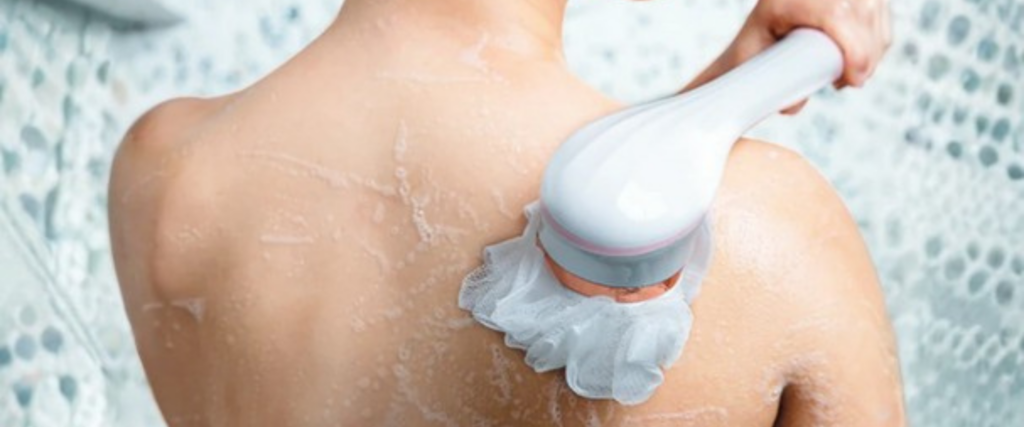
Australian brand Thin Lizzy makes one option here, the Pure Perfection Body Brush, a rechargeable in-shower brush with an extended handle and four interchangeable heads including a loofah, a pumice, a silicone head and a soft bristle head. Used with body wash, it covers the same ground as a dry brush while letting you choose how firm the contact is, and the long handle is the main reason people with restricted shoulder movement tend to prefer this style of tool. It is a wet-use brush and is not intended for dry brushing.
Whichever route you take, the principle is the same: exfoliate gently, do not overdo the frequency, and moisturise afterwards. The brand’s website Like Thin Lizzy carries the rest of its body care range if you want to see what pairs with it.
The Short Version
Dry brushing is a good exfoliant and a pleasant habit. It is not a detox, it will not shift cellulite, and daily brushing is more than most skin wants. Two or three times a week, light pressure, always before the shower, always followed by moisturiser. If a dry brush feels too rough, brush in the shower instead. The point is smoother skin, not a punishing routine.
Frequently Asked Questions
Should you dry brush before or after a shower?
Before. The skin and the brush both need to be dry for the bristles to lift surface cells rather than slide over damp skin. Shower afterwards to rinse everything away.
Does dry brushing help with cellulite?
Not in any lasting way. It can make the skin look temporarily smoother and slightly flushed, which softens the appearance for an hour or so, but it does not change the structure underneath.
Can you dry brush your face?
No. Body brush bristles are far too coarse for facial skin. If you want to exfoliate your face, use a product formulated for it.
How long before you notice a difference?
The smoothness is immediate, from the first session. Any change to persistent rough patches on elbows, knees or shins tends to show over two to three weeks of consistent brushing paired with moisturiser.