HP Jet Fusion 3D Printing: Best Practices FAQ
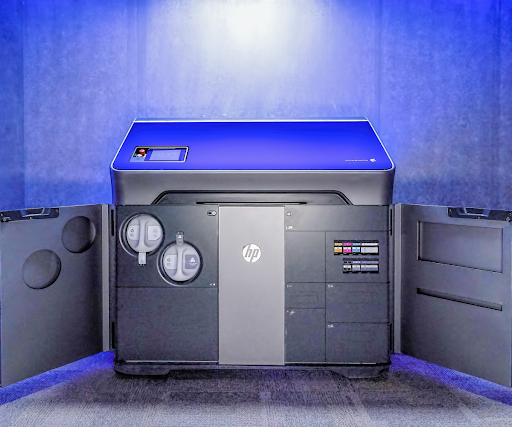
25 Essential Questions Answered for Perfect 3D Printed Parts
Introduction
HP Jet Fusion 3D printing is a high-speed, high-precision additive manufacturing process that produces strong, functional parts with exceptional surface quality. Whether you’re an engineer, designer, or manufacturer, understanding the best practices for designing MJF-printed parts can make all the difference in accuracy, performance, and cost-effectiveness.
This comprehensive FAQ covers everything from material selection and design guidelines to accuracy, surface finish, and post-processing.
1. What is HP Jet Fusion (MJF) 3D printing, and how does it work?
HP Multi Jet Fusion (MJF) is a powder-based 3D printing technology that uses a combination of fusing and detailing agents to selectively bond powder particles. A high-powered infrared lamp melts the powder, creating strong, functional parts with excellent mechanical properties and fine detail resolution.
2. How does MJF compare to other 3D printing technologies like FDM and SLS?
- FDM (Fused Deposition Modeling): Layer-by-layer extrusion; weaker interlayer adhesion.
- SLS (Selective Laser Sintering): Similar to MJF but uses a laser; slower and less detailed.
- MJF: Stronger, more precise, and faster than both; produces near-isotropic mechanical properties.
3. What are the key benefits of designing for MJF?
- High-speed printing for production
- Excellent detail resolution for small features
- Strong, isotropic mechanical properties
- Low waste with efficient powder recycling
- Superior surface finish compared to SLS
4. What materials are available for HP Jet Fusion?
- Nylon PA12: High strength, chemical resistance
- Nylon PA11: More flexible, impact-resistant
- TPU: Rubber-like flexibility for seals and gaskets
5. What is the recommended minimum wall thickness for MJF parts?
- XY Plane: 0.3 mm (for short walls)
- Z Direction: 0.5 mm (for vertical walls)
- Large Surfaces: Increase thickness to avoid warping
6. How can I prevent warping in thin and long parts?
- Keep aspect ratio below 10:1
- Use internal supports or lattice structures
- Avoid abrupt cross-section changes
7. What are the best tolerances for assembly and moving parts?
- Mating parts: 0.4 mm clearance (±0.2 mm per part)
- Moving parts: ≥ 0.7 mm clearance
- Thin walls (<3 mm): ≥ 0.3 mm clearance
8. Can I print hinges, gears, or snap-fit parts with MJF?
Yes, but they require:
- Correct clearance (≥ 0.3 mm for thin walls)
- Optimized material selection (PA11 for flexibility)
- Iterative testing for functional performance
9. How can I reduce weight in MJF parts?
- Hollow the part (minimum wall thickness: 2 mm)
- Use lattice structures (minimum 5 mm gap for powder removal)
- Apply topology optimization to remove excess material
10. What is topology optimization, and how does it help?
Topology optimization uses Finite Element Analysis (FEA) to find the best material distribution based on load and function. It reduces weight while maintaining strength, ideal for aerospace and automotive applications.
11. How accurate is MJF printing?
- HP MJF achieves IT Grade 13 accuracy
- Rivaling injection molding tolerances in many cases
- Best accuracy when critical features lie in the same plane
12. What are the guidelines for embossed and engraved details?
- Minimum depth/height: 1 mm
- Avoid fine details smaller than 0.5 mm for best visibility
13. How does print orientation affect surface quality?
- Upward-facing surfaces may show more layer lines (keep angles >20°)
- Downward-facing surfaces generally have better aesthetics
14. Can I achieve a smooth surface finish with MJF?
Yes! Best practices include:
- Orienting parts to minimize visible layer lines
- Using gradual cross-section transitions
- Post-processing (vapor smoothing, bead blasting, dyeing)
15. What are common post-processing techniques for MJF parts?
- Bead blasting: Removes excess powder
- Vapor smoothing: Reduces surface roughness
- Dyeing: Adds uniform color to parts
16. How do I remove trapped powder from hollow parts?
- Use at least two drain holes (≥ 5 mm diameter)
- Design lattices with ≥5 mm gaps for easier cleaning
- For ducts, use a flexible screw with a drill attachment
17. What software tools are best for MJF design optimization?
- SolidWorks (CAD modeling)
- Materialise Magics (Lattice structures, hollowing)
- nTopology (Topology optimization)
- Autodesk Netfabb (Mesh repair, support optimization)
18. Can I print watertight parts with MJF?
Yes, but:
- Use minimum 2 mm wall thickness
- Ensure smooth internal surfaces
- Consider post-processing sealants
19. How does HP MJF support mass production?
- Fast print speed for batch production
- Reusable powder reduces material cost
- Consistent mechanical properties allow for repeatability
20. What are common applications of MJF 3D printing?
- Aerospace: Lightweight brackets, optimized structures
- Automotive: Functional prototypes, end-use parts
- Medical: Custom prosthetics, surgical tools
- Consumer goods: Wearables, high-detail enclosures
21. How does MJF compare to injection molding?
| Feature | MJF 3D Printing | Injection Molding |
| Setup Cost | Low | High (mold tooling) |
| Production Speed | Fast for small runs | Best for mass production |
| Complexity | High (complex shapes) | Limited (mold constraints) |
| Material Waste | Low (recyclable powder) | Moderate (sprues, runners) |
22. What are the best applications for MJF vs. SLS?
- MJF: Faster, better surface finish, stronger parts
- SLS: Good for large parts, lower cost per unit for some materials
23. Can I mix different materials in one print?
No, HP MJF currently supports single-material printing, but multi-material capabilities are in development.
24. What’s the best way to get started with HP MJF printing?
- Optimize designs using MJF-specific guidelines
- Choose the right material for your application
- Partner with a professional service provider
25. Where can I get high-quality MJF 3D printed parts?
Partner with RapidMade for Expert MJF Solutions!
RapidMade specializes in high-precision HP Jet Fusion 3D printing, offering design consultation, prototyping, and production services.
🔗 Visit RapidMade.com to get a quote or consult with an expert today!