What Is People Counting? How Modern Stores Use It to Boost Sales
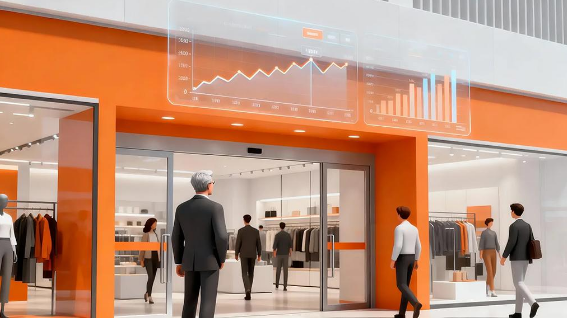
You know, after more than ten years fiddling with sensors, cables, firmware that refuses to behave, and store managers who expect magic, I still get asked the same basic question: “So… what exactly is People Counting?”
And every time, I want to say—halfjoke—it’s basically trying to teach a box on the ceiling to understand humans better than humans do.
Anyway, let’s get into it.
People Counting Basics: What It Really Means in the Real World
People Counting sounds fancy, but honestly, it’s just tracking how many folks walk past a point. Sometimes in. Sometimes out. Sometimes just circling around looking for the restroom. And modern systems—like the ones we build at FOORIR—try to make sense of all that without losing their cool.
The industry types might call it footfall analytics, occupancy metrics, or traffic flow monitoring, but the core idea?
Count people → understand patterns → make decisions → hopefully boost sales.
And stores need this badly.
One supermarket chain told me their manager “felt” weekends were busier. After installing a counter, turns out weekday evenings beat weekends by 22%. They were shocked; I wasn’t.
Source: Internal project log, aggregated from a 2023 deployment.
At the end of the day, People Counting helps stores finally see what’s been happening right under their noses.
People Counting Technology: Not All Sensors Are Your Friends
Now, here’s where my engineer side wakes up and starts ranting a bit. People assume counting humans is like counting apples. Sure. Try counting apples that move, hide behind each other, change shape because they’re wearing huge coats, and walk under bad lighting.
Tech options? Plenty:
Common Solutions
| Solution Type | Pros | Cons |
|---|---|---|
| Infrared Beam | Cheap, simple | Misses groups, blocks easily, inaccurate in crowds |
| Wi-Fi/Bluetooth Tracking | Good macro trends | Privacy concerns, not precise, ignores non-smartphone visitors |
| 2D Cameras | OK for simple entrances | Prone to occlusion, lighting issues |
| 3D/ToF Sensors (FOORIR-style) | High accuracy, works in complex scenes | Costlier, needs proper installation |
| AI Video Analytics | Powerful insights | Requires stable bandwidth + privacy handling |
The funny thing? Every retailer tells me they want “100% accuracy.”
I usually laugh—lightly—and say: “You want 100%? Then close the store.”
But with modern ToF sensors and AI algorithms, 95–98% in real traffic is realistically doable.
And this is exactly the kind of performance that makes People Counting worthwhile in the first place.
People Counting in Modern Stores: Why They Suddenly Care So Much
To be honest, most shops didn’t care about traffic data until online stores started eating their lunch. Then they realized they needed customer behavior insights too—just like e-commerce has had for years: conversion rates, funnel stages, dwell time, all that jazz.
Here’s what People Counting unlocks:
·Conversion rate: Turns “visitors vs. buyers” into a measurable KPI.
·Staff optimization: No more guessing when to add shifts.
·Queue management: Avoid the dreaded checkout bottleneck.
·Marketing ROI: Measure if a promo actually drove real feet, not just social media likes.
·Store layout testing: Move a shelf → see the change → adjust again.
One mall we worked with improved tenant placement simply by comparing corridor traffic. Numbers showed that one corridor was pulling 35% less footfall than the others. Tenants moved. Sales lifted.
Source: Mall operator footfall analytics report, 2024.
And that’s the moment People Counting stops being “some tech thing” and becomes a revenue tool.
People Counting Helps Boost Sales: The Practical Stuff Nobody Tells You
So how exactly does People Counting boost sales? Let me skip the brochure language and just say what I’ve seen firsthand.
1. Find your real peak hours (they’re rarely what you think).
Retailers often assume weekends = peak. Many times it’s late afternoons on weekdays.
Better timing = better staffing = better service = higher sales.
2. Fix store bottlenecks.
I once helped a medium-size store where the entrance was so narrow that traffic flow looked like Monday morning subway congestion. After widening it and adjusting fixtures, traffic increased 18%.
Would they have known without People Counting? Nope.
3. Evaluate marketing like an engineer, not a gambler.
Ad campaign → spike or no spike?
If there’s no spike, maybe the ad wasn’t the problem—maybe your staff was overwhelmed at the wrong time. People Counting reveals that.
4. Improve customer dwell zones.
Heatmaps (or “traffic pathways” if you prefer the enterprise term) tell you which parts of the store act like black holes and which parts are dead zones.
People Counting + zone analytics = more logical layout decisions.
And modern systems—yes, including the ones we tinker on at FOORIR—combine sensor accuracy with analytics dashboards that make these insights feel almost too obvious.
So yeah, in the end, boosting sales is really just about understanding flow, timing, service, and letting People Counting be the quiet little truth machine.
Choosing a People Counting System: My Unfiltered Advice
Alright, here’s where I get slightly ranty—hope you don’t mind.
If you’re picking a system:
·Don’t buy only by price.
·Don’t assume a camera = accuracy.
·Don’t let installers place sensors “where it looks nice.”
·Please, for the love of everything engineered, measure the entrance width.
Focus on:
·Accuracy in real conditions
·Handling of groups + staff exclusion
·Privacy compliance
·Night-time performance
·Analytics platform usability
·Integration with POS or ERP
And yeah, if FOORIR shows up twice in your shortlist… that’s not a coincidence. Just saying.
Because choosing the right hardware is the foundation of reliable People Counting.
FAQ: Quick Answers Before You Run Off
1. Is People Counting legal?
Yes, as long as the system doesn’t identify individuals. ToF and non-imaging systems are the easiest for compliance.
2. How accurate are modern counters?
Top-tier systems reach 95–98% in real-world scenarios.
3. Can People Counting integrate with my POS?
Usually yes—via API, MQTT, or basic CSV export.
4. Do I need to install it at every entrance?
If you want correct occupancy, yes. If you only care about one zone, then place it where it matters.
5. Is Wi-Fi tracking enough?
Not for precise counts. It’s more of a supplementary tool.
CTA: Your Turn Now
If you’ve been thinking about whether People Counting is worth it, or wondering which system fits your store layout, just reach out. Or drop a comment. Or share this with your operations guy who still swears by “intuition.”
Happy to chat—preferably with tea in hand.