The Modern Property Manager’s Guide to Preventing Ponding Water on Flat Roof Systems
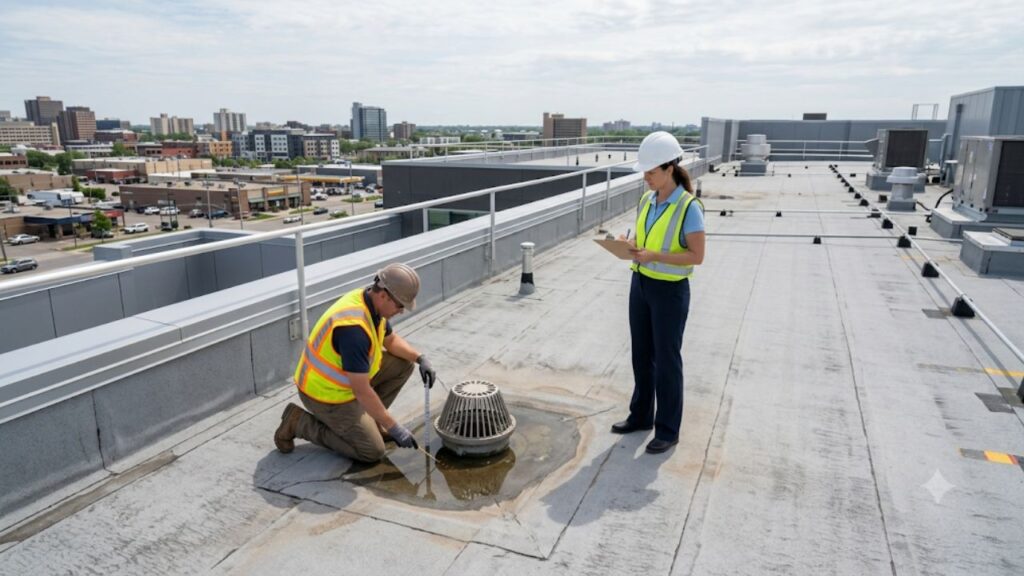
Roofs which are flat are built to withstand harsh conditions. However, standing water on such roofs can deteriorate them very quickly. The guidelines stipulate that standing water on a roof with a lower slope for over 48 hours after a rain event is an issue. Standing water for that period of time could cause damage by deteriorating the surface of the roof, separating the seams, and increasing load beyond that which was originally designed to be sustained. The sun is also a problem. It shines through the water puddles, which makes the top of the roof get weak over time. The layers like TPO, EPDM, or modified bitumen break down from this. A small drop in the roof can turn into a big leak before you know it. To stop all this, you need three things. The roof must have the right slope. Drains must be in the right spots. Taking care of the roof can not be skipped. If you see the roof drooping, or you want to upgrade your old low-slope roof, you should talk to Roofers in Mississauga. They know the rules about how much weight the roof can hold, and they also know the local drainage rules.
What’s Really Happening When Water Sits on a Flat Roof
Most property managers see a puddle on the roof after a storm and assume that it is a minor thing that will go away with time. However, this is far from the case since it leads to a chain reaction that affects the entire roof.
1. The Membrane Starts Breaking Down Chemically
All TPO, EPDM, and modified bitumen roofs are designed to be waterproof. Nevertheless, that does not mean they will endure water forever. The sun shining upon a small puddle becomes a sort of magnifying glass. It makes even more UV light and heat penetrate the roof surface directly. This way, heat strips flexible elements from the roof membranes. As a result, the roof loses its flexibility, cracks, and delaminates at the seams.
2. The Deck Itself Starts to Sag
Water isn’t light — for each inch that builds up, there will be about 5.2 pounds on every square foot. If the roof does not have enough slope, the weight can sit in one place. This starts to push down the deck and the parts that hold it up. When the deck sags, it makes a small dip where water gathers even more when it rains again. This sets up a cycle that keeps going and gets worse if no one stops it.
Worth noting: This gets a lot more dangerous when a freeze-thaw cycle hits standing water and turns it into a heavy sheet of ice — that’s when cumulative ponding can actually threaten structural overload.
How to Actually Fix Drainage on a Flat Roof
The good news is you do not have to take apart the main deck most of the time to fix this. Most of the work gets done if you use a good drainage plan and the right kind of insulation.
Tapered Insulation
When the deck under the roof is flat, the pitch is made by using tapered polyisocyanurate insulation. Contractors put down wedge-shaped boards that are already cut. They do this in a certain way to make a slope just under the waterproof layer. This is done without changing anything on the structure under it.
- Main Slope: This is often made at least 1/8 to 1/4 inch for every foot. It is sloped toward the main drains.
- Crickets and Saddles: These are both shaped like a triangle or diamond. You can find them on the high side of equipment curbs, on chimneys, and between drains. Their job is to move water away from things that stick out on the roof so water does not sit behind them.
Getting the Drainage Layout Right
Good drainage often means you use a main system along with a backup system. The best mix for your building will depend on what it needs.
| Drainage Type | How It Works | Where It’s Used | What to Maintain |
| Internal Roof Drains | Interior pipes running through the building down to storm sewers | Large commercial roofs, parapet-enclosed footprints | Check strainer domes, make sure clamping rings stay tight |
| Thru-Wall Scuppers | Openings cut through parapet walls that spill into downspouts | Perimeter-drained roofs, backup emergency outlets | Clear leaves regularly, check wall flashing seals |
| Gutters and Conductors | External aluminum or steel channels along the roof’s low edges | Smaller commercial roofs or residential flat additions | Watch for sagging, clear ice, and debris |
Conclusion
Maintenance of a flat roof involves preventing water from accumulating on the roof before it becomes a major issue. Having an understanding of how ultraviolet stress, deformation of the deck, and water accumulation interact is what will help you appreciate the importance of small amounts of water. At this point, it makes sense to stop them. Tapered insulation, water exit spots placed where they are actually needed, and a plan for regular checkups are what help keep the roof and the building under it safe for years. If you want a full flat roof change, a water exit update, or need a quick fix, working with skilled Roofers in Mississauga will help give you a roof that stands strong, instead of one that keeps costing you more money.