How to Choose the Right Composite Decking
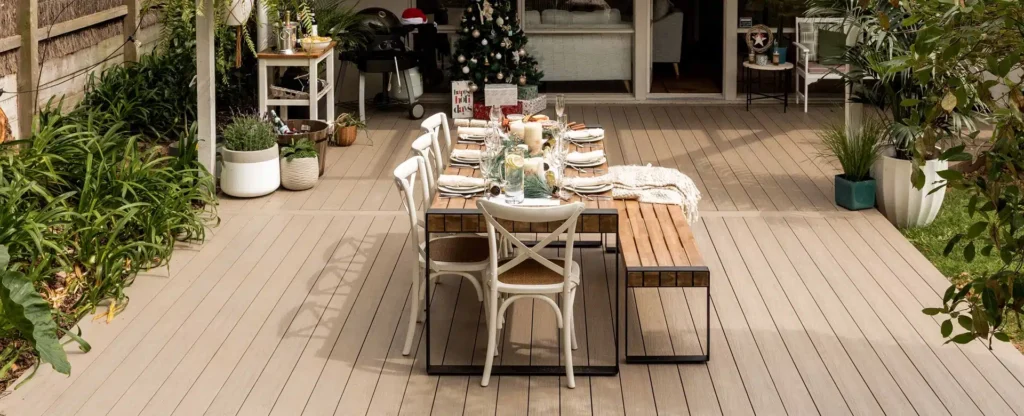
Right Composite Decking
Choosing decking is not just about colour or design. It’s about how you live, how much you can spend, and what you expect from your outdoor space.
Start with How You Use the Deck
Think about daily use. Do you have kids running around? Do pets spend time outdoors? Do you often have guests over?
If yes, your deck needs to handle a lot. It must be tough. Composite decking works well in busy homes. It resists scratches. It doesn’t stain easily. It also holds up well in sun or rain. This makes it a good choice for active families.
Plan Your Budget Early
Composite costs more than timber at the start. But that’s not the whole story. Wood decking needs a lot of care. You need to clean, sand, stain, and seal it. That takes time and money.
The composite deck is different. You clean it with water and a brush. That’s it. So even if it costs more upfront, you save later. You spend less on products and labour. Think about what matters more—lower cost now or fewer chores in the future.
Choose the Look You Want
There are many styles. Some boards look like real wood. Some are smooth with clean lines. What fits your house better?
Colour matters too. Darker shades soak up more heat. They feel hotter in the sun. Light colours stay cooler. Also, some shades fade slower. Think about where the sun hits your deck.
Texture adds detail. Some boards have grain patterns. Others are plain. If you like a natural feel, pick a board with depth. If you like sharp lines, go smooth.
Test the Surface
Looks don’t tell the full story. Walk on the boards. Feel them under your feet. Some are soft. Some are firm. Some are slippery when wet. Some aren’t.
If it rains often where you live, a rougher surface helps. It makes the deck safer. Smooth boards clean faster but may be slick.
Read the Warranty
Warranties protect your purchase. Most cover damage like stains or fading. Some also cover warping or cracks.
A short warranty might last 10 years. A long one could last 25 or more. Longer warranties often mean better quality. Read what’s covered. Check what’s not.
If two boards look the same, the warranty might help you pick. It tells you how much the maker trusts their product.
Know the Types of Boards
There are two types—capped and uncapped. Capped boards have a plastic shell. It keeps out water and dirt. Uncapped ones don’t. They cost less, but they don’t last as long.
Most people choose capped. They handle wet weather better. Some are capped all the way around. These are best in rainy areas or near pools.
Look at the Core
What’s inside the board matters too. Some use wood and plastic. Some use only plastic. Some use minerals.
Wood and plastic feel more like timber. Pure plastic is lighter. Mineral-based boards stay cooler. They also don’t change shape much in heat.
Ask for samples. Try them out in your yard. See which feels better.
Think About How It Gets Installed
Composite is heavier than wood. It’s also more stable. It doesn’t twist or warp as much.
Most brands use hidden clips. These make the top surface smooth. No nails. No screws. Just clean lines.
Check what your builder needs. Some boards need special tools. Some are easier to cut. Complex decks take longer. That adds to labour cost.
Simple decks cost less. If you want patterns, borders, or curves, plan for extra time and money.
Choose a Trusted Brand
Not all brands are the same. Some are new. Some are well known. Ask your installer. Read reviews. Visit showrooms if you can. For example you can choose Compotech Decking, which provides composite decking materials and composite wall cladding. It’s now one of Australia’s leading composite decking providers.
See the boards. Touch them. Look at the colour in real light. It may look different from a photo.
Check if spare boards are easy to find. If you need to replace one later, will you get a match? Brands that sell in more stores make that easier.
Think About the Weather
Your deck has to handle local weather. What works in Brisbane may not work in Melbourne. What lasts in Perth might not hold up in Hobart.
Hot places need boards that stay cool. Wet areas need boards that won’t rot or swell. Coastal homes need materials that resist salt and humidity.
Ask your supplier for advice. Some boards are made for heat. Others handle cold or damp. You can choose based on your climate zone.
Ask the Right Questions
Before you buy, get at least three quotes. Ask for full details. Some quotes skip important parts. Make sure everything is listed—boards, frames, screws, delivery, and labour.
Ask who will install it. Some brands require trained installers. If the wrong person builds your deck, the warranty may not count.
Ask how long the job will take. Ask if they have done similar work before. Ask if they clean up when they finish. The more you ask, the fewer surprises later.
Have more questions? Refer to this website.