How to Choose the Right Landscaping Company in Victoria BC
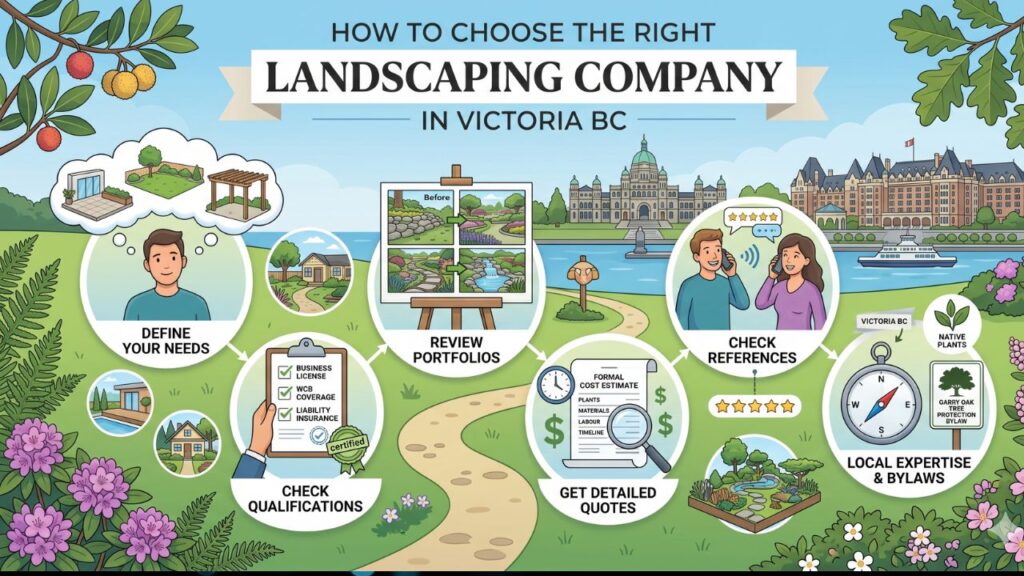
When you invest in your outdoor space, you want that investment to hold up through the seasons, enhance your property value, and actually look the way you imagined. Choosing the right company to handle that work is one of the most important decisions a homeowner can make. The region’s coastal environment is genuinely distinct, and not every contractor has the local experience to work with it effectively. From the way rainfall moves through your soil to the salt air that affects certain materials near the water, outdoor work here requires a level of knowledge that goes well beyond general landscaping practice.
This guide walks you through everything you need to consider before signing a contract, including what to look for, what to avoid, and the questions worth asking before any work begins.
Why Victoria BC’s Climate Makes Contractor Selection So Important
Victoria sits at the southern tip of Vancouver Island and enjoys one of Canada’s mildest climates, broadly classified as a warm-summer Mediterranean climate. That description is appealing, but the practical reality for homeowners and outdoor contractors is more nuanced. The region experiences dry summers followed by wet, overcast winters, which places significant stress on hardscape surfaces, drainage systems, and plant selections alike.
Greater Victoria is also a tapestry of microclimates. Neighbourhoods closer to the Strait of Juan de Fuca deal with salt spray and sandy soils, while inland areas can experience frost and heavier clay-based ground. Properties in elevated or sheltered positions behave quite differently from those on exposed sites just a few kilometres away. A contractor who treats the entire region as a uniform environment is likely to make poor decisions about material selection, drainage design, and plant hardiness.
Soils across the Greater Victoria area range from sandy coastal compositions to dense, clay-heavy ground that retains moisture through the winter. Clay soil, while nutrient-rich, can be problematic for root penetration and drainage if not properly amended. Sandy soil, on the other hand, drains quickly but requires more attention to irrigation and fertilisation. A skilled local contractor understands these distinctions and knows how to prepare and amend the ground before installation begins, not after problems surface.
The dry-wet seasonal cycle also affects hardscaping materials directly. Surfaces must endure months of UV exposure and heat during summer, then withstand near-constant saturation in the cooler months. Pavers, retaining walls, and patios that are not properly installed with appropriate bedding, edge restraints, and drainage channels will shift, or settle within a few years. Choosing a contractor who understands this cycle is not optional; it is essential.
What to Look for in a Landscaping Company
Proper Licensing and WorkSafeBC Coverage
In British Columbia, landscaping work that involves excavation, retaining wall construction, irrigation system installation, or structural elements generally requires that the company carry adequate liability insurance and maintain active WorkSafeBC coverage. Before you discuss the scope of a project, ask for documentation of both. A licensed, insured contractor protects you from financial liability if something goes wrong on your property, and it signals that the company operates as a legitimate professional landscaper in Victoria BC.
Membership in recognized industry organizations, such as the British Columbia Landscape and Nursery Association (BCLNA) or Landscape Ontario equivalents, can also speak to a contractor’s commitment to ongoing professional development and industry standards.
A Portfolio That Reflects Local Work
Ask to see a portfolio, and pay attention to whether the work shown was done and the surrounding Capital Regional District. Projects completed in the Lower Mainland or elsewhere in BC may not translate directly to the soil conditions, rainfall volumes, and plant species relevant to your property. Local portfolio work lets you assess whether the contractor has handled the specific types of challenges your yard might present, whether that involves sloped terrain, drainage concerns, mature tree preservation, or coastal plant selection.
Quality portfolio work demonstrates clean installation, attention to grading and drainage, and finishes that hold up over time. Ask how old the projects in the portfolio are. Work that still looks solid three to five years after installation tells you far more than a freshly completed job photographed the week it was done.
Clear and Honest Pricing
Reputable contractors provide itemized written quotes that break down labour, materials, equipment, and any additional fees. Avoid situations where pricing is vague, conditional, or presented verbally without documentation. A detailed written quote protects both parties and creates a reference point if any disagreements arise during the project.
It is also worth requesting quotes from two or three contractors so you have a realistic sense of market pricing for your scope of work. Unusually low quotes often reflect corners being cut on material quality or labour, while quotes that include unexplained line items deserve a direct conversation.
Workmanship Warranties and Written Contracts
A contractor who stands behind their work will offer some form of workmanship warranty. This is separate from manufacturer warranties on materials and covers the quality of the installation itself. Standard workmanship warranties in the landscape industry typically range from one to two years, though this varies by project type.
Always insist on a written contract before work begins. The contract should outline the full project scope, materials to be used, timelines, payment schedule, and any warranty terms. A contractor who resists putting these details in writing is a contractor worth reconsidering.
Red Flags to Watch for When Evaluating Landscaping Companies
Not every company that presents professionally will deliver professionally. There are several warning signs that are worth recognizing before you commit.
- Pressure to sign quickly or accept a discount for same-day decisions
- Requests for large upfront payments before any work begins
- No physical business address or verifiable local presence
- Vague responses when asked about licensing, insurance, or WorkSafeBC coverage
- Proposals that seem to expand in scope or cost once work has begun
- Reluctance to provide references from recent local projects
- No written contract or itemized quote
One of the more common issues homeowners encounter is the tendency for some contractors to upsell services that are not necessary for the project at hand. A company that recommends expensive drainage overhauls, material upgrades, or add-on maintenance packages without clearly explaining why they are needed is prioritizing revenue over your outcome. A trustworthy contractor explains their recommendations, answers your questions directly, and does not push you toward decisions that inflate the invoice without adding value.
Equally concerning is the contractor who becomes difficult to reach once the deposit clears. Reliable communication throughout a project is a basic professional expectation. If a company is slow to respond during the sales process, that communication is unlikely to improve once they have your money.
How Victoria’s Microclimate Affects Material Choices and Installation Techniques
The choice of materials for patios, walkways, retaining walls, and garden features should always account for how those materials will perform specific climate conditions.
Concrete pavers are widely used in the region, but the quality of the bedding layer beneath them matters significantly. BC wet winters mean that improperly compacted base material will shift and settle, causing uneven surfaces and drainage issues. Permeable paving options have become increasingly relevant, particularly in properties where impervious surfaces contribute to runoff problems.
Retaining walls, especially those built on sloped properties, need to account for hydrostatic pressure that builds up behind the wall during prolonged rainfall. Proper drainage aggregate, weep holes, and geotextile fabric are not optional extras on a well-constructed retaining wall; they are standard practice.
For planting, native and climate-adapted species are the most reliable choice for gardens. Plants like salal, sword fern, red-flowering currant, arbutus, and Garry oak are well-suited to the region’s seasonal patterns and require less irrigation and maintenance once established. Salt-tolerant species are important for coastal-adjacent properties, while frost-resistant varieties benefit gardens in areas that experience colder inland temperatures. A contractor who recommends plant species without considering your property’s specific microclimate, aspect, and soil profile is working from a generic template rather than a considered plan.
Irrigation system design should also reflect the dry summer season. Drip irrigation and zone-controlled systems that deliver water efficiently reduce waste and help maintain plant health without encouraging overwatering, which can be as damaging as drought stress in certain soil types.
Questions to Ask Before Signing a Landscaping Contract
The conversation before a contract is signed is one of the most useful indicators of how a company operates. A few questions worth asking include:
- Can you provide two or three references from projects completed in the past two years?
- What is included in your workmanship warranty, and how are warranty claims handled?
- How do you handle changes to project scope or unexpected conditions during installation?
- Who will be on-site managing the work day-to-day, and how do you communicate progress to homeowners?
- What materials do you recommend for this project, and why?
- What does your payment schedule look like?
- Is your company covered by WorkSafeBC and general liability insurance?
The quality of the answers matters as much as the answers themselves. A company that responds with confidence, specifics, and honesty is demonstrating the kind of professional character that tends to carry through into the actual work.
What a Trustworthy, Locally Rooted Company Looks Like in Practice
A genuinely reputable landscape company is not difficult to identify once you know what to look for. They have an established local presence, a portfolio of completed work you can verify, and clients who are willing to speak on their behalf. They communicate clearly, price transparently, and treat your property with the same care they would their own.
They also understand Victoria in a way that comes only from working here consistently. They know which neighbourhoods have drainage challenges, which soil types need amendment, which materials hold up through the seasonal cycle, and which plant species will thrive on your specific site. That knowledge is not something you can find in a brochure; it accumulates through years of hands-on local experience.
Among the landscaping companies in Victoria BC serving homeowners across the Capital Regional District, the ones worth hiring are those who listen before they design, explain before they build, and follow through after the project is complete. Triton Landscaping reflects this approach, combining local knowledge with a commitment to workmanship that stands up over time.
If you are ready to move forward and want to connect with a professional landscaping company, taking the time to ask the right questions and evaluate the right details will make all the difference in the outcome.