Overcoming Precision Machining Challenges: A Strategic Guide to Selecting a CNC Milling Partner for Optimal Quality and Efficiency
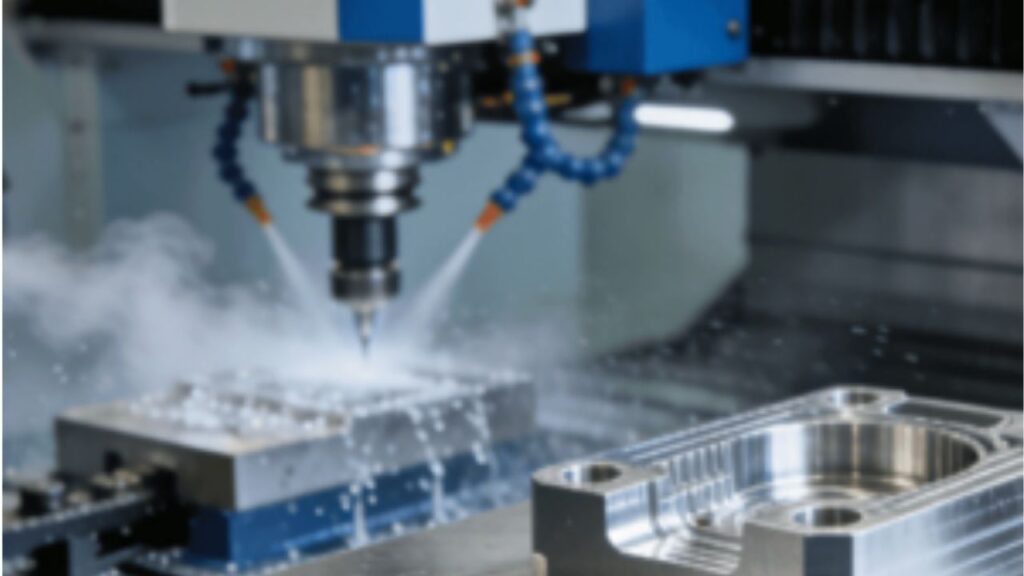
Launching a new product—or responding to an urgent order—can quickly go off track when the CNC supplier can’t meet precision requirements. Common outcomes include poor surface finish, high scrap rates (especially on complex features), and missed deadlines caused by unclear communication. These problems often stem from two gaps: limited understanding of what “full-service” CNC milling actually includes, and a lack of a clear framework for evaluating suppliers beyond price.
This guide breaks down the essential processes behind precision CNC milling and provides practical criteria to help OEM engineers and procurement teams select a partner who can deliver quality, efficiency, and predictable outcomes.
What a Comprehensive CNC Milling Service Really Includes
A strong CNC milling supplier isn’t defined by one machine or one operation. The best partners run an end-to-end quality system that covers planning, execution, verification, and documentation—so your parts are reliable from prototype through production.
Front-End Engineering That Prevents Downstream Failures
Before any metal is cut, a capable supplier should support collaborative engineering—especially DFM (Design for Manufacturability). DFM is where experienced engineers review your design and recommend small changes that reduce machining risk, shorten cycle time, and lower cost without compromising function.
Examples of high-impact DFM improvements include:
- Simplifying overly complex internal features
- Consolidating multi-part assemblies into fewer machined components
- Adjusting non-critical tolerances to reduce scrap and machining time
- Modifying radii, wall thickness, or undercuts to improve tool access
DFM is often the difference between a smooth production ramp and weeks of avoidable delays.
Digital and Physical Setup That Protects Quality
Precision machining depends heavily on preparation—both digitally (programming/simulation) and physically (tooling/fixturing).
Advanced CAM programming and simulation
A serious partner uses CAM strategies and simulation to validate tool paths, avoid collisions, reduce vibration, and improve efficiency. Simulation also improves predictability—helping prevent surprises during production.
Precision fixtures and workholding
For tight tolerances, complex shapes, or repeat production, fixture design matters as much as the machining itself. Good workholding reduces distortion and improves repeatability across the batch.
Verification and Quality Assurance That’s Not “Optional”
Post-machining processes can make or break the final part. A reliable workflow typically includes:
- First Article Inspection (FAI) or first-piece validation
- In-process measurement checks
- Final inspection reports with documented results
- Traceability (material certs, lot tracking, inspection records)
- Surface finishing controls (to meet functional + cosmetic requirements)
Why Multi-Axis Technology Changes What a Supplier Can Deliver
Many sourcing mistakes happen when part complexity doesn’t match a supplier’s technical capability.
3-Axis vs 5-Axis: What It Means in Practice
3-axis milling (X, Y, Z movement) works well for many prismatic parts, but complex geometry usually requires multiple setups. Each setup introduces risk: alignment errors, tolerance stack-up, and added labor time.
5-axis milling adds rotational axes, allowing the tool to approach the part from more directions—often completing multiple sides in a single setup. That enables complex parts (impellers, contoured medical components, aerospace features) with better precision and fewer operations.
The Practical Benefits of Multi-Axis Machining
- Higher accuracy by reducing re-clamping and alignment errors
- Better surface finish through optimal tool angles and smoother tool engagement
- Faster cycle times by consolidating setups and reducing manual handling
- Lower total cost on complex parts despite higher machine rates
The Key Dimensions to Evaluate a Reliable CNC Milling Supplier
Choosing the right partner is a strategic decision. Unit price matters—but it’s rarely the biggest cost driver when quality failures and delays enter the picture.
1) Technical Capability and Quality Infrastructure
Check for:
- Machine range that matches your part needs (3-axis, 4-axis, 5-axis as required)
- Inspection capability (CMM, gauges, in-process probing)
- Documented quality management systems and certifications relevant to your industry
- Ability to support traceability requirements and inspection reporting
If your application is regulated (medical, automotive, aerospace), quality systems and documentation are non-negotiable.
2) Engineering Depth and Proven Experience
Equipment alone isn’t enough. Ask for evidence of similar work:
- Case studies (especially in your industry)
- Examples of tight tolerance parts and complex geometries
- Demonstrated DFM support
- Ability to recommend machining approaches, not just accept drawings
A good engineering team reduces risk and improves manufacturability—often saving more than any discount on unit price.
3) Communication and Project Management Maturity
A supplier can be technically skilled and still fail you if communication is weak.
Strong indicators include:
- Clear RFQ requirements and fast, detailed quoting
- Defined process for approval (DFM → quote → plan → FAI → production → delivery)
- A single point of contact
- Regular progress updates and transparent lead time expectations
Good project management protects schedule and reduces rework.
Material Selection and Surface Finishing: Where Performance Is Won or Lost
Part performance depends on both material choice and surface condition.
Choosing the Right Material for the Application
- Aluminum alloys: lightweight, cost-effective, excellent machinability
- Stainless steels: corrosion resistance, but tougher to machine (work-hardening risk)
- Engineering plastics (e.g., PEEK): high strength, temperature resistance, biocompatibility—but require specialized parameters
A strong partner helps you balance performance requirements with machinability and cost.
Surface Finishing That Supports Function and Durability
Finishing isn’t just for looks. It can deliver corrosion resistance, wear resistance, cleanliness, or adhesion performance.
Common finishes include:
- Anodizing for aluminum (corrosion + wear improvement)
- Passivation / electropolishing for stainless steel (cleanliness + corrosion resistance)
- Sandblasting for uniform appearance or coating prep
A supplier who can guide finishing decisions based on environment and usage is a stronger long-term partner.
How to Control CNC Milling Costs Without Sacrificing Quality
Cost control is about optimization—not shortcuts.
What Drives CNC Milling Cost?
A typical quote includes:
- Engineering time (DFM, programming, setup planning)
- Machine time (cycle time is a major driver)
- Tooling and fixturing (especially for repeat work)
- Material and procurement
- Inspection and documentation
- Finishing and post-processing
Tight tolerances and high cosmetic surface requirements often increase time and cost.
Smart Cost-Reduction Levers
- Use DFM to simplify geometry and relax non-critical tolerances
- Consolidate orders to amortize setup/fixture costs
- Choose materials that meet requirements without over-specifying
- Design for fewer setups (often where 5-axis can reduce total cost)
If you want the best balance of speed and cost with predictable outcomes, working with experts who offer Precision CNC Milling services is a practical next step.
What a Collaborative CNC Milling Partnership Should Look Like
The best partnerships feel structured, transparent, and repeatable.
A Typical End-to-End Workflow
- RFQ submitted (3D model + 2D drawing + specs)
- Supplier review + DFM feedback
- Quote + project plan confirmation
- CAM programming, tooling, material procurement
- First article machining + inspection (FAI report if required)
- Approval → full production
- Final inspection + documentation package
- Shipping with traceability records (as applicable)
This process reduces surprises and keeps projects on schedule.
Conclusion
Selecting the right CNC milling partner affects product reliability, delivery predictability, and long-term supply chain stability. By evaluating suppliers through a structured lens—engineering collaboration, multi-axis capability, quality systems, inspection capacity, communication, and cost drivers—you can move beyond price-only sourcing and build a partnership that supports both today’s production goals and tomorrow’s growth.
For procurement teams specifically, the fastest shortcut to better outcomes is choosing a reliable CNC milling supplier. One that can prove capability, document quality, communicate clearly, and optimize cost through engineering—not compromise.