The Role of Professional Water Damage Restoration vs. DIY Solutions
Introduction
Water damage is one of the most common and costly problems that homeowners and businesses face. Whether caused by a burst pipe, a leaking roof, or flooding, water intrusion can lead to severe structural damage, mold growth, and long-term property deterioration. While some property owners attempt to handle water damage on their own, professional water damage restoration services offer specialized expertise and advanced equipment to ensure complete recovery.
Robert Franks understands that choosing between professional restoration and a DIY approach depends on the severity of the damage, the type of water involved, and the resources available. This article explores the advantages and limitations of both options, helping property owners make informed decisions when dealing with water damage.
Understanding the Severity of Water Damage
Not all water damage incidents are the same. The severity and complexity of the situation determine whether professional intervention is necessary or if a DIY approach is feasible.
1. Classification by Water Source
Water damage is categorized into three types based on the source and level of contamination:
- Category 1 (Clean Water): Results from broken supply lines, appliance leaks, or rainwater intrusion. This water is generally safe to handle with DIY methods if addressed quickly.
- Category 2 (Gray Water): Comes from washing machines, dishwashers, and showers. It contains contaminants that require protective measures during cleanup.
- Category 3 (Black Water): Includes sewage backups, floodwaters, and stagnant water that contains bacteria and hazardous substances. Professional restoration is required due to health risks.
2. Extent of the Damage
Water damage is also classified by the extent of material absorption and spread:
- Class 1: Minimal damage, affecting only part of a room with low permeability surfaces.
- Class 2: Water has spread to entire rooms and saturated carpets, walls, and furniture.
- Class 3: Water has fully saturated walls, ceilings, and flooring, requiring extensive drying and structural repairs.
- Class 4: Deeply absorbed moisture in materials like hardwood, concrete, or brick, requiring specialized drying techniques.
For Class 2 and higher, professional restoration is often the best course of action due to hidden moisture and structural risks.
DIY Water Damage Restoration: When It’s an Option
DIY restoration can be effective for minor water damage, particularly in cases where clean water is involved and the affected area is small.
Steps for DIY Water Damage Cleanup
- Stop the Water Source: Shut off the main water supply if the damage is caused by a leak.
- Remove Standing Water: Use wet/dry vacuums, towels, and mops to extract as much water as possible.
- Dry the Area Thoroughly: Open windows, run fans, and use dehumidifiers to speed up drying.
- Disinfect and Clean: Apply antimicrobial solutions to prevent bacteria and mold growth.
- Inspect for Hidden Moisture: Check behind walls, under carpets, and in ceiling cavities to ensure complete drying.
Limitations of DIY Water Damage Restoration
While a DIY approach may seem cost-effective, it has several risks:
- Hidden Moisture Issues: Water can seep into walls, insulation, and subfloors, leading to mold and structural weakening.
- Inadequate Drying: Household fans and dehumidifiers may not be sufficient to dry deeply embedded moisture.
- Health Risks: Exposure to gray or black water requires protective gear and specialized cleaning agents.
- Lack of Specialized Equipment: Professionals use infrared cameras, industrial air movers, and moisture meters for thorough restoration.
Professional Water Damage Restoration: Why It’s Essential
For moderate to severe water damage, professional restoration services ensure a safe, effective recovery process. Experts have the training, tools, and experience to handle large-scale damage efficiently.
1. Advanced Water Extraction and Drying
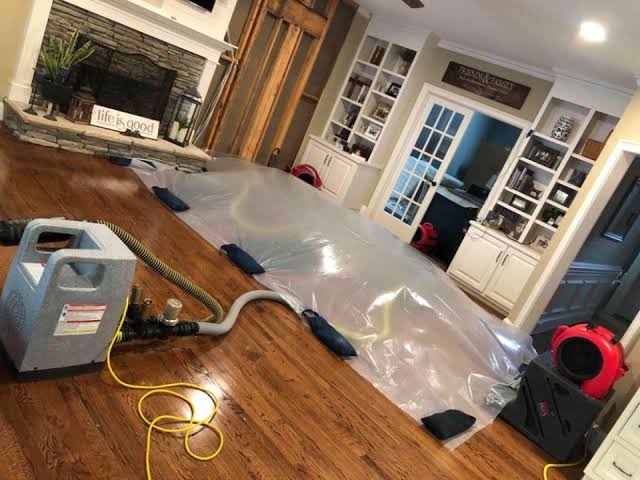
Professional restoration teams use industrial-grade equipment to remove water quickly and dry affected areas thoroughly.
- Truck-mounted water extraction units can remove thousands of gallons of water.
- Air movers and dehumidifiers accelerate drying to prevent mold growth.
- Moisture meters and infrared cameras detect hidden water pockets behind walls and floors.
2. Mold Prevention and Remediation
Mold can begin growing within 24 to 48 hours of water exposure. Professionals:
- Apply antimicrobial treatments to prevent mold formation.
- Use HEPA air scrubbers to filter out mold spores.
- Perform thorough inspections to detect mold in hidden spaces.
3. Structural and Electrical Safety
Severe water damage can compromise a building’s structure and electrical systems. Experts:
- Inspect walls, ceilings, and floors for structural weakening.
- Assess electrical systems to prevent short circuits and fire hazards.
- Repair or replace water-damaged drywall, insulation, and flooring as needed.
4. Insurance Assistance
Navigating insurance claims can be overwhelming, but professional restoration companies:
- Provide detailed damage assessments for insurance adjusters.
- Document the restoration process to support claims.
- Work directly with insurance providers to streamline approvals and ensure coverage.
Comparing DIY vs. Professional Restoration
| Factor | DIY Restoration | Professional Restoration |
| Cost | Lower upfront cost | Higher cost, but long-term savings on repairs |
| Equipment | Household fans, wet/dry vacs | Industrial-grade dehumidifiers, air movers, moisture meters |
| Drying Speed | Slower, higher risk of mold | Faster, more effective drying techniques |
| Mold Prevention | Basic cleaning solutions | Antimicrobial treatments, HEPA air filtration |
| Structural Safety | Limited knowledge | Professional assessments to ensure safety |
| Insurance Assistance | None | Full documentation and claim support |
When to Call a Professional
While minor spills and small leaks can often be handled independently, professional intervention is necessary when:
- Water has spread to multiple rooms or deeply into building materials.
- The source is sewage, floodwater, or any contaminated water.
- Structural elements like drywall, wood, or flooring are at risk.
- There is a musty odor, indicating hidden moisture or mold.
- The property owner wants to ensure a full insurance claim.
Conclusion
Water damage restoration is not a one-size-fits-all process. While DIY solutions may work for minor incidents, larger and more complex situations require professional expertise. The key to effective water damage recovery is acting quickly and using the right methods to prevent long-term issues.
Robert Franks emphasizes that investing in professional restoration not only ensures a thorough cleanup but also protects the structural integrity and air quality of a home or business. By understanding when to handle damage independently and when to seek expert help, property owners can make the best decision for their property’s long-term health and safety.