The Strategic Shift: Rethinking Your Fiber Laser Payback Period
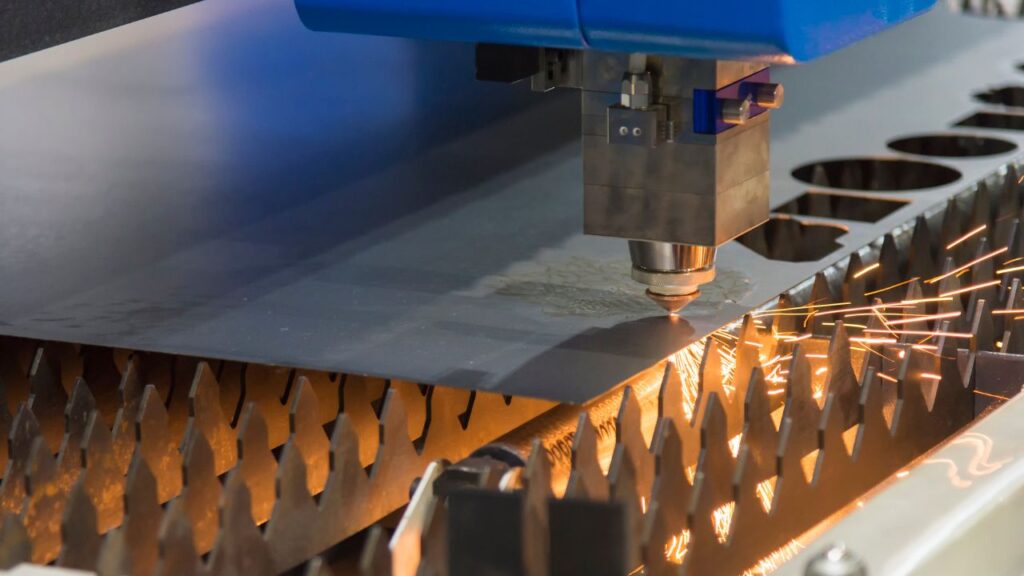
In the modern American manufacturing landscape, the decision to upgrade equipment is rarely about the “newest gadget.” Instead, it is a calculated move to protect margins in an era of rising labor costs and tightening deadlines. For shop owners still relying on legacy plasma or oxy-fuel systems, the question isn’t whether fiber laser technology is superior—it’s how quickly the investment transforms from a capital expense into a profit engine.
The Fiber Laser Payback Period is often misunderstood by focusing only on the sticker price. To see the true ROI, manufacturers must evaluate the entire lifecycle of a part, from raw material to the shipping dock.
1. The Death of Secondary Operations
In many U.S. job shops, the hidden cost of production lies in what happens after the cut. Plasma and oxy-fuel systems generate excessive heat, leaving behind dross, slag, and wide heat-affected zones. These imperfections require extensive grinding and manual cleanup before parts are ready for welding or assembly.
By switching to a fiber laser cutting machine , manufacturers can virtually eliminate secondary finishing processes. Fiber lasers deliver a high-energy-density beam with minimal thermal distortion, producing clean, precise edges straight off the table.
Removing the need for post-processing does more than save consumables—it recovers hundreds of labor hours. In a market facing a severe skilled labor shortage, reallocating workers from low-value grinding to high-value fabrication dramatically accelerates payback.
2. Engineering Stability for Constant Uptime
A machine only generates profit when it is cutting. This is where mechanical design directly impacts financial performance. A high-rigidity cutting bed is not simply an engineering preference—it is essential for vibration control, accuracy, and long-term component protection.
Paired with an aerospace-grade aluminum gantry, the system achieves high-speed motion without sacrificing structural integrity. The high strength-to-weight ratio enables rapid acceleration for complex geometries while reducing mechanical fatigue common in traditional steel beam designs.
The result is fewer maintenance interruptions, more consistent cut quality, and a longer productive lifespan—extending the machine’s profit window well beyond initial ROI.
3. Intelligence vs. Intuition: Solving the Talent Gap
American manufacturing is undergoing a generational shift. Much of the operational “tribal knowledge” required for flame cutting is retiring, leaving shops vulnerable to inconsistency and scrap.
Modern smart control systems embed cutting expertise directly into the software. Instead of relying on operator intuition for torch height or gas parameters, the system automatically adjusts for material variations and optimizes cutting paths.
This intelligence lowers the learning curve, reduces scrap during ramp-up, and ensures consistent output—making ROI independent of a single highly experienced operator.
4. Environmental Compliance as a Financial Advantage
Regulatory pressure in the U.S. increasingly focuses on indoor air quality and environmental responsibility. Legacy cutting methods produce heavy fumes and particulates that are difficult and expensive to manage.
Fiber laser systems equipped with zoned dust extraction capture contaminants directly at the source. This protects employee health, reduces HVAC strain, and minimizes the risk of OSHA penalties or insurance cost increases.
Avoiding even one compliance-related issue can significantly shorten the effective payback period—an often overlooked but critical factor.
5. The Support Ecosystem: Beyond the Hardware
The final component of ROI is support. In today’s global supply chain environment, downtime is costly. Equipment backed by 24/7 online technical support and structured operator training ensures that productivity ramps up smoothly instead of stalling.
With proper guidance, shops can fully utilize advanced nesting, automation, and parameter optimization features—reducing material waste and converting what was once scrap into sellable parts.
Conclusion: The New Math of Fabrication
The Fiber Laser Payback Period is no longer defined by cutting speed alone. When labor savings, reduced rework, intelligent automation, stable engineering, and environmental compliance are factored in, the numbers shift dramatically.For American fabricators aiming to stay competitive in 2025 and beyond, the real question isn’t whether a fiber laser is worth the investment. Given the cost of wasted labor, material loss, and downtime, the question is: can you afford to wait?