Why Commercial Lighting Upgrades Improve Workplace Efficiency
Poor lighting is one of those workplace problems that nobody talks about—until it’s too late. Employees chalk up their afternoon headaches to stress. Managers blame sluggish productivity on workload. But often, the answer is right above their heads. A well-planned commercial lighting upgrade can quietly transform how your team feels, focuses, and performs every single day.
How Lighting Directly Affects Employee Productivity
The human eye isn’t designed to strain under flickering fluorescent tubes for eight hours straight. When lighting is inadequate or poorly designed, employees experience eye fatigue, tension headaches, and difficulty concentrating—all of which chip away at output over time.
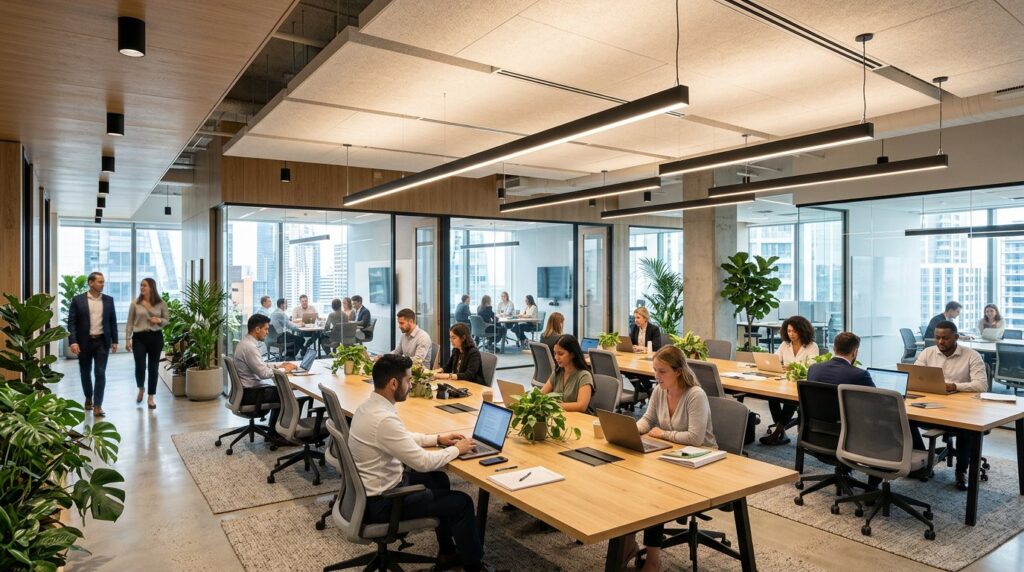
Quality lighting does the opposite. Bright, consistent illumination sharpens focus and supports alertness, particularly during those mid-afternoon slumps. Spaces that incorporate natural light alongside well-designed artificial fixtures tend to feel less oppressive and more energizing. Employees simply feel better in them—and that feeling shows up in their work.
It’s worth noting that lighting affects mood, too. A dim, poorly lit office can feel uninspiring, while a bright, well-balanced environment signals that the business cares about the people working in it. That psychological shift matters more than most employers realize.
The Real Energy Savings Behind a Commercial Lighting Upgrade
Beyond productivity, the financial case for a commercial lighting upgrade is hard to ignore. LED technology has fundamentally changed the economics of commercial lighting. Compared to traditional fluorescent or incandescent fixtures, LEDs consume dramatically less power to produce the same—or better—quality of light.
The numbers are significant. Businesses that switch to LED systems typically reduce their actual energy consumption by anywhere from 40% to 75%. That’s not a rounding error—it’s a meaningful reduction in monthly operating costs. And because LEDs last considerably longer than older bulbs, replacement and maintenance expenses drop alongside the electricity bill.
Most businesses recoup their initial investment within two to three years. After that, the savings are ongoing. Lower actual energy usage also means a smaller carbon footprint, which increasingly matters to clients, partners, and employees who care about environmental responsibility.
Benefits That Go Beyond the Energy Bill
A commercial lighting upgrade delivers returns that extend well past reduced utility costs. Consider maintenance alone: traditional lighting systems require frequent bulb replacements and occasional fixture repairs. Modern LED systems, by contrast, can last tens of thousands of hours with minimal upkeep. That’s less disruption to daily operations and fewer maintenance calls to manage.
There’s also the effect on employee wellbeing and attendance. Workplaces with better lighting environments report lower rates of absenteeism and higher overall morale. When people feel physically comfortable at work—less eye strain, fewer headaches, a more pleasant atmosphere—they’re more likely to show up and stay engaged.
And don’t overlook first impressions. A well-lit office, showroom, or workspace signals professionalism. Clients and visitors notice the environment they walk into. Upgraded lighting creates a polished, intentional space that reflects well on your brand before a single word is spoken.
Modern lighting systems also offer flexibility that older setups simply can’t match. Smart controls allow businesses to adjust brightness by zone, time of day, or occupancy—meaning you’re never paying for light in an empty conference room. That kind of precision reduces actual energy waste further while giving facilities managers greater control over the environment.
Lighting Is a Business Investment, Not Just a Utility Cost
It’s easy to treat lighting as a background expense—something to manage rather than optimize. But the evidence points in a clear direction. A commercial lighting upgrade improves productivity, cuts energy costs, supports employee health, and enhances how your business presents itself to the world.
The initial outlay is real, but so is the payoff. Businesses that treat workplace lighting as a strategic decision—rather than an afterthought—consistently see measurable improvements in both operational efficiency and employee performance. If you’ve been putting off an upgrade, the best time to act is before the costs of inaction quietly stack up any further.