How Facial Plastic Surgery Can Address Age-Related Changes
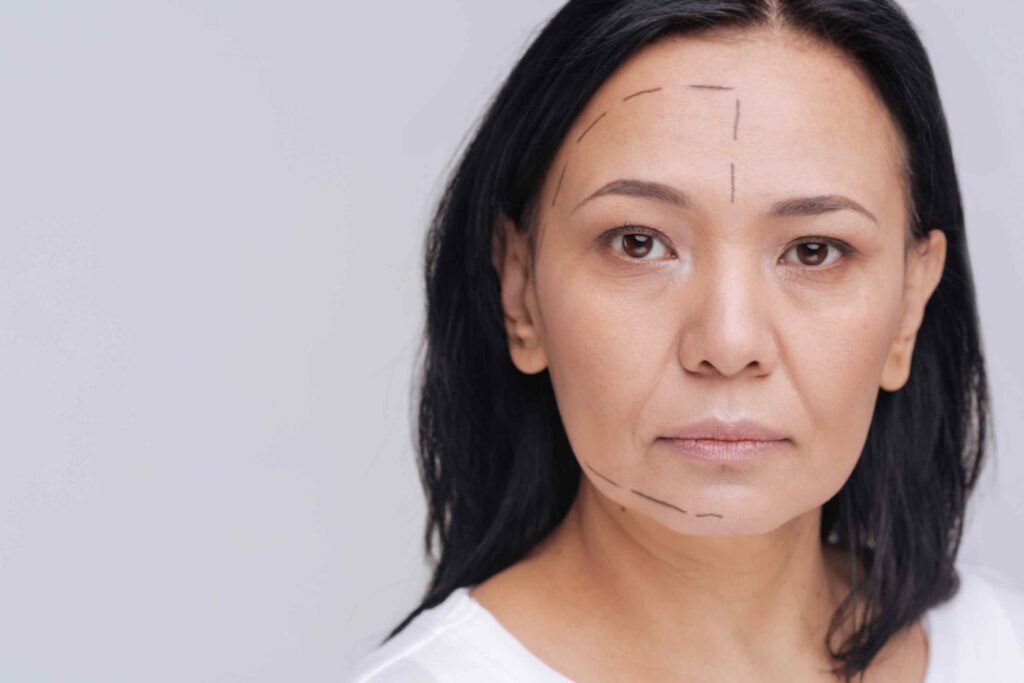
The face changes gradually with age. The skin becomes thinner and less elastic, facial fat shrinks or moves downwards, and the bones of the face slowly lose volume. Together, these changes lead to loose skin, deeper folds and a less defined jawline.
Facial plastic surgery can address many of these changes. The procedure that suits each person depends on which areas of the face are affected.
How the Face Changes With Age
- Skin – The skin becomes thinner and loses elasticity, so it loosens.
- Midface – Fat moves downwards, deepening the folds between the nose and the corners of the mouth.
- Jawline and Neck – Jowls form along the jaw, and the neck may develop loose skin, fat under the chin and visible bands.
- Eyes and Brow – The upper eyelid skin becomes loose and bags form under the eyes. A lower brow can add to hooding of the upper eyelids.
Surgical Options
- Facelift – Also called rhytidectomy, a facelift lifts the deeper layer of facial tissue (the SMAS) as well as the skin, to treat loose skin and jowls in the lower face and neck. The incisions run along the hairline at the temple and around the ear.
- Neck Lift – A neck lift treats fat under the chin, loose neck skin and neck bands. It can be done on its own or with a facelift.
- Upper Eyelid Surgery – Excess skin, and sometimes fat, is removed through an incision in the natural crease of the eyelid, where the scar is hidden.
- Lower Eyelid Surgery – Bags and loose skin under the eyes are treated through an incision inside the lower lid or just below the lashes. Fat is repositioned or removed.
- Brow Lift – A brow lift raises a low brow and softens forehead lines. It is often combined with eyelid surgery, as a low brow contributes to hooding of the upper eyelids.
- Fat Grafting – The patient’s own fat is used to restore lost volume in areas such as the cheeks, temples or under the eyes. Some of the transferred fat is reabsorbed.
Non-surgical treatments such as injectables and lasers can complement surgery or delay the need for it, but they cannot achieve the results of a facelift or neck lift.
Recovery
A facelift is performed under general anaesthesia, or local anaesthesia with sedation. Bruising usually lasts about two weeks, and most people take two to three weeks off work.
Eyelid surgery is often done under local anaesthetic as a day procedure. Stitches are usually removed within about a week, and most people take around two weeks off work. Bruising can take a few weeks to fade, and swelling is often more noticeable after lower eyelid surgery.
Risks
Recognised risks of a facelift include bleeding or a collection of fluid, infection, numbness, injury to the facial nerve, hair loss along the scars, poor scarring and asymmetry. Eyelid surgery can cause dry or irritated eyes, difficulty closing the eyes, asymmetry and scarring, and, rarely, the lower lid turning outwards.
Each of these procedures should be discussed in detail with a plastic surgeon, who can assess which changes are present and which options are suitable.
About the author: Dr Ong Wei Chen is an MOH-accredited plastic surgeon in Singapore with over 20 years of experience in reconstructive and aesthetic surgery. She practises at Gleneagles Medical Centre and is a Fellow of the Academy of Medicine, Singapore. wcongplasticsurgery.com.sg