Cloud VPS vs Shared Hosting: Which One Is Better for Growing Websites?
A good hosting environment is critical for any website that plans to scale in the future. Many websites use shared hosting at first because of its low cost and ease of use. Still, when website visitors start flocking to your site, and performance requirements become higher, shared hosting may no longer be able to meet those needs; this is where Cloud VPS comes in as an excellent option.
By understanding the key differences between Cloud VPS and shared hosting, individual site owners can determine what option may provide them with the best performance, reliability, and long-term growth potential.
What Is Shared Hosting?
Shared hosting is a type of hosting where several websites are all hosted on one single server, and they all share the same resources (CPU processing power, memory (RAM), bandwidth for Internet traffic, and hard drive space, etc). The cost of shared hosting can be kept low by grouping many users together using the same server; this is what makes shared hosting so popular with first-time site owners, bloggers, and small websites that do not need a lot of resources in their first few months.
The fact that all of the users on one server are sharing the same resources also creates limitations in performance if one user were to exceed their resource allocation (example: too many visitors to the site at one time).
Benefits of Shared Hosting
Shared hosting has many advantages, particularly for new sites.
Affordable
It is one of the least expensive types of hosting available today.
Easy Setup
Most hosting companies will set up the server and maintain it for you.
User-Friendly
Most shared hosting environments are very easy to use, even if you do not have any technical experience.
For smaller sites with lower amounts of traffic, shared hosting can be a great choice.
Drawbacks of Shared Hosting
While shared hosting offers convenience, it has certain limitations.
Limited Server Resources
Because many websites are sharing the same server, if one website is busy, there may be little or no available resources for other websites.
Performance Problems
The shared server can create slow load times at peak traffic times.
Less Control
As a general rule, users do not have the ability to change server settings.
As a website grows, the limitations of shared hosting may become an issue.
How Does Cloud VPS Work?
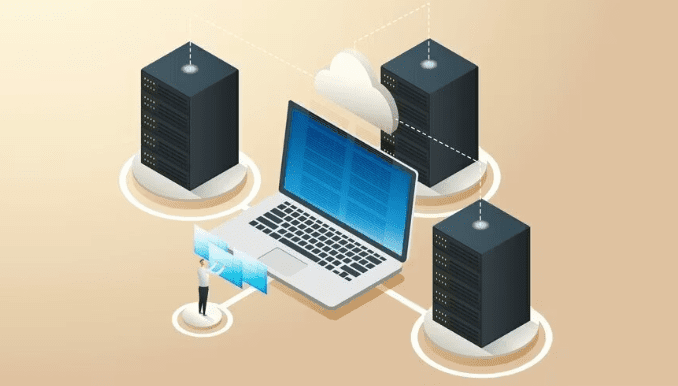
Cloud VPS (Virtual Private Server) is created using virtualization technology by creating unique, separate environments that exist in a shared location (the Cloud). Cloud VPSs (“machines”) are allocated their own separate, unique set of resources by the cloud. The nature of Cloud resources is that they’re not limited to one physical machine like traditional shared hosting. A Cloud VPS has the flexibility and diversity to reside in an entire network of different Cloud servers, supporting the overall Cloud’s redundancies to ensure there is constant availability to the VPS customer.
Because Cloud VPS is not limited to a single physical machine (server), it can also provide redundancy in terms of services by using multiple Cloud Server providers with a load balancer in place, if one Cloud VPS were to experience an outage, other Cloud VPSs within the Cloud (but on different Cloud servers) can still provide services.
The combination of the above features of a Cloud VPS helps create a robust solution for a platform as it grows.
Benefits of Cloud VPS
Cloud VPS provides benefits to websites being expanded by multiple web hosts.
Dedicated Resources
Each VPS user has their own dedicated resources (CPU, RAM, and Storage).
Better Performance
Shared server resources allowed websites to perform faster than if they were sharing a server with other users.
Scalability
As websites’ traffic increases, Cloud VPS will allow users to increase resources.
Improved Reliability
If any of the cloud service’s servers go down, the website is still able to be served from other servers in the Cloud.
With these characteristics, Cloud VPS is an effective solution to websites in the process of being developed or improved upon.
Control And Customization
Cloud VPS gives website Administrators more control over the hosting environment than shared or dedicated servers do. Users have the ability to customize their server settings, install their own software, and manage their own services based on the needs of the individual user.
It becomes significantly easier to manage all of these settings with the use of a web hosting control panel. This allows an administrator to monitor all of their resources, manage all of their domains, configure all of their databases, and manage the operation of the server from one interface.
Website flexibility is also often required if they require a particular configuration.
Performance Comparison
In comparison to other hosting types, Cloud VPS is typically much better.
When there is shared hosting, there are multiple websites that share the same resources on one server. If one or more websites are using too many resources, performance can drop dramatically.
Unlike shared hosting, Cloud VPS has its own allocated resources, allowing for faster loading times and more consistent performance to users.
Security Differences
Another aspect of the performance comparison is security.
When using shared hosting, many websites share one server. If one website has an issue with security, it can affect many other websites using that same server. Therefore, many businesses that use shared hosting may experience customer data loss as a result of shared hosting’s security vulnerabilities.
Cloud VPS offers stronger isolation and security by providing dedicated environments for each VPS. A VPS is a completely separate and independent hosting environment. Therefore, using Cloud VPS, an administrator can apply custom configurations for security.
Cost Considerations
Shared hosting is usually less expensive compared to other hosting services and is typically intended for small business owners who do not have large budgets.
Because Cloud VPS provides dedicated a user with additional resources and performance, the added cost generally makes it worthwhile for businesses that are expanding to use Cloud VPS.
For businesses expecting high levels of website traffic or operating complex web applications, Cloud VPS provides users the best long-term value.
What Type of Hosting is Most Beneficial For Expanding Your Online Presence?
For new websites with minimal visitors, shared hosting may be sufficient at first because it is inexpensive and easy to use. However, when your site’s traffic begins to significantly increase, a Cloud VPS (Virtual Private Server) may provide you with more dependable service. Furthermore, you would have greater control of your server(s) and could also scale your resources to meet traffic demands.
Conclusion
Both Cloud VPS and shared hosting were developed to meet different needs; therefore, shared hosting is ideal for beginners and for new small projects, while Cloud VPS is intended for sites requiring higher levels of service (i.e., performance and scalability).
As your website continues to grow and develop, Cloud VPS can also become the superior choice; it provides dedicated resources amounting to higher security than traditional forms of hosting, as well as provides multiple options for scaling your server resources up or down to meet your demands. Selecting the appropriate type of hosting environment from the beginning can benefit the long-term success and stability of your website and ensure that your business remains successful in the future.