Sustainable Knitting Tools: How to Build an Eco-Friendly Knitting Kit
When we talk about sustainable knitting, the conversation usually stops at the yarn: organic wool, undyed alpaca, recycled cotton. But your needles, stitch markers, and tape measures have a footprint too. Choosing sustainable knitting tools and keeping them in good shape is one of the easiest ways to lower your impact as a maker.
Here’s why your knitting kit matters as much as your yarn stash, and how intentional craftsmanship shapes a sustainable studio.
Eco-Friendly Knitting Needles: Which Materials Last Longest
The single most sustainable tool is always the one you already own. But when you do need to buy new needles, the material you select shapes how long that tool stays out of a landfill.
Plastic needles are cheap and light, but they’re petroleum-based, and thin circular cords often snap at the join, ending up in the trash.
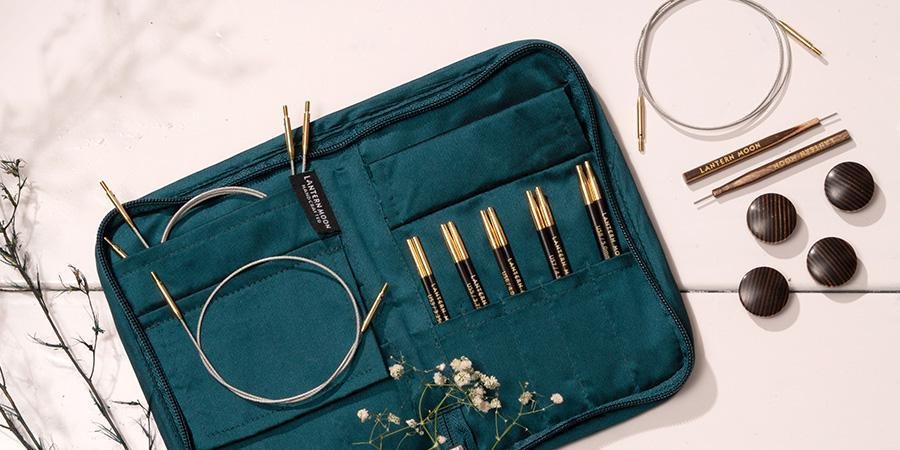
Investing in natural, responsible materials changes the entire picture:
- Certified Hardwoods (Ebony, Rosewood, Birch): Dense, fine-grained woods like ebony, rosewood, and birch resist warping and can last for decades. Ebony is under pressure from overharvesting, so buy only from makers who can show FSC certification or a documented, legal supply chain. If you can’t verify the source, choose birch or bamboo instead.
- Fast-Growing Bamboo: Bamboo grows quickly with little need for fertilizer or irrigation. Look for needles made with minimal adhesives and finishes, since processing affects the footprint too.
- Steel: Metal needles are among the most durable options. A solid set of interchangeable circulars handles a lifetime of heavy-gauge work and can be passed down to another knitter.
Learn More: Ebony Knitting Needles and Sustainability: What Most Crafters Don’t Know
Plastic-Free Stitch Markers and Other Sustainable Notions
Stitch markers, finishing needles, scissors, or measuring tapes may seem tiny, but they have an environmental impact over a lifetime of crafting.
Take stitch markers as an example. Millions of knitters rely on cheap plastic locking rings. Because they are fragile, they snap easily, slip between floorboards, or get lost in couch cushions, eventually winding up in the trash.
Learn More: Knitting & Crochet Accessories, Stitch Markers & Sustainable Notions Collections
Swapping out flimsy plastic accessories for simple, durable alternatives makes a real difference over time:
- Silk-Coated and Metal Rings: Simple brass rings or silk-cord markers work exceptionally well. They rarely snap under tension, glide smoothly along your needles, and last for years.
- Scrap Yarn Loops: The simplest zero-waste stitch marker is a small loop tied from leftover yarn scraps in your project bag.
- Natural Materials: Wooden row counters, horn notions, and metal-tipped fabric measuring tapes offer durable, plastic-free alternatives for your daily work.
How to Care for and Repair Your Knitting Tools
Sustainability is not only about what you buy, but also about how you care for it. With proper care, your tools last longer and perform better.
If your ebony wooden needles start to feel dry after years of crafting, do not toss them out. Rub them gently with a drop of natural oil or beeswax and clean them with a soft cotton cloth. The natural oils from your hands and a light polishing will restore their signature warmth and satiny sheen in minutes. A little care keeps good tools in use for decades.
Before You Buy: 4 Questions for a Sustainable Knitting Kit
It is easy to get carried away when you look at shining tools, limited-edition colorways, and decorative storage boxes. But owning fewer, higher-quality items is the heart of sustainable crafting.
Before adding a new accessory or needle set to your cart, run through this quick check:
- Do I already own something that can do this exact job?
- Is this item sturdy enough to handle years of regular use?
- Is the wood or raw material certified or responsibly sourced, and built to last?
- Can I care for and repair it myself if it shows wear?
Bringing It All Together
Knitting is a slow process, and we spend dozens of hours turning simple strings into warm, useful garments. Bringing that same patient, practical mindset to your sustainable knitting tools completes the circle.
Explore the Lantern Moon Collection to discover responsibly crafted needles, silk accessories, and timeless notions designed to last for years of stitching.